
Buy this Book:
DRAMA / General (DRA000000)
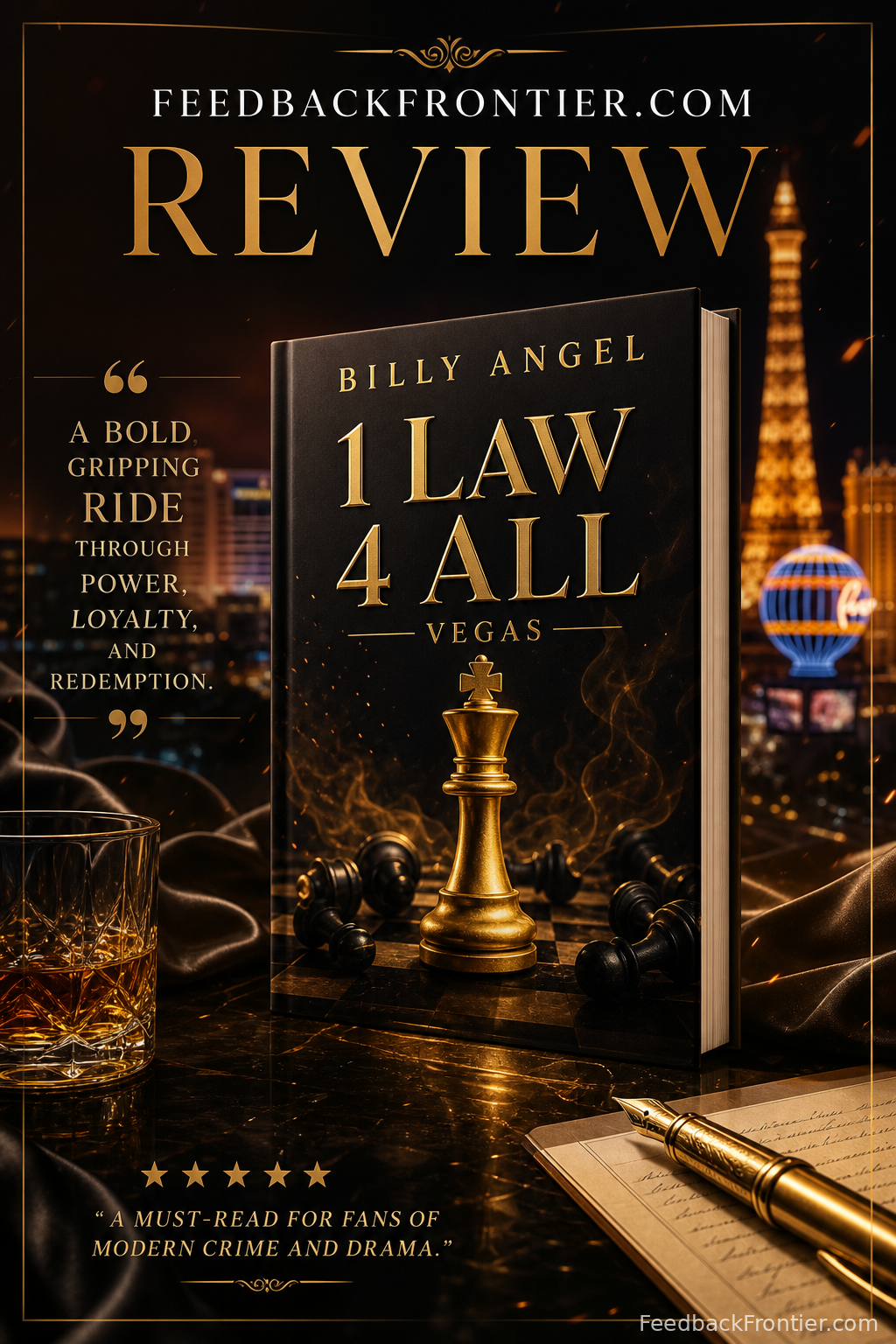
1 Law 4 All - Vegas
by Billy Angel
Listen to this review
One World Order is the kind of high-velocity political thriller that wears its ambitions proudly and largely succeeds because of that confidence. From its opening exchange in Pago Pago to its later leaps through Las Vegas, Washington, the Arizona border, and Beijing, the novel moves with the restless energy of a tabloid exposé, a crime procedural, and a geopolitical conspiracy tale all at once. What makes it especially engaging is the way it keeps those strands in motion without losing sight of the human relationships at its center: Mac and Kitiona’s long-distance tenderness, Jimmy and Rizzo’s bantering partnership, and Sugar and Tonya’s willingness to be more than decorative figures in the investigation all give the story warmth and momentum.
The book’s greatest strength is its sense of propulsion. Each chapter ends with a turn, a clue, or a fresh complication, and that serial structure works beautifully for the material. The mystery around Janelle Park’s disappearance unfolds through a web of dancer interviews, missing texts, covert meetings, and incriminating sightings, while the larger corruption case involving Senator Larry Sneed, Ralph Locci, and the Quon-Rong Holding Group steadily widens. The narrative repeatedly rewards the reader for paying attention: Janelle’s final text, “got a senator tonight,” the appearance of Wendy Wells, the dreamcatcher tattoo, the blog-driven pressure from Under DC’s Rug, and the recurring references to the Galaxy Hotel all accumulate into a satisfying conspiracy map.
The novel also has a lively, unmistakable voice. The dialogue is brisk, often slyly funny, and full of character-specific rhythm. Jimmy and Rizzo in particular are a highly readable duo; their exchanges combine detective competence with comic swagger, whether they are discussing “rocket bullets,” teasing each other about dates, or trying to stay focused while the world around them spirals. The same is true of the Foundation’s broader cast, whose professional seriousness is continually lightened by personal chemistry and well-timed humor. Even in scenes of danger, the book keeps the banter alive, which gives the thriller register a distinctly entertaining pop.
There is also real originality in how the novel blends seemingly disparate worlds. This is not just a Las Vegas vice story or a Washington scandal story; it is both, and then some. The story’s range gives it a contemporary feel, especially in the way the Foundation uses Skype, smartphones, texts, blogs, GPS-style tracking, and satellite-linked communications to chase down the truth. The communications-center chapters are particularly effective because they dramatize how modern detection works: information arrives fragmented, and the characters must piece together meaning in real time. That structure creates an appealing sense of collective intelligence, with Mac, Carol, Ben, Jimmy, Rizzo, Kitiona, and the others all contributing different forms of expertise.
Beyond the plot mechanics, the novel is strongest when it leans into its moral atmosphere. The recurring juxtaposition of glitz and rot is handled with real confidence. Anthony’s restaurant, the Galaxy Hotel, Chelsea’s Pony Farm, and Lake Las Vegas are all rendered as places of surface polish and hidden transaction. Against that backdrop, the story’s central corruption feels especially sharp: political power is shown to be entangled with money, vice, and influence in ways that are both familiar and unsettling. Senator Sneed is a particularly effective villain because he is not presented as a cartoon so much as a man whose appetites have become his governing philosophy. His smugness, opportunism, and habit of rationalizing every act make him an engaging embodiment of institutional corruption.
The emotional stakes are equally well handled. Kitiona’s journey to China, and the growing distance between her and Mac, adds a welcome romantic and cross-cultural dimension to the book. Mark’s anguish over Janelle gives the missing-person investigation a personal core, while Wanda, Sugar, and Tonya evolve from supporting figures into active participants with their own intelligence, risks, and vulnerabilities. The book’s treatment of female characters is most compelling when they are allowed to be strategically sharp and emotionally self-possessed, and several scenes do just that.
If there is a place where some readers may want more, it is in the sheer abundance of material. The novel covers a great deal of ground, and readers who prefer a more compressed or elegant thriller may occasionally wish for a slightly tighter focus in the middle stretches. At times, the pacing can feel breathless by design, and some exposition arrives in large, information-rich passages. Still, this is a constructive tradeoff in a story that is trying to build a broad conspiracy canvas. The energy never really flags; it simply keeps escalating.
Ultimately, One World Order is an entertaining, audacious, and often genuinely smart thriller that understands how to balance procedural momentum, political outrage, romance, and punchy dialogue. It has the pleasures of a page-turner and the scope of a larger cautionary tale about power, greed, and the machinery that hides both. For readers who enjoy fast-moving conspiracy fiction with an ensemble cast, sharp banter, and a plot that stretches from the bedroom to the border to the halls of Congress, this is an easy recommendation. Highly recommended.
Share-ready review images
Download square and vertical images for posts, stories, newsletters, and media kits.

For authors
Want a review page like this for your book?
Upload your manuscript, choose a review tier, and get a permanent public editorial review page you can share with readers.
Review My BookRelated reviews
← Back to Reviews
