Buy this Book:
DRAMA / American / General (DRA001000)
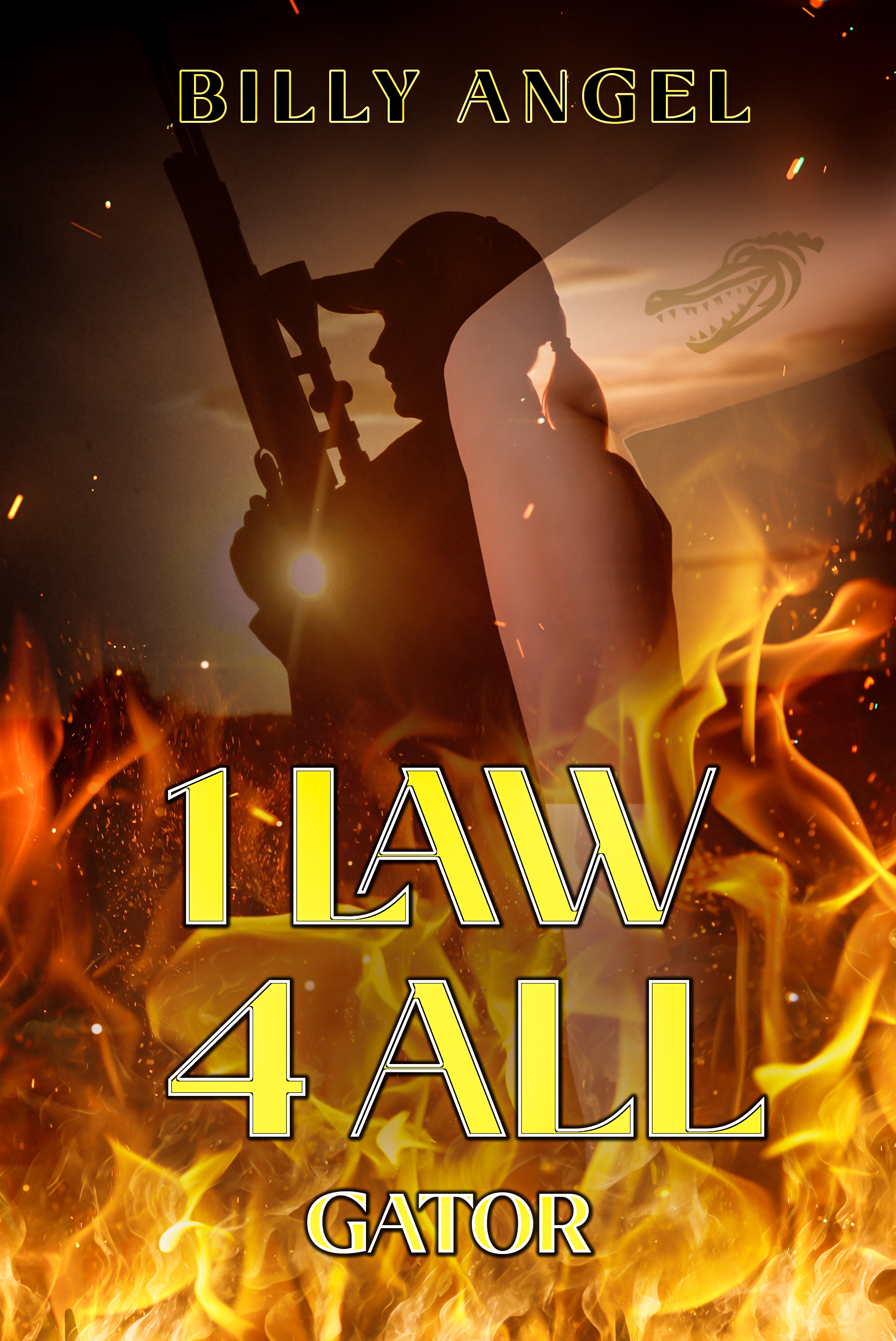
1 Law 4 All - Gator
by Billy Angel
Listen to this review
Project Florida is the kind of sprawling, high-stakes thriller that throws open its doors early and never lets the suspense cool. From the opening beach scene with Dominica Bianca collecting shells on Indian Rocks Beach to the final reckonings among politicians, mob families, investigators, and shadowy international operators, the novel builds an ambitious web of danger that feels both kinetically entertaining and pointedly topical. What makes the book especially engaging is the way it fuses political conspiracy, organized crime, election interference, and personal loyalty into one energetic narrative engine. It is a novel that wants to be big, and it absolutely commits to that scale.
One of the book’s clearest strengths is its momentum. The chapters are quick, scene-driven, and full of movement: kidnappings on the roadside, a near-ambush outside Juan Oneca’s office, police consultations with Detective Mike Rizzo, Foundation video conferences, cross-state chases, and ultimately the explosive showdown at the St. Simons Island shopping center and later the wedding reception attack. The structure gives the novel a propulsive, serial quality, almost like an old-fashioned cliffhanger story updated for the era of encrypted messaging and satellite tracking. The repeated use of the moodmeNow app, the mmN communications, and the “Find Me” tracking technology helps unify the many moving pieces while giving the plot a contemporary, tech-aware pulse.
At the heart of the novel is a compelling ensemble. Dominica Bianca is introduced with immediate visual force in Chapter 1, and her abduction gives the story both urgency and emotional stakes. Juan Oneca emerges as a steady, intelligent anchor, a Tampa attorney whose composure under pressure makes him a credible leader for the 1 Law 4 All Foundation. Lucy and Sean bring ideological passion, while Annie, Carol, Kitiona, Mac, Jimmy, Ben, and Bob all contribute distinct personalities to the ensemble. The women in particular are memorable: Kitiona, with her sniper background and self-possession, is one of the book’s strongest creations, especially in the later chapters when she turns out to be far more formidable than anyone outside her inner circle realizes. Her evolution from supportive partner to decisive protector is one of the novel’s most satisfying arcs.
Stylistically, the book has a confident, almost cinematic directness. The prose favors clear action, vivid descriptions, and brisk exchanges that keep scenes lively. There is a frankness to the narration that suits the material: luxury hotels, mob offices, political backrooms, poolside strategy sessions, and roadside shootouts all have a strongly visual presence. The author also understands how to use contrast effectively. One chapter might dwell on brunch, beach walks, wedding gifts, or shopping trips, while the next plunges readers into attempted assassination, election tampering, or an armored response to violence. That juxtaposition gives the story a lively pulse and reinforces one of its central ideas: that public life, private life, and criminal life can all collide in the same afternoon.
The thematic ambitions are especially notable. Beneath the action, Project Florida is deeply interested in corruption—political corruption, financial corruption, institutional corruption, and the corruption of public trust. The Fair and Free Foundation’s efforts to uncover voter fraud, the Club’s global manipulation, and the exposure of manipulated voting machines all point toward a story that sees democracy as fragile and constantly under siege. The election-machine subplot, with its nano-particle stickers and covert delivery network, is a memorable piece of speculative criminal engineering, and it gives the novel a distinct originality. Rather than settling for generic espionage, the book imagines a high-tech conspiracy tied to logistics, transport unions, media influence, and international money. That breadth of imagination is impressive.
There is also a strong emotional core running through the novel’s action. Dominica and Juan’s relationship matters; so does the Bianca family’s loyalty to their daughters. Frank and Nick’s willingness to move heaven and earth for their children gives the story a familial moral center, while the Foundation members’ loyalty to one another makes their political work feel communal rather than abstract. Even the wedding chapters, with their humor, shopping, and affectionate banter, matter because they remind readers what is at stake. The later wedding attack is effective precisely because the novel has spent so much time making these people feel like a real social circle, not just pawns in a conspiracy plot.
If there is a place where some readers may want more, it is in the occasional briskness of the transitions. The narrative covers a great deal of territory, and readers who prefer slower psychological development may sometimes wish for more interior reflection or fewer rapid pivots between subplots. Likewise, the satirical political commentary is bold and entertaining, though readers seeking a more restrained thriller may find the book’s commentary especially direct. But these are minor notes against a novel that is clearly aiming for energetic storytelling and thematic intensity, and it succeeds on those terms.
What lingers after reading Project Florida is not just the scale of the conspiracy, but the satisfying sense that ordinary loyalties—marriage, friendship, family, professional ethics—can still push back against corruption and violence. The book delivers action, invention, and a surprisingly warm ensemble spirit all at once. For readers who enjoy political thrillers with mob energy, tech intrigue, and a large cast of resilient characters, this is an engaging and rewarding read. Highly recommended.
Also in the series: Billy Angel continues the story in 1 Law 4 All - Vegas.
Share-ready review images
Download square and vertical images for posts, stories, newsletters, and media kits.

For authors
Want a review page like this for your book?
Upload your manuscript, choose a review tier, and get a permanent public editorial review page you can share with readers.
Review My BookRelated reviews
← Back to Reviews
