Religion / Christian Ministry / General (REL109000)
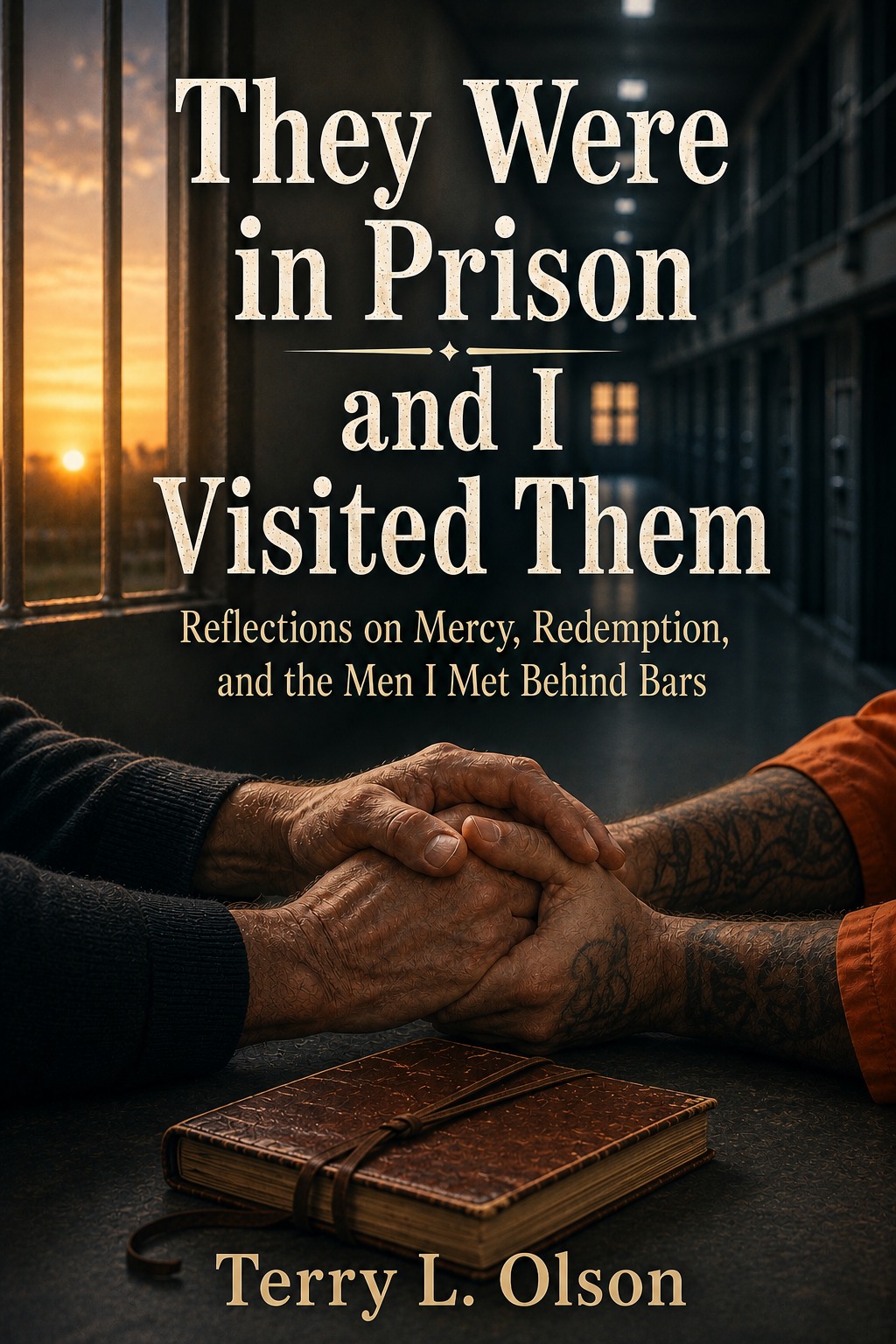
They Were in Prison and I Visited Them
by Terry L. Olson
Listen to this review
They Were in Prison and I Visited Them is an earnest, deeply felt, and ultimately moving work of Christian witness that reads like both a memoir and a ministry manual. What makes it especially compelling is that it never settles for abstraction. Across its portraits of Doug Gallagher, Hilary Crowe, Matthew Granger, Harry Alexander, and others, the book insists on the dignity of people the world often writes off. In doing so, it offers not only testimony, but a theology of accompaniment: to visit, to listen, to teach, to return, and to hope.
At its strongest, the book is animated by lived experience. The chapter on Doug Gallagher is especially powerful because it braids together two perspectives: the author’s own recollection of meeting Doug at Clallam Bay Corrections Center and Doug’s own “Concrete Cradle” account of violence, homelessness, addiction, and juvenile incarceration. That juxtaposition gives the narrative emotional and moral force. We see Doug not merely as a “case” but as a human being capable of change. The author’s testimony that others thought he was “wasting my time with Gallagher” only sharpens the impact when Doug’s life becomes a story of trust, discipline, faith, and eventual clemency. The passage in which Doug’s “good heart” is gradually transformed into a new life is the book at its best: direct, hopeful, and spiritually confident without becoming sentimental.
Hilary Crowe’s story deepens that hope by showing how restoration can ripple outward across generations. Her biography is one of the book’s most affecting sections because it refuses easy language. Hilary describes adoption, belonging, exclusion, ADHD medication, early drinking, drug court, relapse, homelessness, and the long, hard road into sobriety with a candor that feels genuinely earned. Her voice is distinct from the author’s, and the chapter’s power lies in that difference: this is not simply a minister speaking about recovery, but a daughter speaking from within the wreckage and the rebuilding. The reunion between Hilary and Doug, especially the scene of their first embrace after years of separation, is rendered with such warmth that it becomes the emotional center of the book. The line about heaven stitching their hearts back together is the sort of image that stays with the reader.
The book also stands out for its moral seriousness. In the chapter on Matthew Granger, the author writes with unusual courage about loving enemies, prison subcultures, and the possibility of redemption even for men with grievous histories. His reflections on Jesus washing Judas’s feet and on St. Paul’s violent past are not mere ornament; they frame the book’s entire argument that mercy is not weakness but obedience. Likewise, the chapter on Harry Alexander broadens the scope from individual transformation to structural justice. The discussion of clemency, recidivism, aging prisoners, legal financial obligations, and the denial of freedom despite demonstrated change gives the book a prophetic edge. Readers may not agree with every political conclusion, but the force of the author’s conviction is unmistakable, and his concern for older inmates nearing death is both humane and persuasive.
The second half of the book is less narrative and more devotional, but it remains lively in its own register. The “Weekly Reflections,” sermons, prayers, and “Deep Questions of Faith” create a textured handbook for spiritual formation. The entries on Understanding, Sloth, Love, Sanctification, and Relinquishment are especially strong because they translate theology into urgent moral exhortation. The author has a gift for memorable phrasing, and his repeated insistence that love is a willful act rather than a feeling gives the book coherence. Equally effective is the section on “How to Stay Married for Life: The Circle of Love,” which uses the extended story of a generous landowner and gardener to illustrate agape, gratitude, and mutual self-giving. It is one of the book’s clearest examples of practical theology shaped by lived wisdom.
Stylistically, the book has the rough edges of a work driven by passion rather than polish. There are occasional typographical errors, uneven transitions, and repetitions, and some readers may wish for tighter editing or a more consistent narrative frame. At times the prose becomes emphatic where a little restraint might deepen its impact. Yet these qualities do not diminish the book’s sincerity; if anything, they remind us that this is a document of vocation, not vanity. The author writes as someone approaching the end of life, and that urgency gives the pages a kind of trembling honesty.
Perhaps the book’s greatest achievement is that it refuses despair. Again and again, it returns to the conviction that human beings are not reducible to their worst acts, their addictions, or their sentences. The final sections, written from hospice, are especially affecting because they gather the book’s themes into gratitude, surrender, and peace. The author’s closing reflections on visitors, prayer, birdsong, and the privilege of having been used to help others leave a quiet but lasting resonance.
They Were in Prison and I Visited Them is moving, spiritually generous, and often genuinely inspiring. Readers drawn to prison ministry, recovery narratives, Christian discipleship, or stories of radical redemption will find much to value here. Despite its rough-hewn presentation, it offers something rare: testimony that feels lived, costly, and full of hope. I strongly recommend it.
Share-ready review images
Download square and vertical images for posts, stories, newsletters, and media kits.

For authors
Want a review page like this for your book?
Upload your manuscript, choose a review tier, and get a permanent public editorial review page you can share with readers.
Review My Book← Back to Reviews
