FICTION / Science Fiction / Action & Adventure (FIC028010)
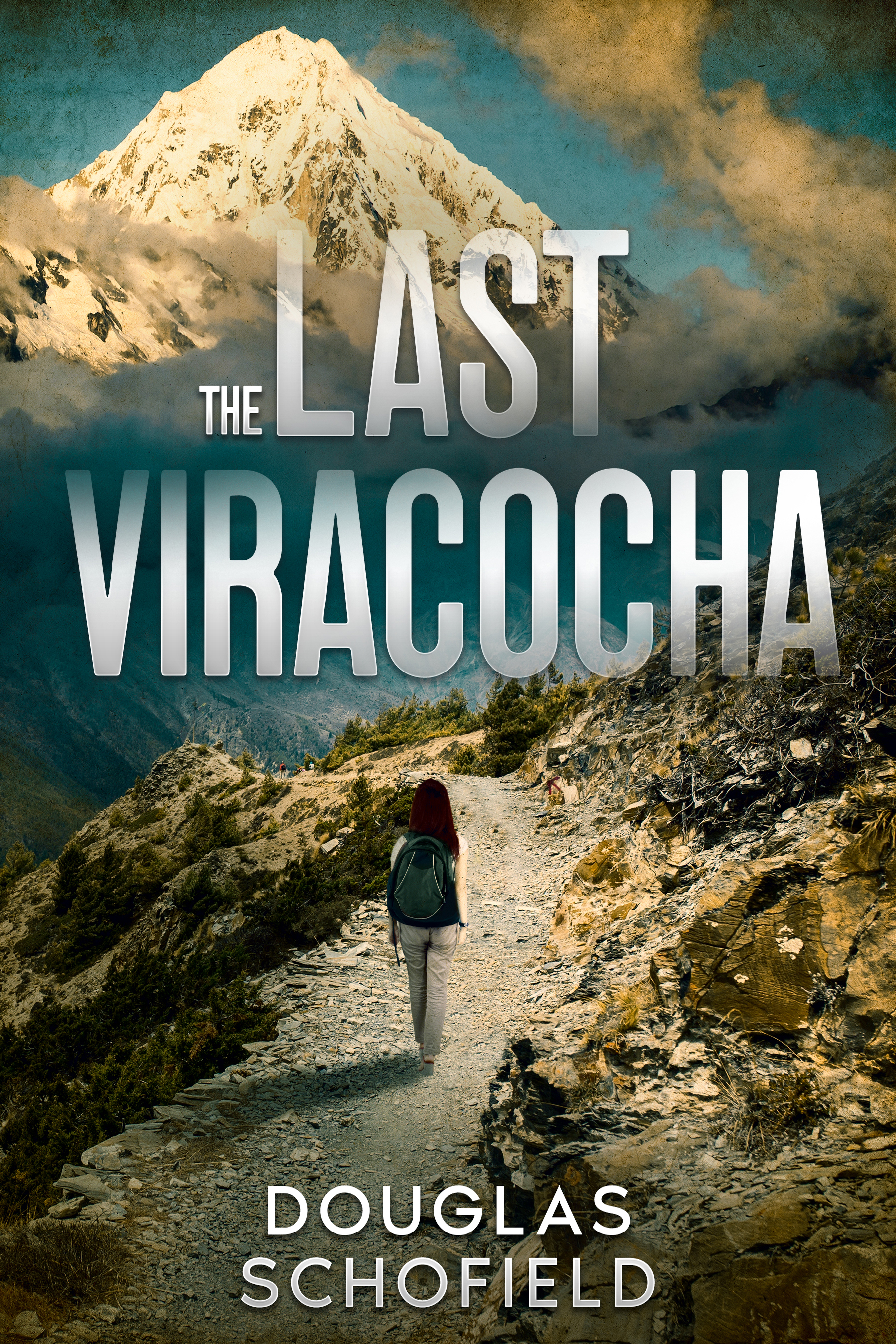
The Last Viracocha
by Douglas Schofield
Listen to this review
The Last Viracocha is the rare kind of genre novel that manages to be both exuberantly entertaining and intellectually ambitious. Douglas Schofield opens with the lively, sharply observed atmosphere of the Whiskey Roundup in Winslow, Arizona, where Eve Barcelon first appears as a young archaeologist whose beauty is matched by her brisk wit and guarded intelligence. From that opening, the book steadily widens its frame, moving from the practical world of desert digs, packing crates, shipping containers, and academic rivalries into a globe-spanning mystery that ultimately reaches far beyond Earth itself. The result is a novel that feels at once grounded in fieldwork detail and wonderfully unmoored from expectation.
One of the book’s greatest strengths is the voice Schofield gives Eve. She is not written as a generic prodigy or a passive recipient of revelations; she is clever, impatient, funny, and deeply human. Her exchanges with Sully, Carlos Armesto, Professor Rex Lister, Curtis Grady, and her mother Nicole all feel distinct and alive. The banter carries real personality, but it also sharpens character. Eve’s irritation with Lister, whose “ornaments to that man’s personality” are few indeed, is more than comic friction: it establishes the professional sexism and institutional condescension that shape her world. Likewise, Marie Rambarran emerges as one of the novel’s most appealing secondary characters, a capable, perceptive collaborator whose Trinidad-inflected wit and quiet authority give the Belize and Moray sequences an extra spark.
Schofield also excels at structure. The novel is carefully layered, beginning with archaeology and climate crisis, then gradually introducing Cetus Foundation’s secretive patronage, the strange Mayan casket of the Red King, the mysterious “Awakening,” and finally the startling larger truth about Eve’s origins. The book’s episodic progression never feels random; each section adds a new register of meaning. A Lidar image of a hidden Mayan city, a codex quotation about the yaxox tree, the bizarrely false-looking middle-English inscription on the Red King’s casket, and the perfectly matched terraced depressions at Moray all become clues in a design that is both mystery plot and cosmological revelation. The novel’s architecture mirrors the ruins it describes: hidden chambers, false surfaces, and concealed passages that finally open into a much larger chamber of reality.
The archaeological content is especially satisfying because it is rendered with enthusiasm rather than exposition-heavy solemnity. The dig at Homol’ovi, the care with packing artifacts, the attention to pottery, survey plans, radiocarbon dating, and excavation protocol all lend the opening section credibility. Later, the Mayan and Incan material becomes more than backdrop; it is integral to the plot’s logic. The “talking gerbil” nonsense that Marie encounters on the casket lid, the Chichén Itzá echo demonstration, and the rediscovered connection to Moray are all cleverly deployed, making the book feel like a celebration of historical patterns, language, and scholarship. It is the kind of novel that clearly delights in the intelligence of its own material, and that delight is infectious.
At the same time, the book’s deeper thematic ambitions are what truly elevate it. Beneath the suspense and spectacle lies a sustained meditation on identity, inheritance, ecological responsibility, and the moral use of power. Eve’s crisis of parentage is handled with real emotional force: the awkward birthday dinner, the confrontation over her father’s passport and secrecy, the note hidden in the music box, and the dawning realization that she is not human all build to a wrenching reassessment of self. Yet Schofield refuses to make this merely a twist for shock value. Eve’s question, “Who am I?” becomes a question about what constitutes family, duty, and belonging. The answer, as the novel ultimately suggests, is not blood alone but memory, choice, stewardship, and love.
The environmental subtext is equally strong. From Nicole’s warnings about drought, food riots, and record temperatures, to the urgency of preserving Earth’s biosphere, the novel keeps climate collapse in view without becoming didactic. Indeed, one of the book’s most compelling ideas is that ecological ruin and civilizational collapse are not abstract threats but immediate forces shaping individual lives. The contrast between Thalassa’s environmental discipline and humanity’s present instability gives the later revelations a sobering ethical dimension. Even the extraterrestrial framework is used not for escapism but for moral comparison.
The action sequences are brisk and cinematic, especially once Eve’s abilities awaken. The floating of the casket slab, the escape from armed pursuit, the storm-besieged hotel refuge, and the climactic confrontation in Moray all have genuine momentum. Schofield writes these scenes with clarity and confidence, balancing tension with wit. Grady’s evolving role is particularly effective: initially comic and vaguely suspect, he becomes a likable and more complicated presence, while Jack Neufeld adds a promising layer of covert pressure and loyalty.
If there is any mild reservation to note, it is simply that readers who prefer a more restrained science-fiction mode may find the later revelations expansive rather than gradual, and the wealth of names, agencies, and secret histories can occasionally feel dense. But this is a constructive abundance, not a flaw that diminishes the book’s success. Schofield is clearly aiming for scope, and he earns it.
The Last Viracocha is imaginative, smartly paced, emotionally resonant, and full of memorable characters and ideas. It blends archaeology, climate anxiety, family mystery, and speculative wonder into a story that is both propulsive and surprisingly moving. I recommend it enthusiastically to readers who enjoy adventurous fiction with real intelligence and a large sense of wonder.
Share-ready review images
Download square and vertical images for posts, stories, newsletters, and media kits.
For authors
Want a review page like this for your book?
Upload your manuscript, choose a review tier, and get a permanent public editorial review page you can share with readers.
Review My BookRelated reviews
← Back to Reviews
