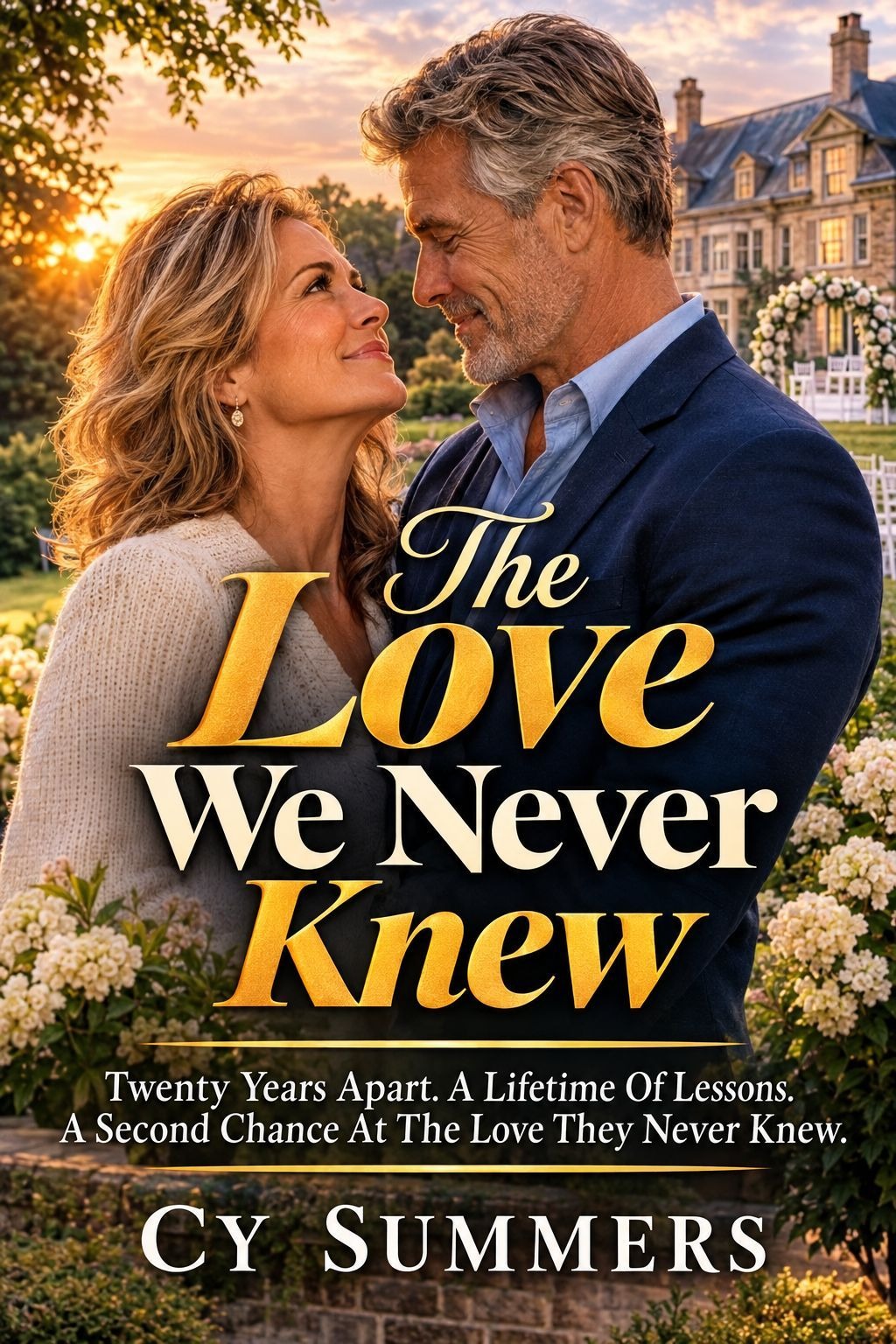
Buy this Book:
Fiction / Romance / Contemporary (FIC027020)
The Love We Never Knew
by Cy Summers
Listen to this review
The Love We Never Knew builds its romance around an appealing question: what might happen if two people who once failed at marriage met again after becoming fuller versions of themselves? Carolyn Johnson, a political science professor, and Joe, her former husband and a retired Air Force colonel, reunite at their son’s wedding. The novel follows their tentative reconnection through family celebrations, visits between Morgantown and Washington, and increasingly candid conversations about their past. Its central insight—that a second chance should not mean returning to the people one used to be—is thoughtful and well suited to a story about love later in life.
Carolyn is the book’s strongest presence. At forty-eight, she has built a career and a life she values, and the narrative takes care not to frame romance as a rescue from loneliness. Her enthusiasm for teaching, particularly her delight in watching students learn to think beyond what they have been told, gives her an identity independent of the courtship. Her hesitation about fitting a relationship around her work is also credible. When she accepts the university’s offer to direct a new interdisciplinary program, the opportunity is treated as a genuine achievement, not an obstacle she must sacrifice to prove her love.
Joe’s growth is quieter but also central. Retirement leaves him questioning what comes next, and his consulting work supporting military families gives that uncertainty a practical dimension. The strongest scenes between the pair are often not grand romantic gestures but conversations in which they begin to understand the costs their marriage imposed. On Carolyn’s porch, Joe recognizes her loneliness while she sees how helpless he felt at a distance from family life. The novel does not suggest that affection alone can repair the past; instead, it emphasizes listening, apology, and the willingness to discuss work, geography, finances, and expectations before remarrying. Their sessions with Pastor Thomas and the notebook of topics to address make that commitment concrete.
The prose is clear and accessible, with a warm, gently humorous register. Recurring banter—“Professor” and “Colonel,” the teasing over Joe’s planning habits, and his failed pancake-making—helps establish ease between the characters. Domestic details give the relationship texture: Carolyn’s crowded car trunk after the wedding, the shared drive into the mountains, Thanksgiving stories about a dropped carving platter, and the dance-floor photograph that becomes a keepsake. These scenes support the novel’s interest in ordinary companionship. Its most affecting image may be the old Christmas ornament showing the young couple: once a reminder of a marriage that ended, it becomes a way to acknowledge both their shared history and the people they have since become.
Faith is woven into the characters’ ordinary decisions rather than confined to a single crisis. Carolyn and Joe pray, read scripture, attend church, and interpret their developing relationship through trust in God’s direction. This gives the novel a consistent spiritual framework and helps shape its emphasis on patience and grace. Readers seeking Christian romance will likely appreciate the explicit devotional passages and the way belief informs the couple’s choices. The approach is sincere, though its repeated use of scripture and prayer to close scenes can make the emotional movement feel explained after it has already been shown.
That repetition is the book’s most noticeable limitation. Many chapters revisit a familiar pattern: a pleasant shared moment, a private realization that the relationship is changing, a prayer, and a message confirming the other person’s feelings. The recurring “new beginning” language reinforces the theme but also reduces surprise. The dialogue is often charming, yet the Professor/Colonel teasing can become a default rather than a fresh expression of character. As the courtship advances, the narration sometimes restates that each is content alone but open to love, or that they should proceed patiently, when the scenes have already made those points.
The dramatic stakes are correspondingly mild. The conference scheduling conflict in Chapter 14 offers a promising test of their ability to make room for each other, but it is resolved through a thoughtful call and a rescheduled visit. The larger questions—two cities, demanding careers, what marriage should look like—are discussed with admirable seriousness, yet rarely generate sustained disagreement or uncertainty. The divorce itself remains more an acknowledged source of hurt than a fully dramatized history; the novel offers broad explanations and meaningful apologies, but few particular past incidents to give that rupture sharper definition. Readers looking for high-conflict romantic tension or a more complex exploration of why the first marriage failed may find the treatment too smooth.
The book ultimately delivers a reassuring, deliberately hopeful arc, from an unexpected coffee at the lodge to a proposal, a second wedding, and the couple’s future as grandparents. That resolution fits its themes, even if the closing chapters move quickly through major milestones. The Love We Never Knew is best suited to readers who enjoy gentle, faith-centered contemporary romance, mature protagonists, and stories that prize communication and domestic intimacy over dramatic twists. Its best moments honor the possibility of loving someone anew without asking either person to abandon the life they have built; its repeated reflections and low-conflict plot make it a less compelling choice for readers seeking greater psychological complexity or narrative tension.
Share-ready review images
Download square and vertical images for posts, stories, newsletters, and media kits.
For authors
Want a review page like this for your book?
Upload your manuscript, choose a review tier, and get a permanent public editorial review page you can share with readers.
Review My Book← Back to Reviews
