Buy this Book:
The Light That Never Said Goodnight
by Ala Aims
Listen to this review
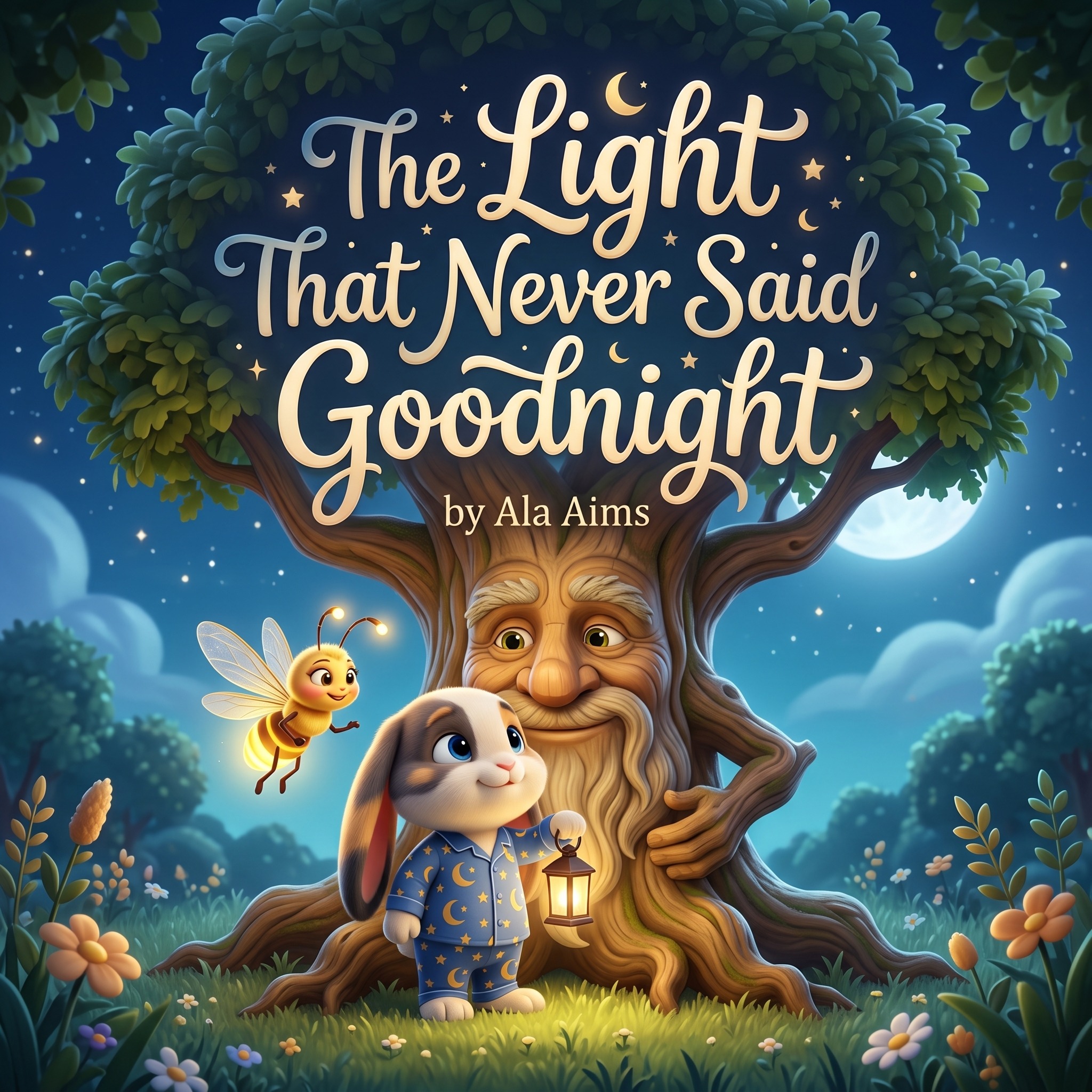
The Light That Never Said Goodnight is a compact, warmly intentioned picture-book fable built around a simple but durable insight: kindness is not merely decorative, but transformative. In its best passages, Ala Aims uses the nocturnal garden setting to give that idea a gentle visual life. Milo, a “small, curious rabbit” with “harlequin-colored fur” and “the biggest blue eyes,” wanders out beneath the moon in search of “the brightest place in the whole garden,” only to discover that brightness is linked less to radiance than to care, attention, and shared action. The book’s central reversal is clear and effective for young readers: what seems like a quest for a place becomes a lesson about behavior, community, and inner light.
The story’s greatest strength is its accessibility. The language is uncomplicated without being bare, and the pacing moves smoothly from Milo’s search, to Luma’s arrival, to the discovery of the hidden clearing and the moral revelation from Grandpa Oakley. The sequence is easy to follow and likely to hold a child’s attention. The imagery is also consistently gentle and luminous: “golden glow,” “sparkling dewdrops,” “shimmered with gentle light like lanterns in the night.” This visual softness matches the book’s emotional register, which is reassuring rather than dramatic. For a bedtime read, that matters. The title’s promise of a light that never ends is fulfilled not through suspense, but through atmosphere and comfort.
There is also a pleasing structural neatness to the book. Milo begins by seeking brightness outside himself; by the end, he understands that “the brightest place wasn’t something he had found. It wasn’t a place at all.” That realization is reinforced by the actions he performs in the clearing: lifting a fallen twig from a tiny flower, watering dry soil with dewdrops, and helping the garden come alive. These moments are small, but they are concrete, and they allow the moral to be dramatized rather than merely stated. Grandpa Oakley’s line, “A bright heart makes a bright garden,” offers the story a memorable center of gravity, while the final reflection broadens the message into a general meditation on kindness, presence, and unseen effects.
At the same time, the book’s strengths are also the source of its limitations. The narrative is built around a very familiar picture-book moral, and readers who have encountered many kindness-centered bedtime stories may find little that feels formally surprising. The book does not complicate Milo’s emotional journey or introduce much tension beyond the brief obstacle of the hedge. Luma, while charming, functions mostly as a guide, and Grandpa Oakley serves explicitly as a moral spokesperson. That clarity is useful for the intended audience, but it also means the characters are more emblematic than layered. Milo is likable, yet he remains primarily a vessel for the lesson rather than a deeply individualized presence.
Another limitation lies in the book’s ending material. After the story concludes, the text turns directly to authorial reflection, expanding the lesson in a more didactic, almost devotional register: “Some moments may not seem important when they happen. A smile. A laugh with someone you love. Sitting beside someone who doesn’t want to be alone.” This passage has sincerity and may resonate with caregivers looking for a gentle emotional prompt, but it also shifts the book away from narrative subtlety and into instruction. For some readers, that will be welcome; for others, especially those who prefer picture books to trust images and scene-building over explanation, the explicit moralizing may feel heavy-handed. The invitation to email “MILO” for bonus activities also underscores the book’s instructional rather than literary aims.
Because the book is presented as having been created “with the assistance of artificial intelligence using BookBudKids,” some readers may approach it with curiosity about authorship and craft. Within the text itself, what matters most is that the prose remains coherent, tender, and consistent in tone. Still, the overall effect is closer to a polished moral vignette than to a richly textured story world. The garden is appealing, but it is not especially particular; the moonlit setting supports the message, yet it is not developed with the kind of detail that might linger independently of the lesson.
Even so, the book’s emotional aim is clear and largely successful. It wants to reassure children that small acts matter, that they may be kinder and braver than they realize, and that warmth can spread quietly from one creature to another. In that respect, it does what a good beginner’s fable should do: it offers a memorable image, an easy arc, and a conclusion that is simple enough to repeat aloud. The final sentiment — “Sometimes, the brightest light begins with you” — is straightforward, but for the book’s audience, straightforwardness is the point.
Recommendation: This will be a strong fit for parents, caregivers, and teachers seeking a gentle bedtime story or a conversation starter about kindness, especially for very young children. Readers looking for narrative complexity, deeper character development, or more subtle moral storytelling may find it too explicit, but as a soft, soothing picture-book lesson, it is effective and well matched to its audience.
Share-ready review images
Download square and vertical images for posts, stories, newsletters, and media kits.
For authors
Want a review page like this for your book?
Upload your manuscript, choose a review tier, and get a permanent public editorial review page you can share with readers.
Review My Book← Back to Reviews
