Buy this Book:
Women’s fiction
The Lies Beneath
by Crystal Gary
Listen to this review
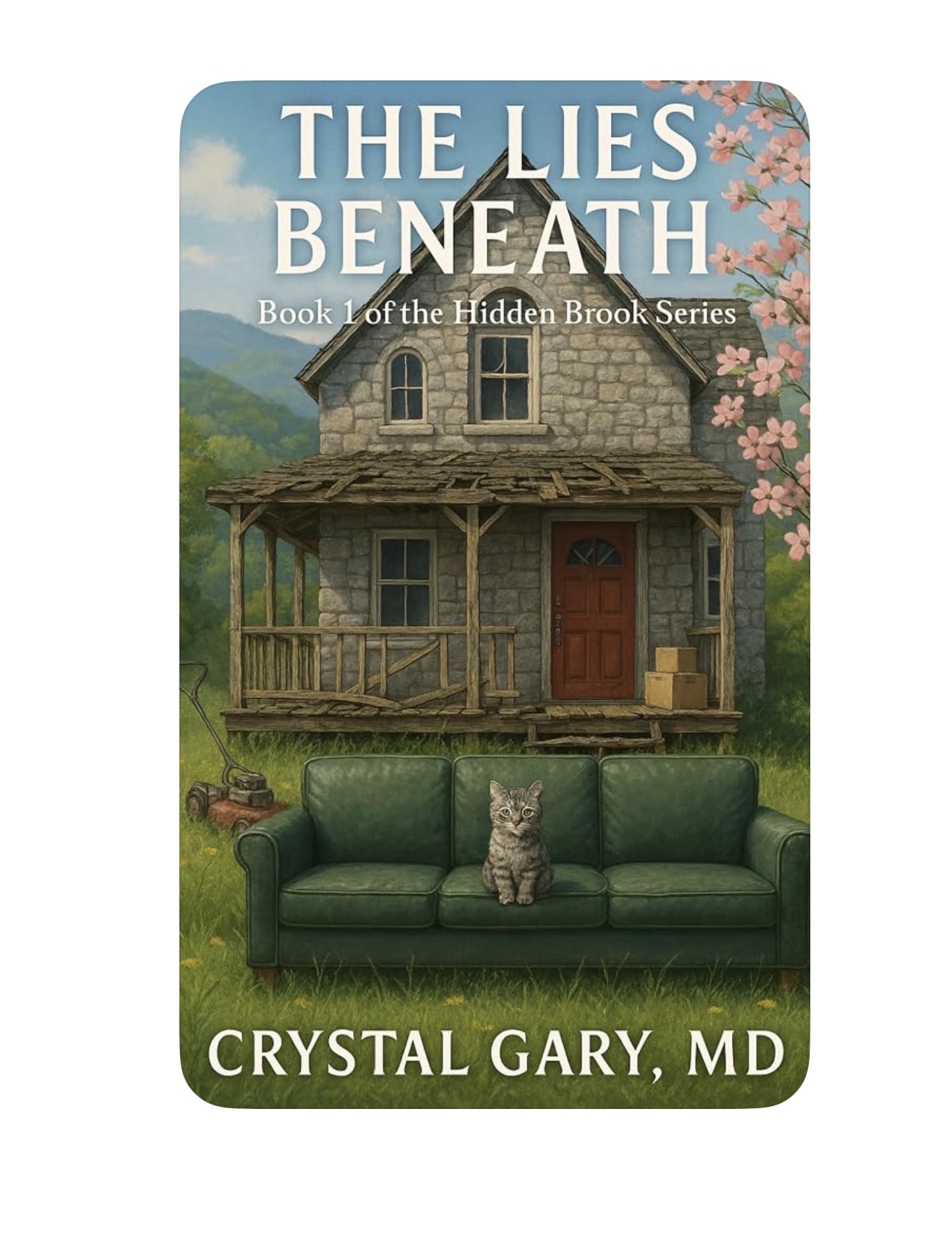
The Lies Beneath, the first book in Crystal Gary’s Hidden Brook series, brings together a small-town environmental mystery, a family drama, and a second-chance-at-love story. Its central question is urgent and clear: what happens when a community’s homes and water are tainted by the people who profit from them? Mallory Jennings, a recently divorced family physician and mother of three, finds reason to suspect that residents of Youngstown have been exposed to cadmium through the Creek Bend development. As she investigates, the novel widens into a story of corporate influence, medical duty, and the costs of speaking out.
The book’s strongest premise is its use of environmental contamination as both mystery and source of human harm. The opening prologue establishes the deliberate decisions behind Creek Bend’s development, while Mallory’s discovery of her Aunt Mildred’s Summit Corporation files gives the investigation a personal entry point. In Chapter Seven, old water tests, a reclamation plan, and the phrase “alternative containment methods” begin to connect the family archive to the town’s present. The clues build accessibly: a folder, a set of conflicting samples, a former physician’s account of a contaminated well, and eventually a thumb drive containing an email exchange that suggests Summit’s leaders knew about the risk. The story makes corporate wrongdoing tangible rather than abstract by linking it to places people live and patients’ everyday health.
Mallory is an appealing center for this material. Her professional concern is grounded in scenes of care, not merely in a generalized sense of justice. The consultation with Hannah after her third miscarriage is especially affecting: Mallory offers medical follow-up while also making room for grief and self-blame. Later, Hannah’s kidney disease gives the investigation a devastating human consequence. Other clinic encounters—the child who resists vaccination, the elderly Mrs. Davis, and the patient with a metallic taste—help establish Mallory’s demanding work and her attentiveness to patterns. The novel’s recurring idea that care entails responsibility, even when it is inconvenient, is one of its most coherent themes.
The domestic storyline adds warmth and gives Mallory’s courage something immediate to protect. Her three sons respond differently to their father Dan’s absence, and the early phone call between the former spouses conveys the residue of betrayal without making the children interchangeable. The house inherited from Aunt Mildred also works as more than a setting: repairing its porch and sorting its boxes parallel Mallory’s attempts to piece together both a home and a history. Wes, the contractor helping with the repairs, offers companionship and a possible future. His developing relationship with Mallory is direct and emotionally legible, and the final reflection that home depends on the people who fill it brings the domestic and romantic strands to a satisfying thematic close.
Gary writes in an accessible, conversational style, with brisk dialogue and frequent humor. Taylor’s iced-coffee-fueled research work and the exchanges about home repairs provide lighter counterpoints to the more serious material. The book is also structurally propulsive: revelations about Summit, threats to Mallory’s employment, the clinic fire, and the investigation’s personal risks keep supplying new turns. The later discovery that a supposed IT visit was a setup, followed by the fire and Mallory’s arrest, raises the stakes sharply. Readers who enjoy a fast-moving, emotionally explicit thriller will likely find the momentum and clear moral conflict inviting.
That same directness, however, can limit the book’s subtlety. Emotional states are often stated repeatedly after a scene has already made them apparent: characters’ anger, fear, grief, attraction, and determination are regularly explained in several successive formulations. The romance likewise leans on familiar signals—charged glances, racing hearts, “electricity,” and repeated assurances of mutual attraction—rather than allowing more space for the relationship to develop through distinctive interaction. Dialogue can also become expository, especially when characters explain corporate history, medical concerns, or the investigation’s significance to one another. A more selective approach to repetition would make the strongest moments land harder.
The thriller’s escalation is entertaining but sometimes strains plausibility. The evidence against Summit accumulates quickly, while the opposition becomes increasingly extreme: Mallory is threatened, the clinic is destroyed through a carefully staged fire, and she is arrested on a suspiciously convenient set of grounds. The epilogue then compresses a sprawling legal and political reckoning into an astonishingly swift outcome, including a settlement, asset seizures, indictments, flight to Costa Rica, and extradition within 48 hours. This sweep gives the story a cathartic finish, but it also reduces the complexity of the institutional battle the earlier chapters have worked to establish. The novel may be less satisfying for readers who want procedural realism or ambiguity about how justice is achieved.
The medical and environmental material is integral to the plot, but it sometimes moves from suspicion to certainty faster than the investigation shown can support. Mallory’s lists of varied illnesses and the conflicting water samples create an effective basis for concern; the narrative then increasingly treats cadmium as the confirmed explanation for individual losses and diseases. Readers may wish for more distinction between a plausible cluster, a suspected exposure, and a medically established causal link. More careful handling of that uncertainty would strengthen, rather than weaken, the book’s advocacy-minded premise.
The Lies Beneath is best suited to readers who want an accessible, high-stakes small-town thriller with a strong family focus, a physician heroine, a cleanly drawn corruption plot, and a hopeful romantic thread. Its compassion for patients and its attention to the lasting damage of environmental negligence are genuine strengths. Readers seeking restrained prose, tightly calibrated procedural realism, or a more nuanced account of medical causation may find the book less convincing. For those willing to embrace its melodramatic turns and emphatic style, it offers an energetic opening to a series with clear thematic purpose.
Share-ready review images
Download square and vertical images for posts, stories, newsletters, and media kits.
For authors
Want a review page like this for your book?
Upload your manuscript, choose a review tier, and get a permanent public editorial review page you can share with readers.
Review My Book← Back to Reviews
