Apologetics
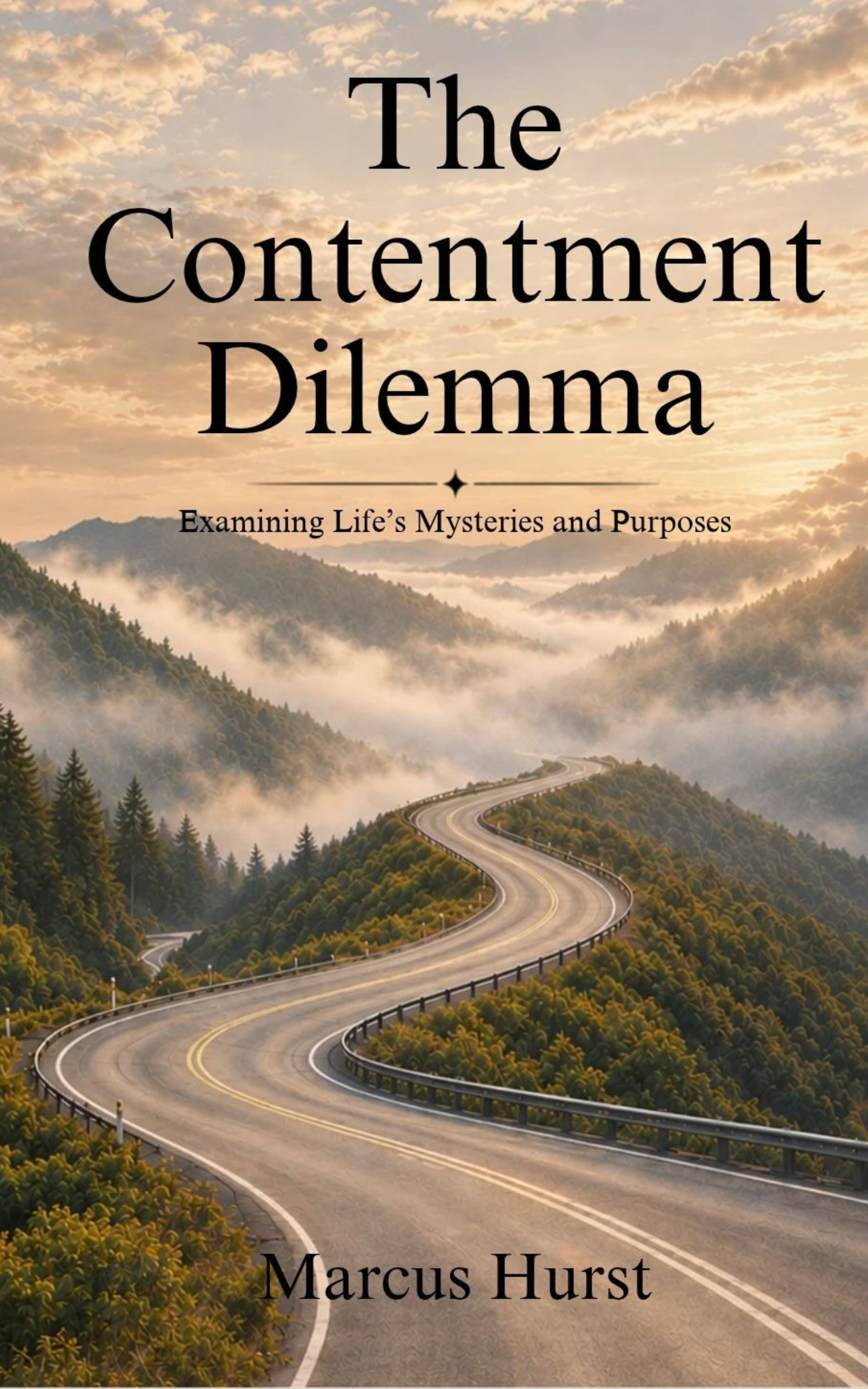
The Contentment Dilemma
by Marcus Hurst
Listen to this review
Marcus Hurst’s The Contentment Dilemma: Examining Life’s Mysteries and Purposes is an extended Christian argument that lasting peace comes not from satisfying personal desires but from surrendering to God. Across twelve chapters and a concluding set of questions, Hurst moves from the search for truth to suffering, sin, salvation, spiritual discipline, and relationship with God. The book’s central idea is clear and consistently felt: contentment is not a life without pain, but a life brought into alignment with the author’s understanding of Christian truth. Readers who share that framework will find earnest encouragement here; those seeking an open-ended or comparative exploration of life’s purposes may find the conclusions settled in advance.
The book is strongest when it makes its abstract argument personal. Hurst draws on his experiences of losing a first job, later accepting a similar position, managing financial uncertainty, and praying through moments of distress. In Chapter 2, he describes learning humility through dismissal and a subsequent job that proved meaningful; in Chapter 10, unexpected income and free milkshakes become small illustrations of what he understands as divine provision. These anecdotes give the book a plainspoken, testimonial quality and show what surrender means in ordinary decisions, not just in doctrine. His account of waking restless in 2021, praying for relief from what he identifies as Satan’s presence, is especially revealing: readers see both the intimacy of his faith and the interpretive lens through which he makes sense of experience.
Hurst also gives the book a memorable vocabulary. The recurring “me-infection” names self-centeredness as a contagious spiritual disorder, while the image of people orbiting themselves rather than their Creator gives the argument a useful organizing metaphor. Chapter 1’s contrast between abundant modern life and persistent emptiness establishes the problem effectively, and the later chapters develop a coherent response: truth requires humility, humility makes surrender possible, and surrender enables a deeper relationship with God. The frequent use of Scripture, hymns, and cited Christian writers situates the work in a recognizable devotional tradition. Its direct address to “friend” and its conversational questions make it accessible to readers accustomed to sermons, Bible studies, and personal testimony.
There is genuine emotional force in the treatment of suffering. Chapter 4 gathers several possible functions of adversity—correction, education, growth in faith, and solidarity—and connects them to biblical passages and personal examples. The book is at its most compassionate when it acknowledges that suffering can be devastating and that some harms, including rape and murder, are wrongs inflicted on victims. Yet this discussion also exposes a significant limitation: Hurst repeatedly interprets suffering as God-sent refinement or adjustment, sometimes with more certainty than the subject permits. Statements that all pain has a purpose, that problems are ultimately for our best, or that God does not give more than a person can bear with divine help may comfort some readers but can feel reductive to people facing trauma, chronic illness, bereavement, or depression. The brief acknowledgment that some suffering has no merit does not fully resolve the tension between that recognition and the chapter’s broader assurances.
The treatment of dissent is another point where the argument narrows. Hurst presents naturalism as an attractive escape from moral accountability and often frames unbelief as resistance to truth, pride, or Satan’s deception. He does include questions about other religions and admits, in one answer, that he cannot guarantee he has the best response. That candor is welcome, but it sits beside confident claims that other religious experiences must be categorized as either God or Satan and that Christian peace is unique. The book does not give competing worldviews much space to explain themselves on their own terms. Some skeptical or religiously diverse readers may therefore feel diagnosed rather than engaged. Similarly, the assertion that much of what people call depression is exhaustion from self-sovereignty risks collapsing a complex experience into a spiritual explanation.
Structurally, the volume is comprehensive but often repetitive. Chapters return again and again to the same sequence—self-rule breeds dissatisfaction, truth exposes sin, and surrender restores peace—while recurring metaphors, quotations, hymns, and exhortations sometimes slow the progression. The numbered questions provide signposts, but several answers extend rather than complicate the central case. A more selective structure, clearer separation between personal testimony and theological claim, and more sustained engagement with difficult counterarguments would sharpen the book. Its editorial presentation also deserves attention: the supplied text contains inconsistent spelling and spacing, and its chronology needs clarification. The front matter gives a 2023 copyright, while later passages cite 2026 research and describe a July 2026 visit to Auschwitz. That may reflect a later edition, but the publication timeline and the supporting dates should be made clear. The bibliography’s mixture of books, webpages, and sources whose origins are marked unknown also calls for careful verification, particularly where the text relies on statistics.
The Contentment Dilemma is a sincere, strongly conviction-led work whose chief value lies in the author’s personal witness and practical emphasis on prayer, confession, forgiveness, Scripture, and Christian fellowship. It is not a neutral inquiry, and its assurances about suffering and its explanations of nonbelief may limit its reach. Readers in conservative Christian communities, especially those seeking devotional encouragement and a direct call to spiritual surrender, are the audience most likely to value it. Those readers may also benefit from approaching its confident claims about pain and mental health with care.
Share-ready review images
Download square and vertical images for posts, stories, newsletters, and media kits.
For authors
Want a review page like this for your book?
Upload your manuscript, choose a review tier, and get a permanent public editorial review page you can share with readers.
Review My Book← Back to Reviews
