Religious Memoir
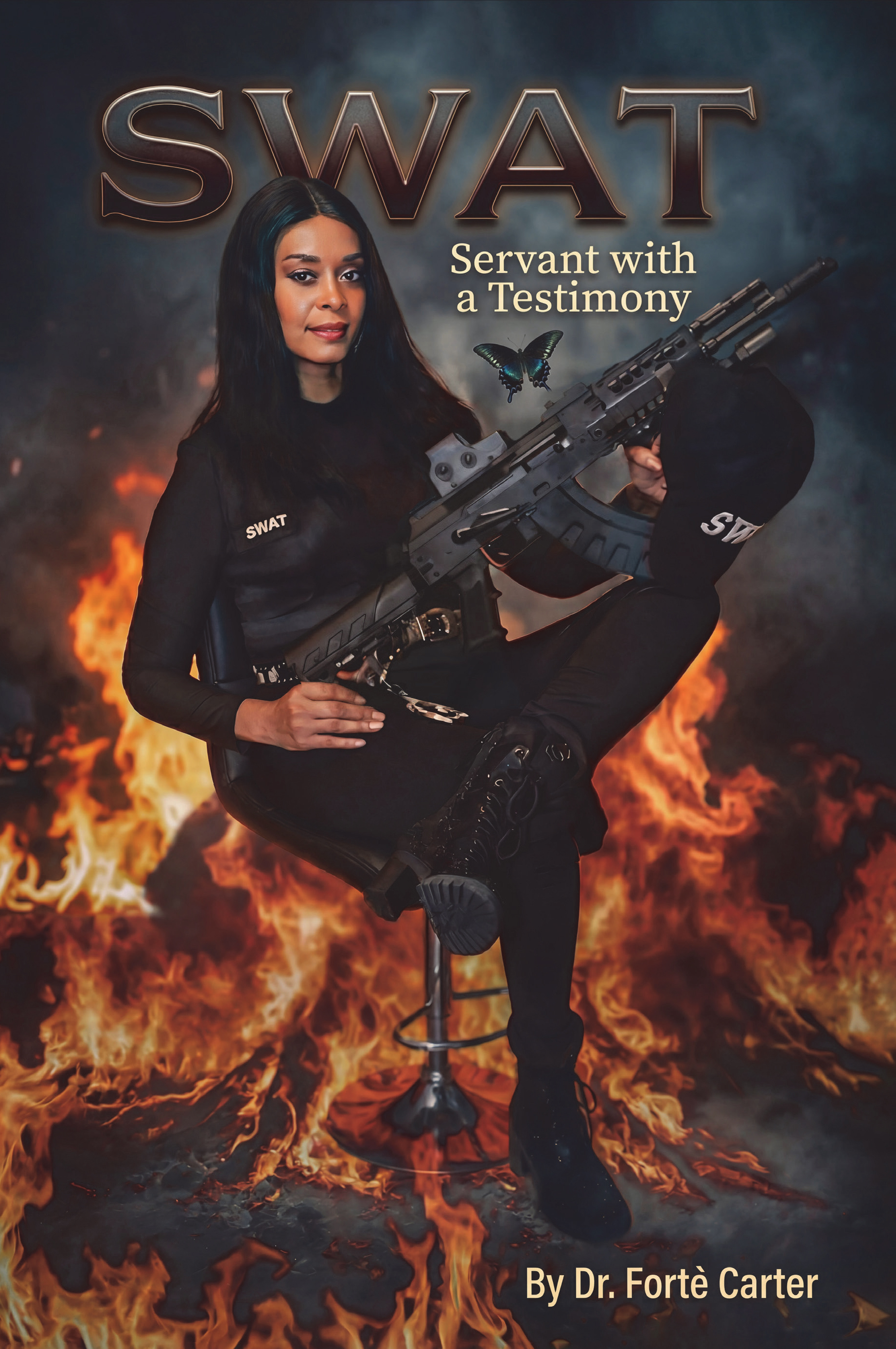
SWAT Servant with a Testimony
by Dr. Fortè
Listen to this review
SWAT Servant With a Testimony is an unusually hybrid memoir: part spiritual testimony, part illness narrative, part self-help workbook, and part devotional sermon. Dr. Forté Carter frames her story around the image of a “black butterfly,” a symbol that gives the book its governing metaphor of transformation through darkness. Across its many chapters—especially “This Is Where My Story Begins,” “Bewildered, Lost and Frantic,” “The Quicks and Season: Fighting for Breath, Fighting for Faith,” and “I Escaped from the Abyss”—the book returns insistently to the same core event: a seven-year ordeal of panic attacks, weight loss, voice loss, recurring ER visits, and repeated medical uncertainty, all interpreted through a religious lens of endurance and deliverance.
The book’s greatest strength is its emotional candor. Carter writes from a position of lived distress rather than detached retrospection, and that immediacy gives the memoir force. Her description of walking to the front door each morning and asking God, “Do You hear me?” is memorable not because it is polished but because it is repetitive, sincere, and rooted in lived exhaustion. The journal sections from 2017–2019 are especially effective in this regard. They capture the granular, discouraging rhythm of chronic uncertainty: hot flashes, nervousness, ear ringing, bloating, weakness, and the obsessive search for something—anything—that might explain the body’s betrayal. The cumulative effect is persuasive. Even when the prose becomes melodramatic, the underlying experience of fear and disorientation feels real.
Carter is also at her best when she writes concretely. Her list of “self-diagnosed remedies” is one of the book’s most distinctive features. Rubber bands on the wrist, lavender oil, fidgets, hypnosis podcasts, humidifiers, TBN, acupuncture, pineapple juice, and anointed oil together create a vivid map of improvised survival. Whether or not a reader accepts every remedy or the explanatory framework around them, the inventory is specific enough to feel embodied rather than abstract. Likewise, the recurring details about her dog Lady Carter, her assistant Anthony Martin, and the supportive figures who “showed up” help the book avoid becoming purely self-regarding. The people who called, prayed, brought food, and walked with her give the memoir a social texture that matters.
Structurally, however, the book is uneven. It often repeats the same emotional arc—collapse, prayer, medical frustration, self-directed experimentation, momentary relief, renewed despair—without always advancing the narrative in a fresh way. Several chapters function less as distinct episodes than as thematic reiterations of the abyss motif. That repetition may be intentional, mirroring the monotony of prolonged suffering, but on the page it can also feel overextended. The result is a book that is most powerful in bursts rather than as a continuous reading experience. Readers seeking a tightly shaped memoir may find the expansiveness wearying.
The tonal shifts are another challenge. Carter’s voice can move from raw anguish to comic asides, capitalized exclamations, colloquial punchlines, and devotional exhortation within a few paragraphs. At times that volatility is energizing; it captures how a person in crisis may swing between despair, defiance, and humor. At other times it creates tonal whiplash, especially when the book pivots from a serious account of medical dismissal to lines such as “LOL” or to highly stylized declarations of being a “fashion queen.” This stylistic mix gives the memoir personality, but it also makes the book feel less disciplined than it could be.
Another limitation is the book’s treatment of diagnosis and healing. Carter is explicit that this is “not a medical manual,” yet the memoir repeatedly enters explanatory territory, including claims about psychosomatic disorder, menopause, and various natural remedies. The narrative is strongest as testimony, but weaker when it begins to generalize from that testimony into quasi-clinical guidance. The long chapter on “The Truth About Prevention” and the extended discussion of psychosomatic stamina read more like self-help essays than memoir, and they sometimes flatten the complexity of the experience into aphorism. Readers looking for careful medical context or a more rigorously argued account of diagnosis will not find it here.
The same is true of the book’s later spiritual and relational turns. Stephan, the “knight in shining armor,” functions more as a symbolic catalyst than as a fully developed character. His role is narratively important—he marks the return to church and the lifting of the “chains”—but the emotional logic of that turnaround is asserted more than demonstrated. Likewise, the later chapter involving a Muslim friend and reflections on the Nation of Islam broadens the book’s scope, but it arrives somewhat abruptly and reads more like a side conversation than an integrated development of the memoir’s central argument.
Still, the book’s ambition is real. It wants to testify, to comfort, to interpret, and to instruct. That ambition occasionally overreaches, but it also gives the work its urgency. Carter is speaking not just to readers but to women, believers, and anyone who has been told by doctors or by society that their pain is illegible. In that sense, SWAT Servant With a Testimony is less a polished literary memoir than a public act of witness, one that values spiritual survival over narrative elegance.
Recommended most strongly for readers who want a faith-centered testimony about chronic, medically ambiguous suffering, especially Christian readers drawn to devotional memoirs and women navigating menopause, anxiety, or dismissal by the healthcare system. Readers who prefer restrained prose, tighter structure, or medically grounded memoirs may find it frustrating. But for its intended audience, the book offers sincerity, specificity, and a fierce insistence that survival itself can become a form of praise.
Share-ready review images
Download square and vertical images for posts, stories, newsletters, and media kits.

For authors
Want a review page like this for your book?
Upload your manuscript, choose a review tier, and get a permanent public editorial review page you can share with readers.
Review My Book← Back to Reviews
