Children's Nonfiction
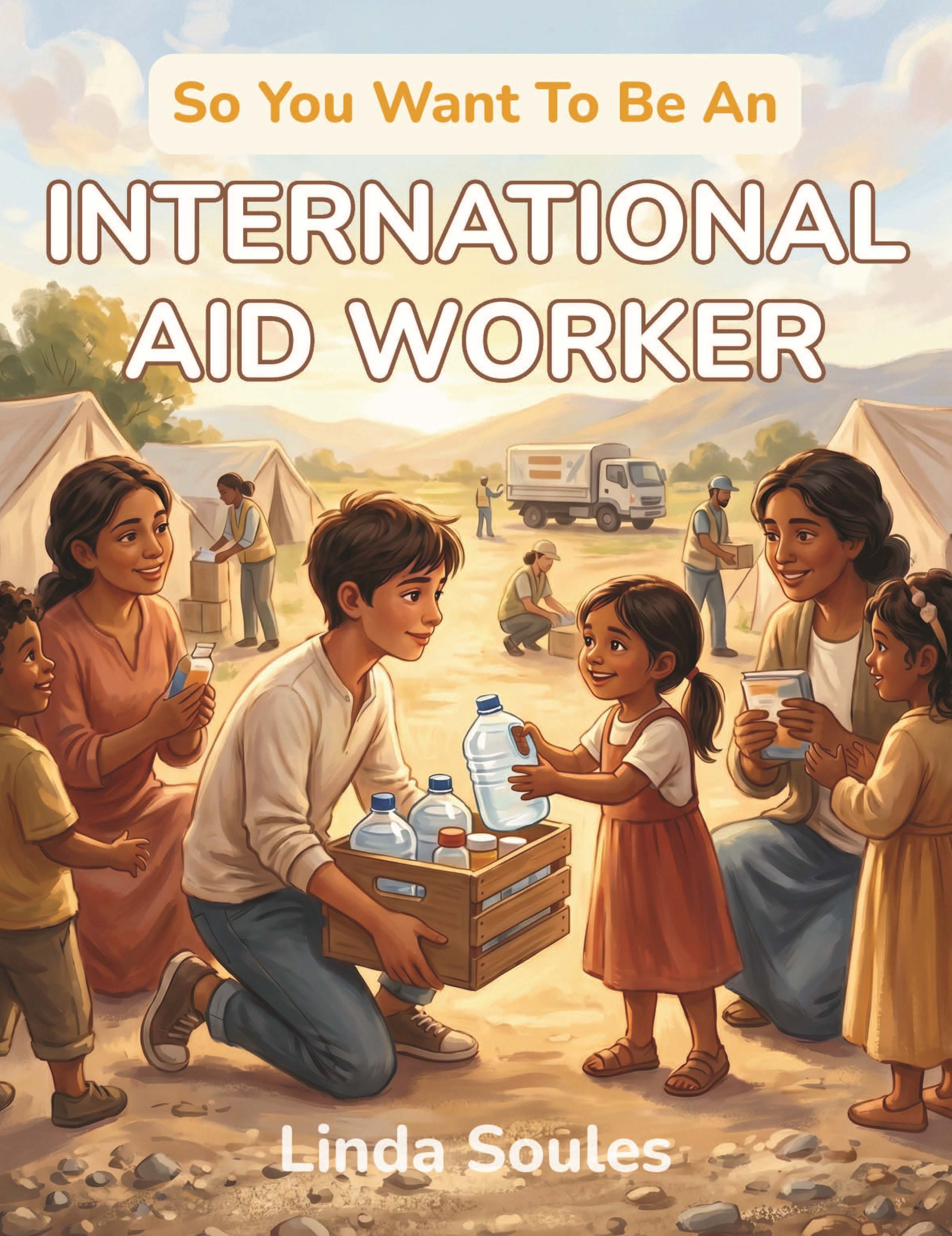
So You Want To Be An International Aid Worker
by Linda Soules
Listen to this review
Linda Soules’s So You Want to Be an International Aid Worker is a career guide for young readers that takes its subject more seriously than its inviting, conversational voice might initially suggest. Rather than presenting humanitarian work as a sequence of dramatic rescues, it explains the ordinary systems, difficult choices, and local relationships that make effective aid possible. Its central argument is that helping well requires not only compassion but also competence, humility, and respect for the people receiving support.
The book’s strongest feature is its insistence that aid workers do not arrive to “save” helpless strangers. In the opening chapter, Soules describes people affected by crisis as parents, students, farmers, and shopkeepers who are often already working hard to help themselves and one another. The later chapters extend this idea through the principles of humanity, impartiality, neutrality, and independence, as well as the instruction to “do no harm.” These concepts are explained through accessible scenarios: a truck stopped at a checkpoint, limited rice for waiting families, or free food distributed in a way that could damage local livelihoods. The examples make abstract ethics intelligible without pretending that every decision has an easy answer.
The practical detail is equally valuable. The chapters on clean water, supply chains, needs assessments, and local knowledge show how much humanitarian work depends on planning and listening. The “Tools of the Trade” section ranges from UNICEF’s School-in-a-Box to cash assistance and the hazards of unsolicited donations, including winter coats sent to tropical Sri Lanka. The acronym SWEDOW (“stuff we don’t want”) gives young readers a memorable way to understand why good intentions do not guarantee useful help. A later calculation asks readers to work out how many water-truck deliveries a camp of 50,000 people would require. Such details give the book an educational texture beyond general encouragement.
Its structure is designed to sustain curiosity. Brief, clearly separated topics move from what aid workers do to where they work, the rewards and risks, preparation, and related careers. The imagined day in a relief operation is especially effective: a broken tap, a delayed delivery, a coordination meeting, and a goat eating part of a distribution list turn routine work into a readable narrative without disguising its routine nature. “Try It: Pack the Truck!” and the preparation suggestions also invite readers to apply the ideas rather than merely admire the profession. The glossary provides useful reinforcement for terms such as “capacity building,” “impartiality,” and “internally displaced.”
Historical profiles add human dimension without making the book depend on a single heroic model. Henri Dunant’s response to wounded soldiers at Solferino introduces the origins of organized humanitarian aid; Sadako Ogata’s decision to assist Kurdish families trapped on the wrong side of a border illustrates the tension between rules and urgent need. Salva Dut’s journey from refugee to founder of Water for South Sudan offers a particularly apt example of someone who once needed help later contributing to it. Eglantyne Jebb and Fridtjof Nansen broaden the account further, showing that humanitarian work can include advocacy, rights, and practical solutions for stateless people, not only emergency distributions.
Soules’s prose is direct, warm, and often humorous. The goat, the troublesome truck, and the explanation of “very married” versus “very tired” make the work approachable for middle-grade readers. Humor is not used to erase the subject’s gravity: the chapters on burnout, family separation, danger, and the anguish of limited resources acknowledge that aid work can exact a serious cost. Particularly commendable is the recognition that most first responders and many professional aid workers are local people, while international staff are there to support them. The book also explains that professionals should travel with an organization, a defined role, and supplies, rather than independently turning up after a disaster.
There are limits to the treatment. The book’s moral vocabulary—dignity, listening, humility, shared humanity—recurs so often that some passages feel like variations on the same lesson. Repetition may help younger readers retain the principles, but it can also narrow the discussion. The account outlines why neutrality and independence matter, for example, without exploring at comparable length the conflicts that arise when those principles are difficult to maintain or when aid organizations themselves make mistakes. The histories and examples are necessarily compressed, and readers seeking a detailed account of humanitarian politics, institutional accountability, or the varied meanings of displacement will need more specialized material. Some of the playful asides may also feel too breezy to readers who prefer a more restrained tone when discussing famine, war, and death.
The material supplied does not include the book’s illustrations, so their contribution cannot be assessed here. The text itself, however, is strongly organized for readers roughly in the middle-grade range, with short explanations, practical questions, and concrete examples. It is not a recruitment pitch so much as an introduction to the realities behind a compelling vocation—and a reminder that useful preparation can begin with service close to home.
Recommendation: This is a worthwhile choice for curious readers, especially ages 10 to 14, who are interested in humanitarian careers or want a clear introduction to how disaster relief and longer-term aid work function. It will be most valuable to young readers ready to encounter both the appeal of helping and the patience, expertise, and restraint that responsible help demands.
Share-ready review images
Download square and vertical images for posts, stories, newsletters, and media kits.
For authors
Want a review page like this for your book?
Upload your manuscript, choose a review tier, and get a permanent public editorial review page you can share with readers.
Review My Book← Back to Reviews
