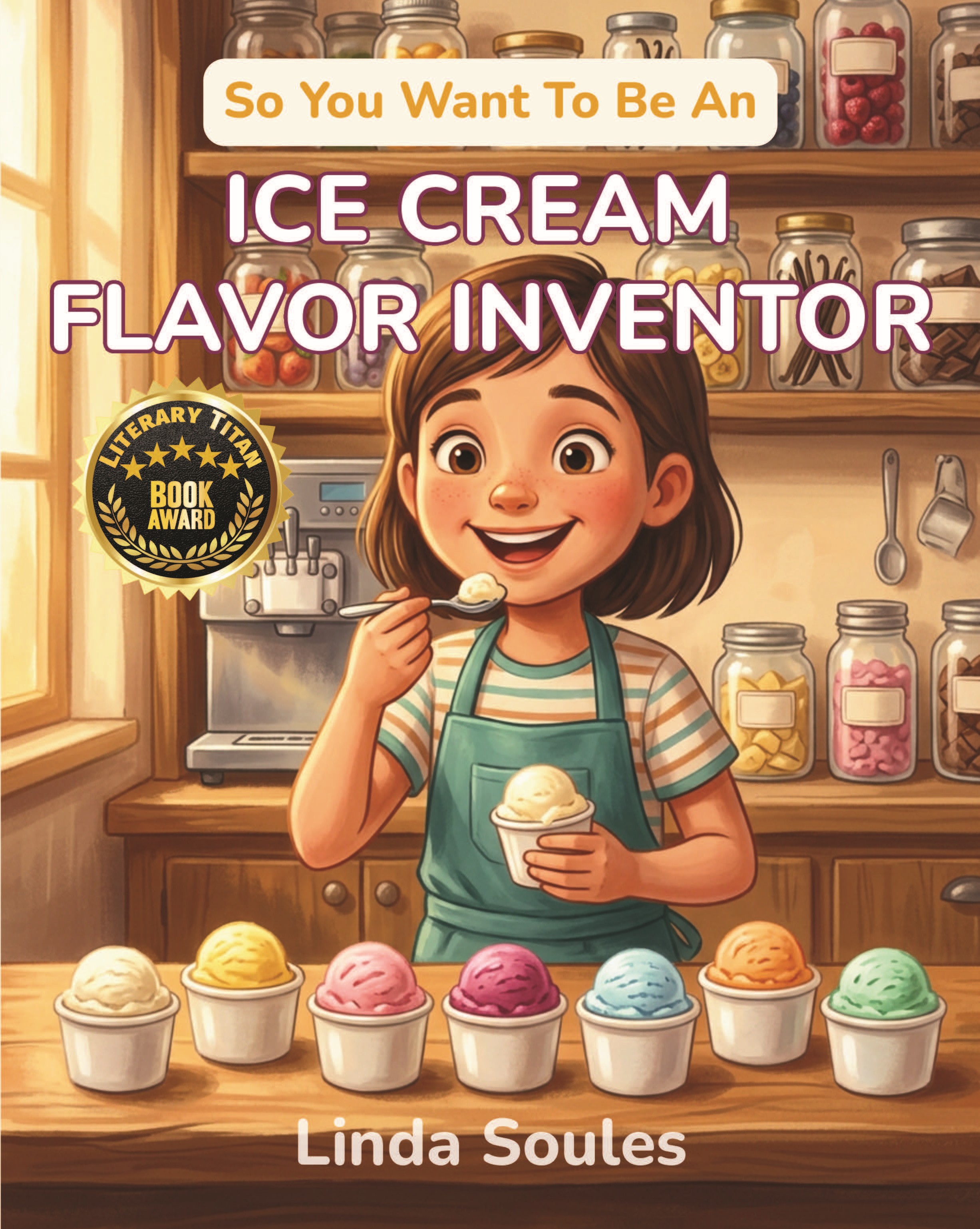
Children's Nonfiction
So You Want To Be An Ice Cream Flavor Inventor
by Linda Soules
Listen to this review
So You Want To Be an Ice Cream Flavor Inventor? makes a persuasive case that inventing a scoop is more than an excuse to eat dessert. Linda Soules presents the work as a meeting of culinary imagination, sensory attention, and food science, and the book’s most engaging idea is that flavor is something we actively construct. Its opening jelly-bean test—taste with your nose pinched, then release it—gives young readers a quick, memorable way to experience the relationship between smell and taste. From there, the book steadily turns curiosity into a possible career.
The writing is lively and accessible, often using metaphor to make technical ideas stick. Flavor notes are compared to musical notes; a palate is a muscle to be trained; and an inventor is described as a translator among colleagues who speak the languages of chemistry, data, machinery, and art. These images help explain why the job involves both intuition and method. The practical details add substance: readers learn how a batch freezer churns and freezes, why ice-crystal size affects texture, how a refractometer measures sugar, and why a frozen mix may need to taste sweeter than the finished product. The glossary reinforces these concepts without interrupting the main narrative.
The book is particularly effective when it shows invention as an iterative process rather than a flash of inspiration. The mango-chili example tracks successive batches as the balance shifts among mango, chili, and lime; the “Day in the Life” schedule gives that process a believable workplace rhythm. In the sample day, an inventor adjusts brown-butter oat pieces, considers consumer research, and rejects passion-fruit substitutes that do not taste true to the fruit. The harder parts receive welcome space, too: many ideas fail, seasonal deadlines can strain creativity, and a flavor that works in sorbet may not survive the addition of cream. This helps the career portrait feel less like a fantasy built around endless tasting.
History and suggested activities broaden the book’s appeal. The accounts of John Harrison, Dana Cree, and Augustus Jackson show different routes into the field, while Jackson’s willingness to share his methods with other Black confectioners gives the historical section a meaningful community dimension. At home, readers can compare foods blind, keep a flavor journal, or make an unchurned frozen treat and observe its icy texture. These exercises turn the book’s central message—pay attention—into something a child can practice rather than merely admire.
Soules also connects flavor to memory, culture, and the pleasure of sharing food. The examples of matcha, kulfi, horchata, hibiscus, ube, and rosewater suggest that a flavor inventor’s curiosity can extend well beyond familiar supermarket options. The later reflection on food as a carrier of heritage gives this career an emotional dimension, and the closing note broadens “attention” into a way of noticing music, seasons, and other people. At its best, the book leaves readers with more than a job description: it invites them to treat curiosity as a habit and creative work as a form of care.
That expansive, encouraging voice can also become repetitive. The ideas that inventors listen to ingredients, learn through repeated tasting, and make people happy recur across several sections, sometimes with similar examples and language. The “Could This Be Your Job?” passage, the author’s note, and the series description all return to the same invitation, so the book’s final stretch feels less concise than its practical sections. A few lines also appear to have escaped editing: after describing a finished flavor, the text says, “Only then do you open their eyes,” where the shift in pronouns is confusing. Such slips are minor, but they stand out in an otherwise carefully guided introduction.
The science is engaging, though readers should understand that this is an introductory overview, not a technical reference. Claims such as smell accounting for “about 80 percent” of flavor perception are stated confidently and repeated, but the book does not explain the limits or context of that figure. Likewise, the broad cultural examples are evocative but brief: cuisines sometimes appear as collections of ingredients to adapt, with little discussion of how an inventor might work with the people and traditions behind them. Given the book’s emphasis on honoring heritage, more concrete attention to collaboration and sourcing would strengthen that dimension. The career picture is also weighted toward creativity and sensory skill; it offers less detail about education, hiring, commercial constraints, or the everyday realities of food-industry work.
These limitations do not undo the book’s central achievement. It makes a specialized career intelligible to young readers through concrete experiments, accessible explanations, and a candid account of trial and error. It will be most valuable to curious readers around ages 10–14 who enjoy food, science, and hands-on projects, as well as parents or teachers looking for a conversation starter about careers that combine art and technical knowledge. Readers seeking a rigorous science guide or a comprehensive account of the food industry will need additional resources, but as an inviting first look at flavor invention, this is a thoughtful and useful choice.
Share-ready review images
Download square and vertical images for posts, stories, newsletters, and media kits.
For authors
Want a review page like this for your book?
Upload your manuscript, choose a review tier, and get a permanent public editorial review page you can share with readers.
Review My Book← Back to Reviews
