Children's Nonfiction
So You Want To Be An Animal Rescue Worker
by Linda Soules
Listen to this review
So You Want To Be An Animal Rescue Worker is a warm, accessible introduction to a career that its author is careful not to present as easy. Aimed at young readers considering what they might do as adults, it combines an account of daily responsibilities with practical ways to help now. Its central idea—that rescue work means seeing an animal as a life in need, not a nuisance—is clear and affecting. The book’s strongest passages make that care tangible; its main limitation is that its lyrical encouragement sometimes outpaces the complexity of the work it describes.
The opening, “What If You Were An Animal Rescue Worker?,” establishes the book’s emotional register with a shelter door as its governing image: a threshold between being “alone and held” and between “invisible and seen.” This is vivid writing for a career guide, and it gives a young reader a memorable way to understand the work. The chapter on what rescue workers do then broadens the picture beyond kindness, describing them as medical first responders, behavioral observers, advocates, matchmakers, and social workers. That range is one of the book’s most useful insights. Rescue is not simply a matter of liking animals; it requires judgment, communication, persistence, and attention to people as well.
The structure is well suited to exploratory reading. Short, clearly named sections move from workplaces and tools to rewards, difficulties, preparation, and possible fit. “The Tools of the Trade” is especially effective in making practical skills legible to children: catch poles and traps, first-aid supplies, and microchip scanners are explained in plain language, while “The Rescuer’s Calm” makes patience itself a tool. The discussion of animal body language—distinguishing a fearful cat’s hiss from meanness, for example—helps turn compassion into an observable practice. A glossary reinforces terms such as “triage,” “foster,” and “TNR,” and the later suggestions to volunteer, organize a supply drive, or make enrichment toys give readers modest, age-appropriate ways to act.
The book also makes a commendable effort to show the strain behind the appealing moments. “The Hardest Parts of the Job” names grief, limited resources, difficult cases, and compassion fatigue rather than treating every rescue as a success story. The chapter on legal constraints adds a less familiar dimension: rescuers may need to wait for legal permission before intervening in a harmful situation. And the explanation that shelter intake is connected to upstream problems—including housing restrictions, veterinary costs, and unplanned litters—moves the discussion from individual acts of rescue toward prevention. The image of rescue as “bailing out a flooding boat” is simple but apt, and the book’s argument for spay-and-neuter programs follows coherently from it.
“A Day in the Life” is the most concrete section, following a worker from morning rounds through a field call, fundraising for a senior cat’s surgery, training, and an adoption. The return of the frightened dog who takes a treat in the morning and meets a family later gives the vignette a satisfying shape. It also shows how much of the job consists of tasks between the dramatic moments: record-keeping, phone calls, and preparing an empty kennel. The chapters on colleagues and the ways rescue workers help people add welcome breadth, presenting the work as collaborative and community-based rather than as a solitary act of heroism.
Still, the book’s prose can lean heavily on repetition and affirmation. The ideas that every life deserves a chance, that workers return tomorrow, and that a child who cares might become a rescuer recur in several forms. This repetition may be reassuring to the intended audience, but it sometimes reduces room for further explanation. The tone also tends to resolve difficult realities into encouragement: workers cannot help every animal, the book acknowledges, but the emotional answer is often that helping the next one is enough. That is humane, yet readers seeking a more sustained account of how professionals manage conflicting priorities, burnout, or painful decisions will find the treatment introductory.
Some practical claims would benefit from more qualification or visible sourcing. The discussion of animals as property and the difficulties of intervening in bad homes is important, but the broad phrasing can make legal rules sound more uniform than the book establishes. Several statistics and historical claims appear without citations in the provided text. The author’s “Want To Learn More?” section does offer organizations, websites, books, and suggested activities, which gives readers places to continue; however, the core chapters would be stronger if readers could more easily trace factual claims to sources. The book also describes shelters as places designed to make animals “healthy, friendly” and appealing to adopters—a formulation that risks implying that friendliness is a necessary measure of an animal’s worth, despite the book’s otherwise generous attention to fearful, feral, senior, and behaviorally challenging animals.
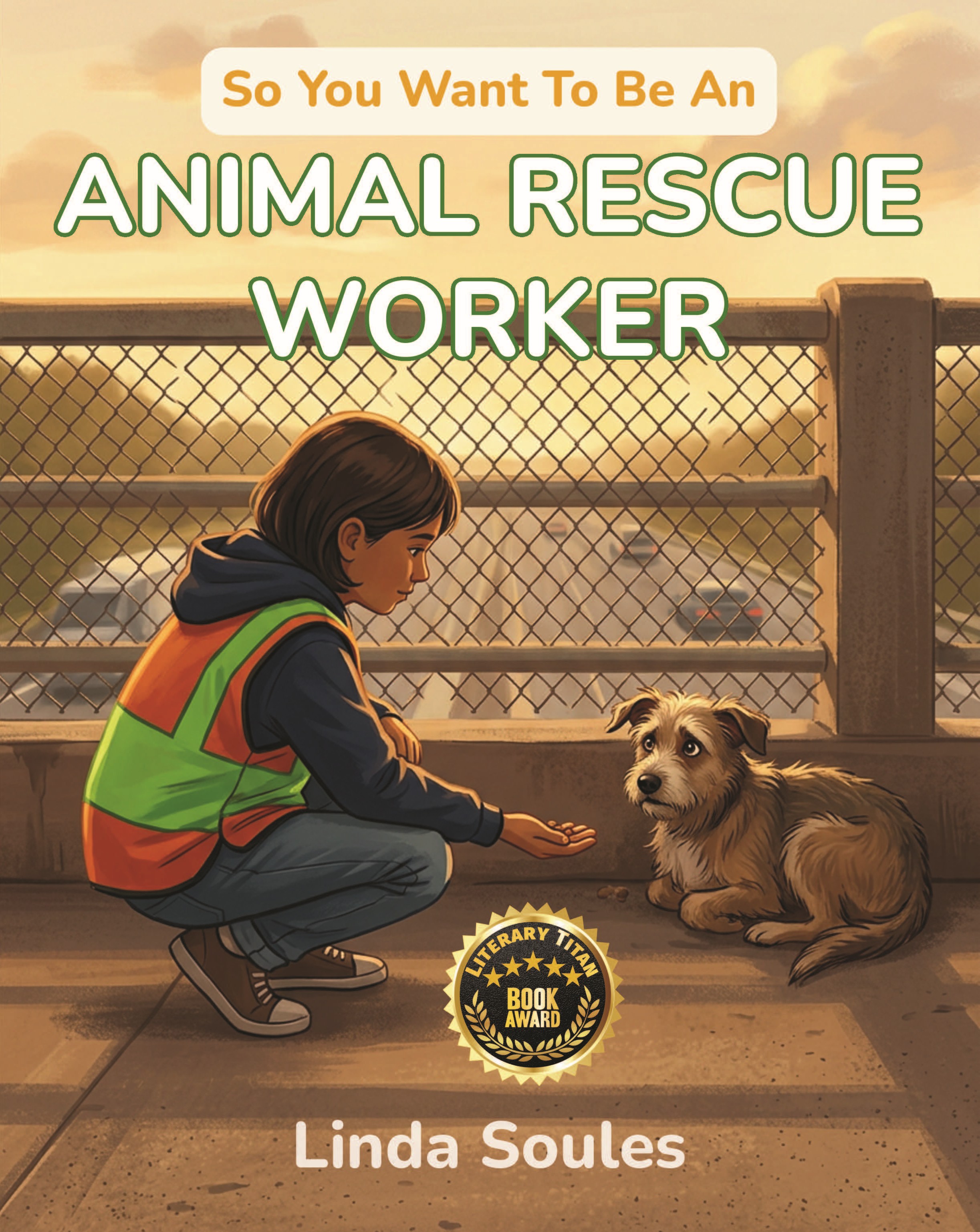
The author’s note about AI-assisted illustrations is transparent, but the supplied material does not include the images, so their quality cannot be assessed here. Overall, this is a compassionate, readable career introduction whose best contribution is to show that animal rescue depends on observation and practical work as much as feeling. It will be most valuable to roughly middle-grade readers who care about animals, want an inviting first look at rescue work, or are ready for small ways to help through a family or local shelter. Readers looking for detailed professional training or a rigorous, sourced account of animal-welfare policy will need to go beyond it.
Share-ready review images
Download square and vertical images for posts, stories, newsletters, and media kits.

For authors
Want a review page like this for your book?
Upload your manuscript, choose a review tier, and get a permanent public editorial review page you can share with readers.
Review My Book← Back to Reviews
