Children's Nonfiction
So You Want To Be An Actor
by Linda Soules
Listen to this review
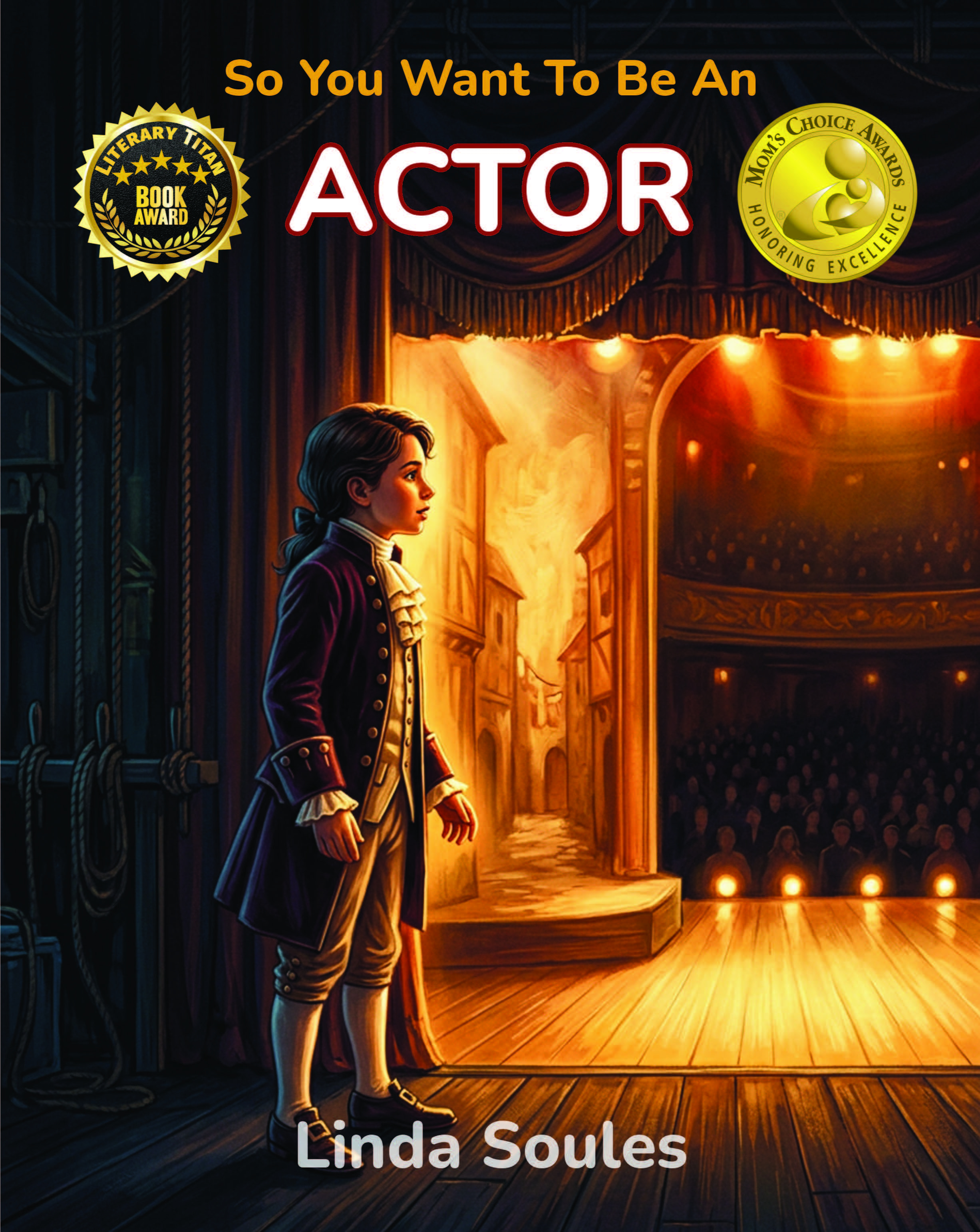
So You Want to Be an Actor by Linda Soules is a career introduction for young readers that treats acting as both an imaginative calling and a demanding craft. Its most valuable corrective is announced early: performing before an audience is only the visible part of the work. Script analysis, rehearsal, research, physical preparation, auditioning, and coping with rejection all belong to the job. That emphasis makes this more substantial than a simple celebration of stage glamour, and gives aspiring performers a clearer sense of what they would be choosing.
The book’s strongest passages explain how actors build a character from specific questions and observations. Readers are encouraged to ask what a character wants and fears, attend to the way a body carries emotion, and listen to scene partners rather than merely waiting for a cue. The “Day in the Life” schedule makes those ideas concrete through script work, research into a marine engineer’s world, a table read, movement coaching, and memorization. It is a carefully staged example rather than a universal workday, but it effectively shows how many different kinds of preparation may feed a performance.
Soules also resists presenting acting as a reliable route to fame. The chapters on rejection and financial instability plainly state that most actors hear “no” far more often than “yes,” that employment can be irregular, and that many performers combine acting with other jobs. The line “The craft is the career” neatly captures the book’s effort to separate artistic purpose from celebrity. Its advice to work backstage, audition for a school or community production, read scripts aloud, and keep a people-watching journal gives readers accessible ways to explore the field without pretending that enthusiasm alone guarantees a professional future.
The book’s central theme is empathy. Acting is described as a way to inhabit another person’s experience and help an audience recognize feelings it may not have been able to name. This idea gives the guide emotional coherence, particularly in “How You Help People” and the author’s concluding note. The book also acknowledges that such emotional openness can carry a cost: grief, anger, and vulnerability do not necessarily disappear when rehearsal ends. The suggestion that performers must learn to approach difficult feelings without becoming trapped in them is a thoughtful inclusion. It complicates the otherwise idealistic account and opens a useful conversation about care and sustainability.
The prose is conversational and deliberately stirring, often using short sentences, direct address, and images of light, darkness, and discovery. This can make the material inviting to readers who might be intimidated by a conventional career handbook. The discussion of a live audience’s changing responses, in contrast with film’s close attention to a glance or pause, is particularly effective in conveying differences between stage and screen work. Named examples such as Charlie Chaplin, Viola Davis, and Meryl Streep offer points of reference, while the glossary and “What You Can Do to Prepare Right Now” section give the book a useful, browsable structure.
That same lyrical approach sometimes becomes repetitive. Ideas about empathy, truth, vulnerability, and making audiences feel less alone recur in several chapters, and the book often restates its inspirational message instead of extending the practical discussion. The enthusiastic suggestion that actors become better human beings through their work is appealing, but is presented as a broad conclusion rather than a possibility with limits. Likewise, some statements about acting’s history, influence, and techniques are delivered with considerable certainty, while anecdotes and sweeping claims are not accompanied by citations in the supplied text. Young readers are given a compelling interpretation of acting, but not always enough context to distinguish a general principle from an illustrative claim.
As a result, the guide is more successful as an invitation than as a comprehensive account of the profession. It introduces auditions, headshots, reels, agents, unions, and the distinction between stage and screen, but these subjects receive less practical detail than the book’s reflections on character and emotional truth. Its sample day, with multiple specialists and a movement coach, may also represent a well-resourced production more readily than the varied circumstances of working performers. The recommended books, websites, and organizations help point readers toward further exploration, although the main text itself does not offer a detailed roadmap through training, employment, or the business side of a career.
For readers around the series’ stated ages of 10 to 14, this is an engaging and unusually candid starting point, especially for children drawn to performance but unaware of its less glamorous demands. Its combination of encouragement, practical exercises, and frank discussion of rejection makes it more useful than a purely inspirational portrait. Readers seeking detailed, step-by-step professional guidance—or a critical survey of acting methods and career pathways—will need additional resources. But young readers curious about the work behind a performance, and adults looking for a thoughtful way to begin that conversation, are the audience most likely to value this book.
Share-ready review images
Download square and vertical images for posts, stories, newsletters, and media kits.


For authors
Want a review page like this for your book?
Upload your manuscript, choose a review tier, and get a permanent public editorial review page you can share with readers.
Review My Book← Back to Reviews
