Children's Nonfiction
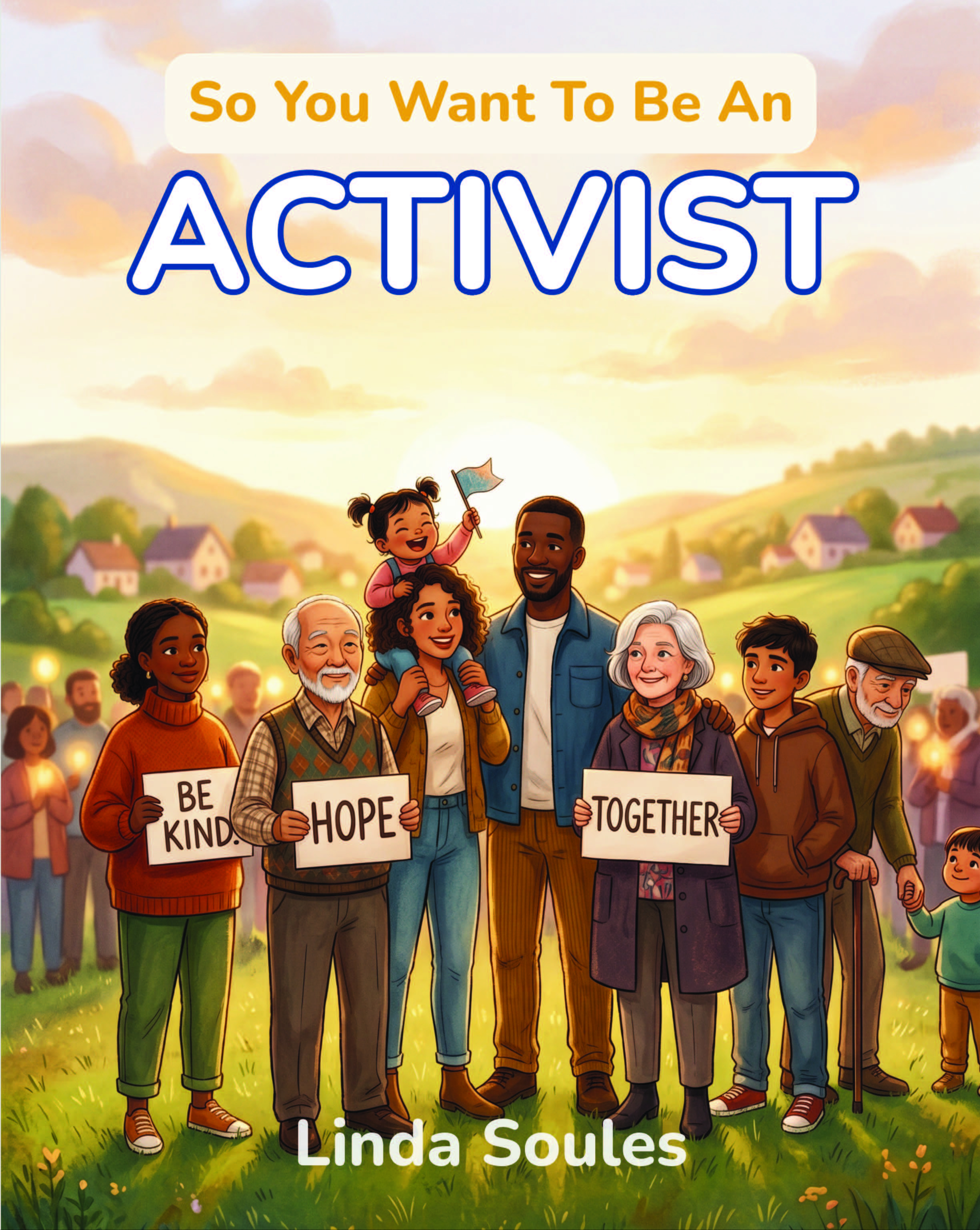
So You Want To Be An Activist
by Linda Soules
Listen to this review
Linda Soules’s So You Want to Be an Activist treats activism not as a sequence of stirring public gestures but as practical, collective work. Aimed at young readers, it begins with problems they might recognize—a polluted river, a broken school, a classmate being bullied—and follows the path from noticing injustice to organizing for change. Its strongest contribution is this demystification: rallies may make the news, the book observes, but campaigns also depend on reports, phone calls, testimony, meetings, and the less visible labor of keeping people involved.
The writing is direct, conversational, and often memorable. Soules explains terms such as “grassroots,” “lobbying,” and “mutual aid” in plain language, while using wry asides to keep the practical material lively. The chapter on “The Tools of the Trade,” for instance, makes a persuasive case for the spreadsheet alongside the more recognizable petition, megaphone, and protest sign. The joke that a campaign may be won by “the most organized list” rather than “the loudest voice” captures the book’s larger argument: useful change often depends on patient coordination more than spectacle.
The book also gives activism a credible working rhythm. Its sample day moves from news-reading and team check-ins to lobbying, drafting testimony, a meeting at city hall, and an evening community gathering. The detail that a two-minute statement must fit evidence and a personal story into roughly 270 words offers a concrete glimpse of the craft. More importantly, the account does not disguise the costs. “The Hardest Parts of the Work” discusses failed votes, unanswered calls, burnout, and the peculiar invisibility of preventing harm. Its reminder that sustaining a campaign requires protecting sleep, relationships, and one’s body is a valuable corrective to the familiar ideal of the tireless young crusader.
Several of the book’s most thoughtful passages emphasize listening and accountability. The section on “The People You Work With” insists that people directly affected by an issue are colleagues and potential leaders, not passive recipients of an activist’s help. The principle “nothing about us without us” gives ethical weight to the practical advice. Likewise, “The Most Important Qualities of an Activist” pairs moral conviction with humility, listening, and strategic patience. That combination makes the book less about righteous certainty than about learning to work alongside others, including people who disagree.
The historical profiles broaden its idea of who makes change. Frederick Douglass, Wangari Maathai, Malala Yousafzai, and Gandhi appear alongside Lois Gibbs, Bayard Rustin, Dolores Huerta, and Jennifer Keelan-Chaffins. The latter group supports the book’s attention to less celebrated organizing labor: Rustin’s logistical work on the March on Washington and Huerta’s role in farm-worker organizing complicate the tendency to remember movements through a single famous face. The profiles are brisk, but they give young readers several possible models of action rather than presenting activism as one personality type or tactic.
The structure is useful for browsing. Career information, practical preparation, a glossary, and a list of further reading and organizations make this more than an inspirational essay. The section on paid work is especially clear-eyed: it distinguishes unpaid community action, salaried advocacy jobs, and organizing alongside a separate career, while naming roles such as policy analyst and union representative. That range helps avoid the misleading implication that activism must be either a full-time profession or a purely voluntary calling.
Still, the book’s earnestness sometimes turns into repetition. The idea that ordinary people can change the world recurs in the opening, the chapters on impact and preparation, the author’s note, and the final appeal. Repetition can reinforce a message for younger readers, but here it occasionally crowds out further complexity. The confident, uplifting cadence also sits uneasily beside the book’s more sober account of defeat and long-term strain. Although it acknowledges disagreement over disruption and nonviolence, it mostly presents organizing as a broadly shared process, with limited space for conflicts among allies, competing priorities, or the ways a campaign’s choices can have unintended effects.
Historical examples are necessarily compressed, but some causal links are presented with more simplicity than the subject warrants. The account of Jennifer Keelan-Chaffins, for example, places her Capitol steps demonstration beside the signing of the Americans with Disabilities Act four months later; younger readers could infer a direct and uncomplicated connection. The book’s many sweeping statements about rights, campaigns, and what “works” would also benefit from source notes or a bibliography that lets readers investigate particular claims. The “Want to Learn More?” list is a useful start, but it does not serve as documentation for the historical accounts. In the supplied text, some contents and layout details also appear garbled—“Activ ist,” “3:o0 PM,” and broken-up headings—which may be transcription or formatting artifacts rather than problems in the finished book, but they interrupt the reading here.
The author’s note discloses that the illustrations are AI-assisted and describes the process and ethical considerations behind them. Since no illustrations are included in the material provided, their quality or relationship to the text cannot be assessed. The closing catalogue of other titles in the series is also a noticeable shift from the book’s subject into series promotion, though it does not undo the usefulness of the preceding material.
This is a promising introduction for readers roughly 10 to 14 who want to understand civic action, explore a possible career, or find a manageable first step toward a cause they care about. Its clearest strength is the insistence that activism involves listening, planning, teamwork, and endurance as much as public protest. Readers seeking a more rigorous history or a nuanced account of strategic and political disputes will need additional sources, but young readers looking for an accessible, practical invitation to participate are likely to find it encouraging and useful.
Share-ready review images
Download square and vertical images for posts, stories, newsletters, and media kits.
For authors
Want a review page like this for your book?
Upload your manuscript, choose a review tier, and get a permanent public editorial review page you can share with readers.
Review My Book← Back to Reviews
