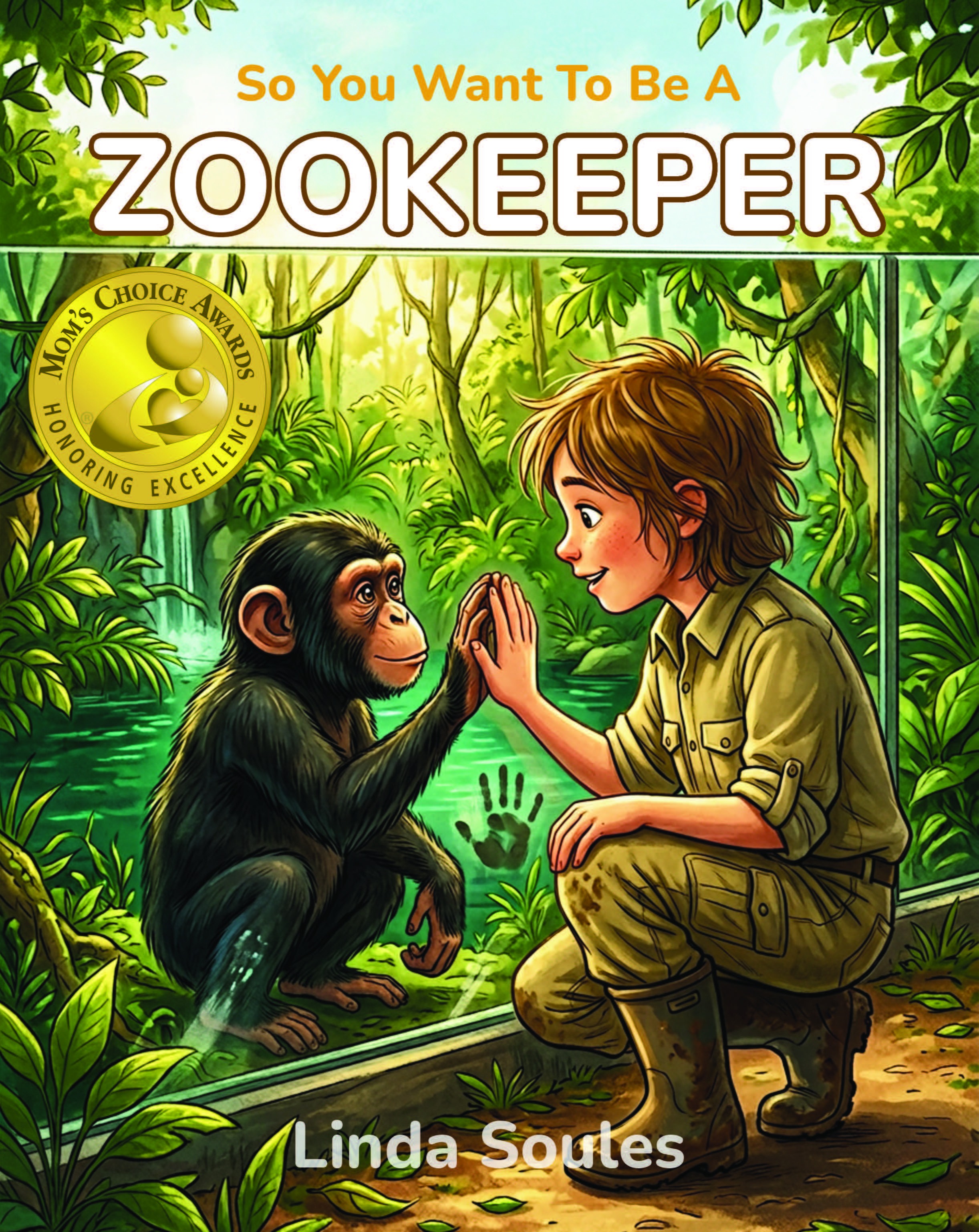
Children's Nonfiction
So You Want To Be A Zookeeper
by Linda Soules
Listen to this review
So You Want to Be a Zookeeper is less a conventional career manual than an invitation to look beyond the glass. Its central correction is clear: zookeeping is not “playing with animals,” but sustained work to protect and care for them. Linda Soules builds the case through vivid glimpses of early-morning rounds, carefully prepared diets, behavioral records, and patient training. The result is an engaging introduction to the responsibilities behind a job that children may otherwise imagine mainly in terms of close contact with charismatic animals.
The book’s strongest writing makes routine work meaningful without pretending it is glamorous. The account of elephant waste—roughly 300 pounds a day, with changes that can signal health problems—turns an unappealing chore into a lesson in observation. Likewise, the discussion of enrichment explains why puzzles, scents, and varied food presentations matter to an animal’s welfare, not simply its entertainment. The concrete details help young readers understand that good care depends on noticing an individual animal’s habits and recognizing when something changes.
Soules also gives the book a humane and coherent ethical center. Positive reinforcement, patience, and respect for an animal’s behavior recur throughout, while the chapter on the job’s hardest parts addresses illness, death, and grief plainly. The line that love is “a practice” captures the book’s larger argument: affection matters, but it must be expressed through daily responsibility. This emphasis is more valuable than a simple celebration of animal-loving as a career qualification, and it gives the book an emotional seriousness appropriate to its subject.
The structure is well suited to browsing. Short sections cover workplace environments, tools, colleagues, useful qualities, preparation, and a sample day, while the glossary introduces terms such as “husbandry,” “protected contact,” and “Species Survival Plan.” The imagined schedule—from 6:30 a.m. rounds to end-of-day notes—offers a particularly useful sense of how observation, public education, and veterinary support fit together. Practical suggestions, including volunteering at an animal shelter and keeping a behavior log while watching an animal camera, give readers ways to explore the work before treating it as a fixed ambition.
Several passages widen the perspective from individual care to conservation. The examples of the California condor, Arabian oryx, and black-footed ferret show how managed breeding and reintroduction can contribute to species recovery. The profiles of Gerald Durrell, Joan Embery, and Lawrence Anthony add human stories to that history, with different illustrations of conservation, public engagement, and courage. These sections give the book a useful sense of the field’s varied traditions, though their compact, anecdotal treatment is more inspirational than analytical.
That advocacy is also where the book’s limitations become most apparent. Modern zoos are described as rescue centers and as a “global team effort” against extinction, but the account gives little space to the complexities or debates surrounding keeping wild animals in managed settings. The text does discuss enrichment and animal welfare, yet it rarely asks how well particular facilities meet those aims or where conservation claims may be limited. Its statements about animal choice and care are similarly presented as broad assurances rather than as practices that can vary across institutions and species. A brief acknowledgment that standards and circumstances differ would have made the ethical framing more balanced.
As career guidance, the book is an inspiring starting point rather than a full preparation guide. It emphasizes physical demands, early hours, safety, and the emotional cost of loss, but offers little detail on training requirements, hiring competition, pay, or how a young person might progress into the profession. The “Want To Learn More?” section points readers toward additional books, organizations, and zoo programs, which partly addresses that gap, but readers seeking concrete career logistics will need to follow those resources. The energetic prose can also become repetitive: the language of love, wonder, trust, and advocacy returns often, sometimes at the expense of fresh explanation. The sample day and recurring appeals to care reinforce the theme, but a tighter edit might give factual material more room.
The supplied text notes that the series uses AI-assisted illustrations, but the illustrations themselves are not included here, so their quality and contribution cannot be assessed. The writing, meanwhile, is accessible without being entirely simplistic: it defines specialized terms and speaks directly to young readers while taking animal welfare seriously. Its occasional sweeping claims and polished, emotionally emphatic tone may be less satisfying to readers who want a skeptical, evidence-heavy account of zoo practice.
Overall, So You Want to Be a Zookeeper is a warm, informative introduction with a memorable focus on observation and everyday care. It will be most valuable to animal-curious readers, especially children roughly 10 to 14, who want to understand what keepers actually do and try small steps toward exploring the work. For a complete picture of the career—or of the ethical questions surrounding zoos—it works best as a first book, supplemented by more detailed and more critical sources.
Share-ready review images
Download square and vertical images for posts, stories, newsletters, and media kits.
For authors
Want a review page like this for your book?
Upload your manuscript, choose a review tier, and get a permanent public editorial review page you can share with readers.
Review My Book← Back to Reviews
