Children's Nonfiction
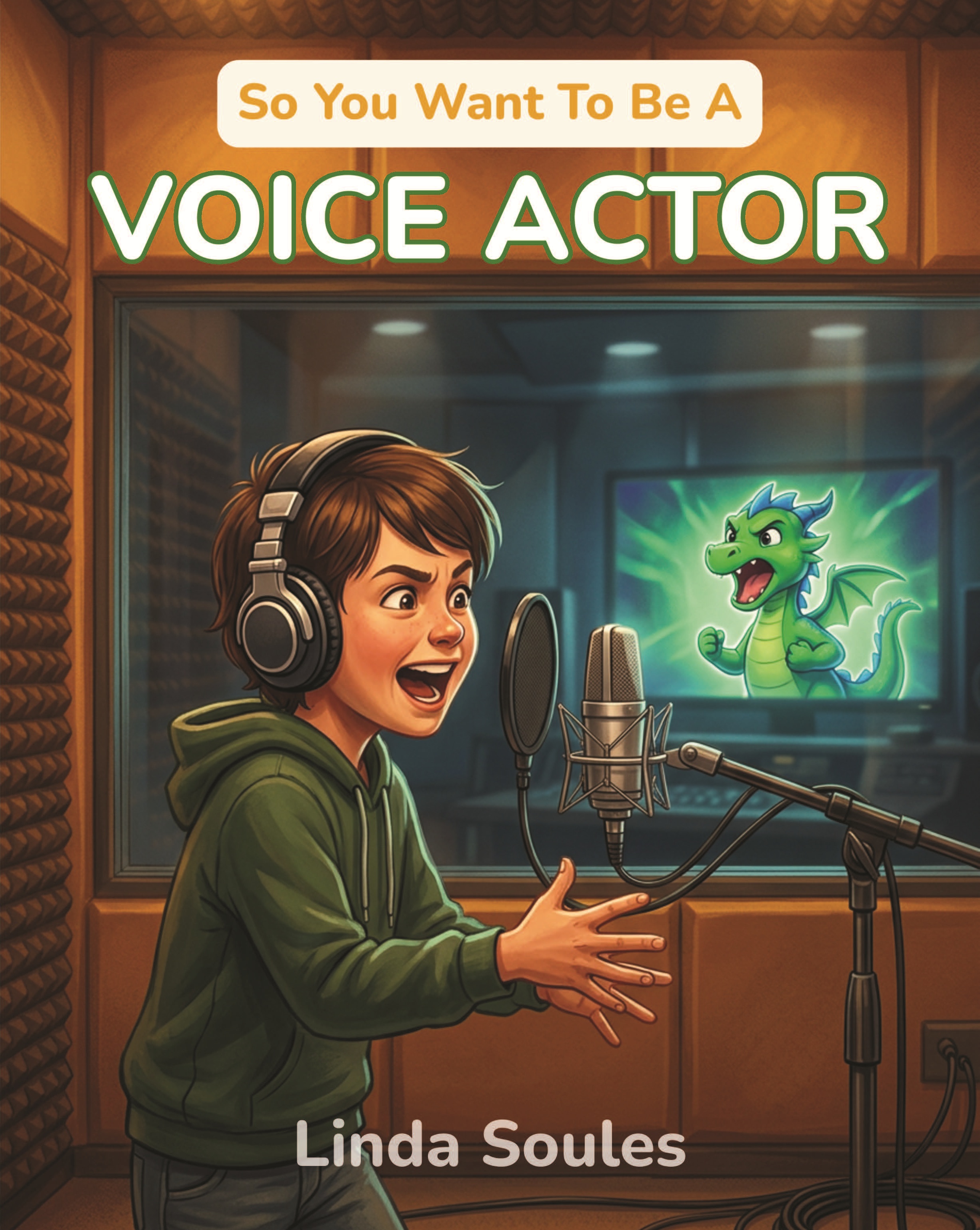
So You Want To Be A Voice Actor
by Linda Soules
Listen to this review
So You Want to Be a Voice Actor? by Linda Soules approaches career guidance less as a forecast of salaries and job prospects than as an invitation to imagine what acting with the voice can do. Its central idea is that a convincing character begins not with a funny sound but with an understanding of the person behind it. “The character is a person who has a voice,” the book argues, and that principle gives this introduction its clearest point of view. For young readers curious about performance, the result is lively, encouraging, and often perceptive, though it is stronger on the art of voice acting than on the practical realities of entering the profession.
The prose is direct and highly visual, using short emphatic sentences and concrete examples to make vocal technique accessible. Pitch, pace, breath, and emotion are explained as tools a child can hear and try, rather than as abstract terms. The exercises—reading a page in different character voices, delivering “I found it” in five emotional registers, and comparing a sentence spoken with and without a smile—turn the book’s ideas into immediate practice. Its account of the body’s role is especially effective: gestures, posture, and facial expression may be invisible to the audience, but they shape what the microphone captures. This makes a useful corrective to the assumption that voice acting is simply speaking into a recording device.
The book’s most distinctive theme is imaginative empathy. Readers are asked to consider what a character wants and fears, to listen closely to real people, and to let a voice emerge from an inner life rather than impose a vocal gimmick. That approach links craft to attentive observation and emotional honesty. The chapter “How You Help People” extends the idea beyond technique, describing how an animated character’s voice can become part of a child’s sense of companionship and memory. The passage about a child hearing a dragon, mouse, and cat as distinct people conveys the emotional stakes without losing sight of the performer behind them.
Structure supports that welcoming tone. The book moves from defining the job to its tools, pleasures, difficulties, collaborators, necessary qualities, and ways to prepare. It then offers a glossary and a substantial “Want to Learn More?” section, including books, organizations, websites, and activities such as watching credits or listening to a scene with the picture off. The profiles of Mel Blanc, June Foray, Phil LaMarr, and Tara Strong, alongside facts about Nancy Cartwright and the Wilhelm scream, give the discussion a historical and popular-culture dimension. These details help young readers see the field as a craft with a history, not merely an extension of cartoon fandom.
Soules also makes a welcome effort to acknowledge less glamorous demands. Repeated takes, director feedback, vocal fatigue, hydration, warm-ups, and the need for recovery all complicate the fantasy of effortless character-making. The discussion of recording alone—imagining a scene partner whose lines may have been recorded months earlier—is a particularly useful glimpse of the work’s unusual conditions. The author’s note, with its account of voices remembered from childhood, gives the book a personal emotional frame, while the series note identifies its intended range as roughly ages 10 to 14 and explains the use of AI-assisted illustrations transparently.
Still, the book’s enthusiasm sometimes pushes its claims beyond what the practical guidance can support. Statements such as “the microphone is the ultimate truth detector” and the assertion that a genuinely felt emotion will make an audience feel it are memorable, but they present performance as more straightforwardly measurable than it is. More importantly, the treatment of the profession is selective. It explains sessions and roles in a studio, but offers little about auditions, rejection, agents, pay, or the sustained training and business skills a working performer may need. The further-reading list partially acknowledges that gap, especially by directing readers to resources on the industry, but the book’s title may lead some children to expect a fuller account of how one actually pursues the job.
There are also a few points where the explanation could be more carefully qualified. The “Day in the Life” schedule reads as a specific, busy working day without making clear how typical it is. The book describes actors often recording separately, yet later mentions a fellow cast member’s energy in a shared session; these could be complementary cases, but the distinction is not spelled out. Its explanation of animation and lip-sync likewise shifts between the actor’s performance shaping animation and the actor fitting words to existing mouth movements, without clearly separating those workflows. For an introductory book, such distinctions need not be exhaustive, but clarifying them would make the account more dependable.
Overall, So You Want to Be a Voice Actor? is an engaging first look at the imaginative and physical craft of creating characters through sound. Its practical exercises, accessible language, and emphasis on acting from character are its strongest assets; its idealized rhetoric and limited coverage of the profession’s business side are meaningful constraints. It is best suited to curious readers, especially ages 10 to 14, who enjoy reading aloud, performing, or inventing characters and want a motivating place to begin. Young people seeking a realistic guide to making voice acting a career will need to pair it with the more industry-focused resources the book recommends.
Share-ready review images
Download square and vertical images for posts, stories, newsletters, and media kits.

For authors
Want a review page like this for your book?
Upload your manuscript, choose a review tier, and get a permanent public editorial review page you can share with readers.
Review My Book← Back to Reviews
