Children's Nonfiction
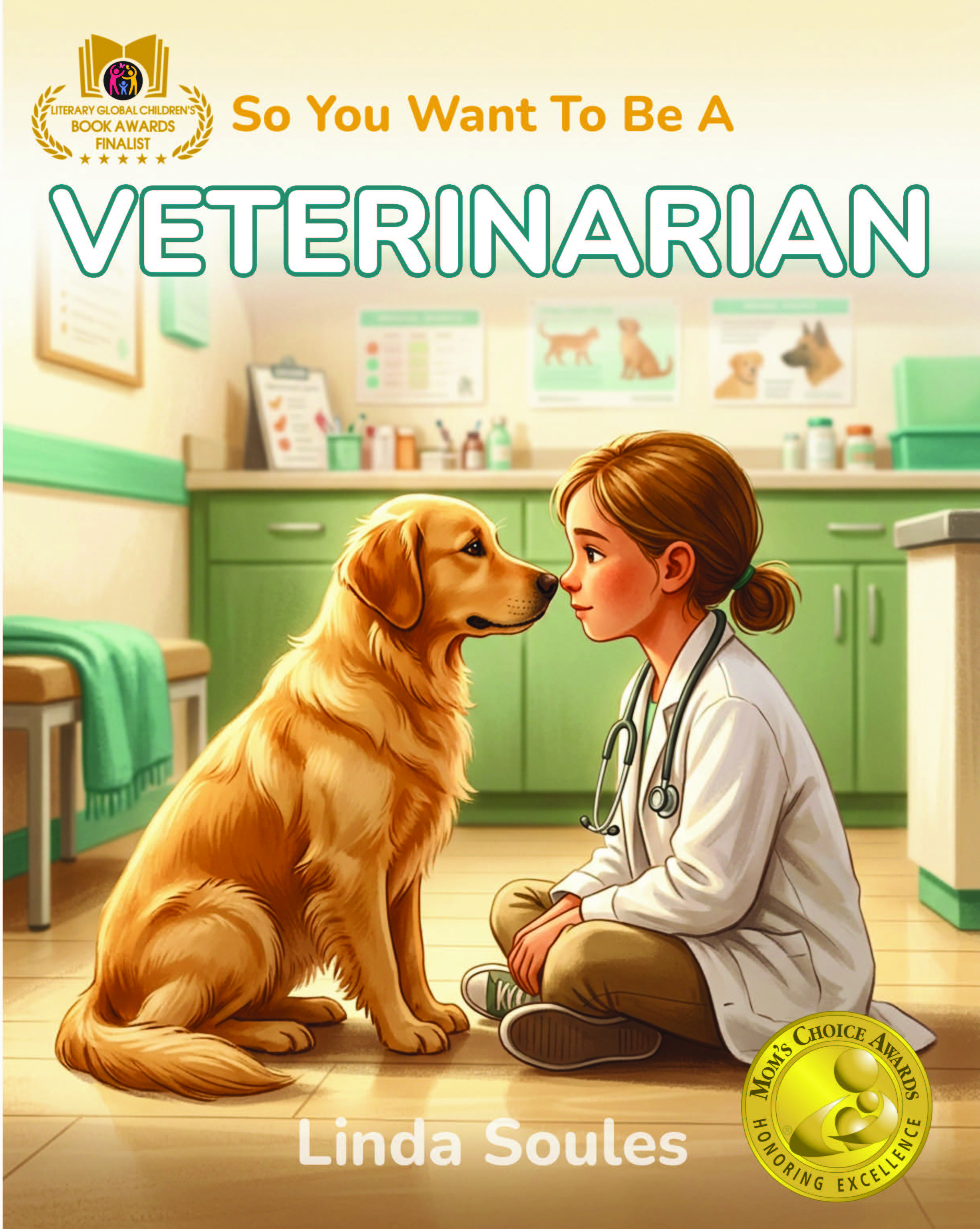
So You Want To Be A Veterinarian
by Linda Soules
Listen to this review
So You Want to Be a Veterinarian is an accessible career introduction for young readers, built around a compelling truth: veterinary medicine depends on learning to understand patients who cannot explain what hurts. Its opening image of the veterinarian as “a doctor, a detective, and an animal translator all rolled into one” neatly frames the book’s central idea. The strongest passages show how attention to posture, movement, appetite, and behavior can reveal illness, and why an owner’s observation that a pet is “not acting like herself” deserves to be taken seriously.
The book also does well to widen the reader’s picture of the profession beyond the familiar dog-and-cat clinic. Its sections on farm, zoo, wildlife, marine, and exotic-animal practice convey the range of settings and knowledge involved. Details such as farm calls at 3 a.m., a squeeze cage for safely examining a dangerous animal, and the different drug risks for a Great Dane and a Chihuahua give the career practical texture. The brief account of a clinic day—from overnight checks to appointments, surgery, and a difficult conversation with a longtime client—helps turn a list of duties into a plausible working routine.
For a children’s book about a demanding profession, its willingness to address emotional difficulty is a notable strength. The chapters on euthanasia, grief, and financial limits do not pretend that care is always straightforward. They recognize that a veterinarian may have to discuss treatment that a family cannot afford, while still treating the family’s love for the animal with respect. The emphasis on technicians, receptionists, practice managers, and other colleagues likewise counters the idea of the vet as a lone hero. These passages give young readers a more humane and socially grounded picture of the work.
The book is most effective when it pairs this seriousness with lively, memorable examples. The parrot yelling “HELP!” during a checkup and the cat arriving with its head in a tissue box supply comic relief without obscuring the animals’ needs. The preparation chapter is especially useful: observing body language, keeping an animal journal, studying biology, volunteering at a shelter, and asking to watch a routine appointment are concrete ways a child can explore the interest now. The glossary and suggested books, websites, camps, and organizations add useful routes for further learning.
Structurally, the sequence is clear and well suited to browsing: it moves from the basic role and workplace through tools, rewards, challenges, a sample day, personal qualities, and preparation. Short sections and direct address should help readers dip in and out. The “Could This Be Your Job?” checklist invites self-reflection, while profiles of James Herriot, Aleen Cust, and Temple Grandin introduce different forms of contribution to animal care. Cust’s account, in particular, gives the book a historical dimension, showing how professional recognition can lag behind a person’s ability and work.
The main limitation is that the book’s emotional emphasis sometimes becomes repetitive. The human-animal bond, the difficulty of end-of-life decisions, and the breadth of species knowledge recur in several sections, often in similar language. The repeated insistence that veterinary work is both heartbreaking and deeply meaningful reinforces the theme, but leaves less room for other practical questions: the educational route into the profession, the length and demands of training, and how specialties differ in day-to-day work are only lightly sketched. Readers seeking a detailed guide to becoming a veterinarian will need more than this book provides.
Its enthusiasm can also tip into overstatement. Claims such as “vets treat EVERY animal on Earth,” “You will laugh every day,” and the suggestion that admission to veterinary school may be harder than admission to human medical school are presented broadly, without qualification or supporting context in the supplied text. The fun facts sometimes move from cautious wording to confident conclusions—for example, the discussion of cats’ purring notes research on healing before suggesting that cats may “purr themselves better.” The end matter says the research was extensive, but this excerpt offers no citations or source notes, so curious readers cannot readily check such claims. A more measured distinction between established facts, emerging research, and playful generalization would strengthen the book’s reliability.
The prose is warm, conversational, and deliberately encouraging, although its frequent emphatic statements and second-person assurances may feel more persuasive than exploratory to some readers. The author’s note about AI-assisted illustrations is unusually transparent and gives families context about the book’s production; the supplied text, however, does not allow the visual presentation itself to be assessed. Overall, this is best suited to curious readers roughly in the stated 10–14 age range who want an engaging first look at veterinary work, especially those drawn to animals but not yet aware of the profession’s less visible responsibilities. It is a thoughtful starting point, rather than a comprehensive career manual, and is strongest when it connects compassion to observation, teamwork, and practical preparation.
Share-ready review images
Download square and vertical images for posts, stories, newsletters, and media kits.

For authors
Want a review page like this for your book?
Upload your manuscript, choose a review tier, and get a permanent public editorial review page you can share with readers.
Review My Book← Back to Reviews
