Children's Nonfiction
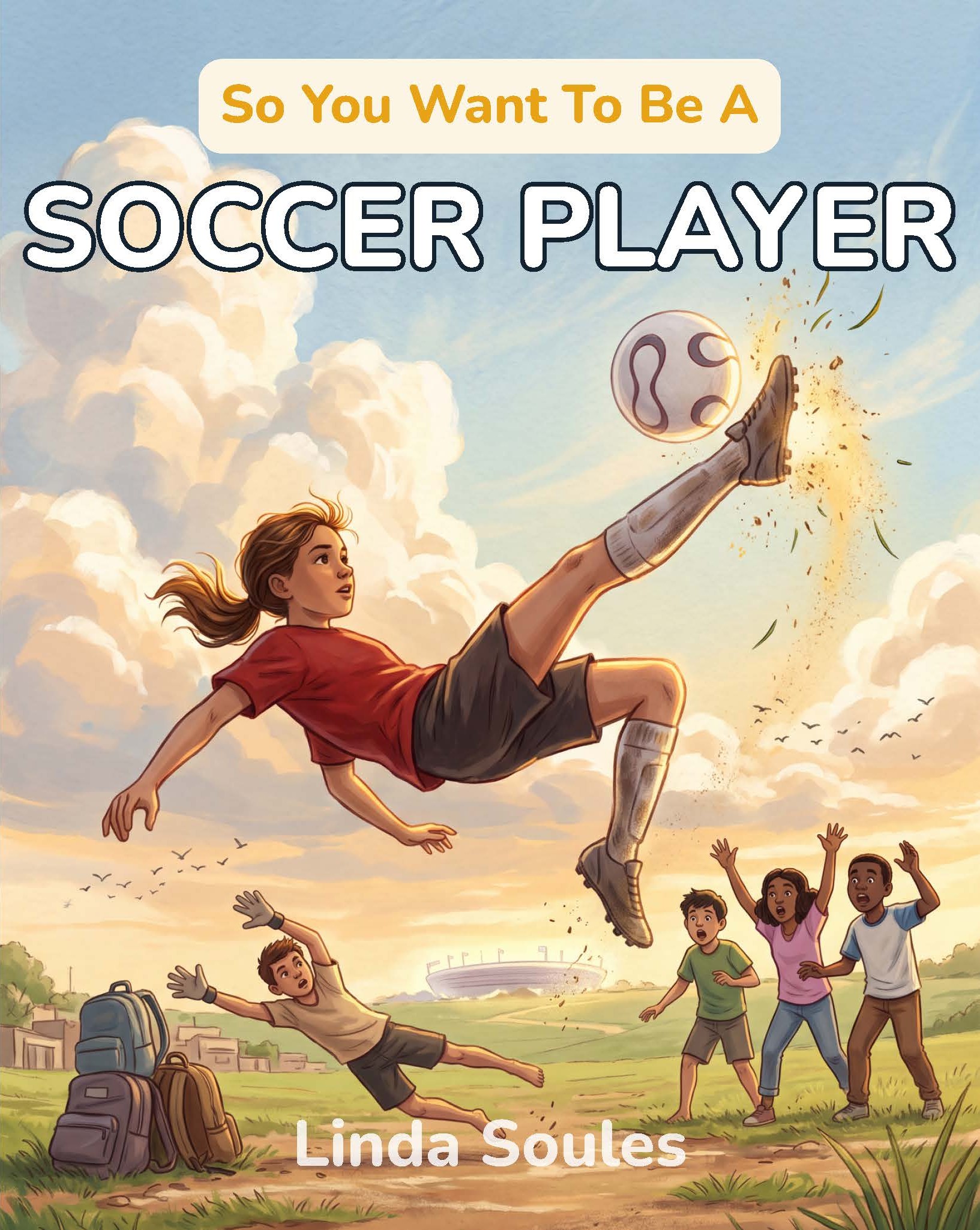
So You Want To Be A Soccer Player
by Linda Soules
Listen to this review
So You Want to Be a Soccer Player is an inviting introduction to the sport as both a game and a possible career. Linda Soules addresses the reader directly, beginning with the pleasures of grass underfoot and a ball arriving at just the right moment. That energetic second-person voice gives the book momentum without making it feel like a training manual. Its best recurring idea is that soccer’s apparent simplicity—a ball, two goals and a rule against hands—contains layers of skill, strategy and cooperation. Soules makes those layers accessible to young readers while taking their curiosity seriously.
The explanations are especially effective when they translate technique into vivid, usable images. A good first touch, the book says, works like a hand catching an egg: the foot gives slightly to cushion the ball. The image is memorable, and it leads naturally to the practical point that control comes from repeated touches rather than shortcuts. Elsewhere, the description of a match as “a ninety-minute puzzle test while running a quarter of a marathon” brings together the sport’s physical and mental demands. The advice to scan over one’s shoulder before receiving a pass is concrete enough for a reader to try immediately.
The book’s scope is broader than its career-guide premise might suggest. It moves from cuju and kemari to the formation of the Football Association in 1863, and from the Dick, Kerr Ladies’ huge 1920 crowd to the ban that kept women off affiliated grounds for fifty years. Its portraits of Mia Hamm, Marta, Sun Wen and Pelé give history human scale, while Didier Drogba’s role in Ivory Coast’s civil conflict connects sporting fame with civic responsibility. The account of the Panyee children building a floating pitch from scrap wood is another strong example: it turns the abstract claim that soccer travels across borders into a specific, resourceful story.
Soules is also attentive to what happens beyond the eleven players on the field. Sections on video analysis, GPS vests, nutrition, recovery and the people around a professional team convey that a career involves far more than match-day spectacle. The imagined daily schedule, from treatment and rondo drills to video review and an ice bath, helps make that labor tangible. Just as importantly, the book does not sell professional soccer as a likely outcome. It states plainly that fewer than one in a hundred players become professionals, notes the frequency of injury and public criticism, and urges readers to continue their education. That candor is a meaningful strength in a book aimed at children with big ambitions.
Its account of soccer’s appeal is most affecting near the end, where missed chances and “almosts” become a lesson in resilience and kindness. The author’s closing reflection argues that the game teaches players to return after failure, and asks readers to offer a teammate an “Unlucky!” rather than blame. This idea is prepared by earlier sections on slumps, mistakes and the need to recover mentally after a poor play. The ending therefore feels earned, and extends the book’s interest beyond athletic achievement to the way players treat one another.
The tone is lively, and the short anecdotes—Pickles finding the stolen World Cup trophy, Sam Bartram waiting in the fog, and the dog that left Jimmy Greaves with a soaked shirt—provide welcome comic relief. Yet the abundance of facts and asides sometimes works against the book’s shape. Equipment, history, slang, player profiles, training advice and career pathways follow one another in quick succession; the transitions can feel more like a collection of useful fact boxes than a steadily developed argument. Some themes, especially repetition, teamwork and perseverance, recur often enough to become emphatic rather than newly illuminating. A more selective structure might give the strongest stories and practical advice greater room to resonate.
The manuscript also makes many historical, statistical and biographical claims without providing sources. It does sometimes signal uncertainty—for example, it notes that historians dispute the story of a two-day pause in Nigeria’s war to watch Pelé—but readers have little guidance for checking other claims. That matters in a book whose confident, conversational delivery can make all its information sound equally settled. The supplied text also contains irregular spacing and headings that interrupt passages, which may reflect the manuscript or its formatting; in either case, the final presentation would benefit from careful editorial attention.
Overall, this is a generous, engaging primer for children who love soccer or are wondering what playing seriously might involve. Its strongest features are its accessible explanations, its inclusion of women’s history and adaptive forms such as blind and powerchair football, and its clear-eyed account of the work and uncertainty behind a professional career. Readers looking for an in-depth tactical guide or a tightly organized history may find it too broad and episodic. For young players, families and curious fans who want an encouraging introduction grounded in practice, stories and realistic expectations, it is a worthwhile choice.
Share-ready review images
Download square and vertical images for posts, stories, newsletters, and media kits.


For authors
Want a review page like this for your book?
Upload your manuscript, choose a review tier, and get a permanent public editorial review page you can share with readers.
Review My Book← Back to Reviews
