Children's Nonfiction
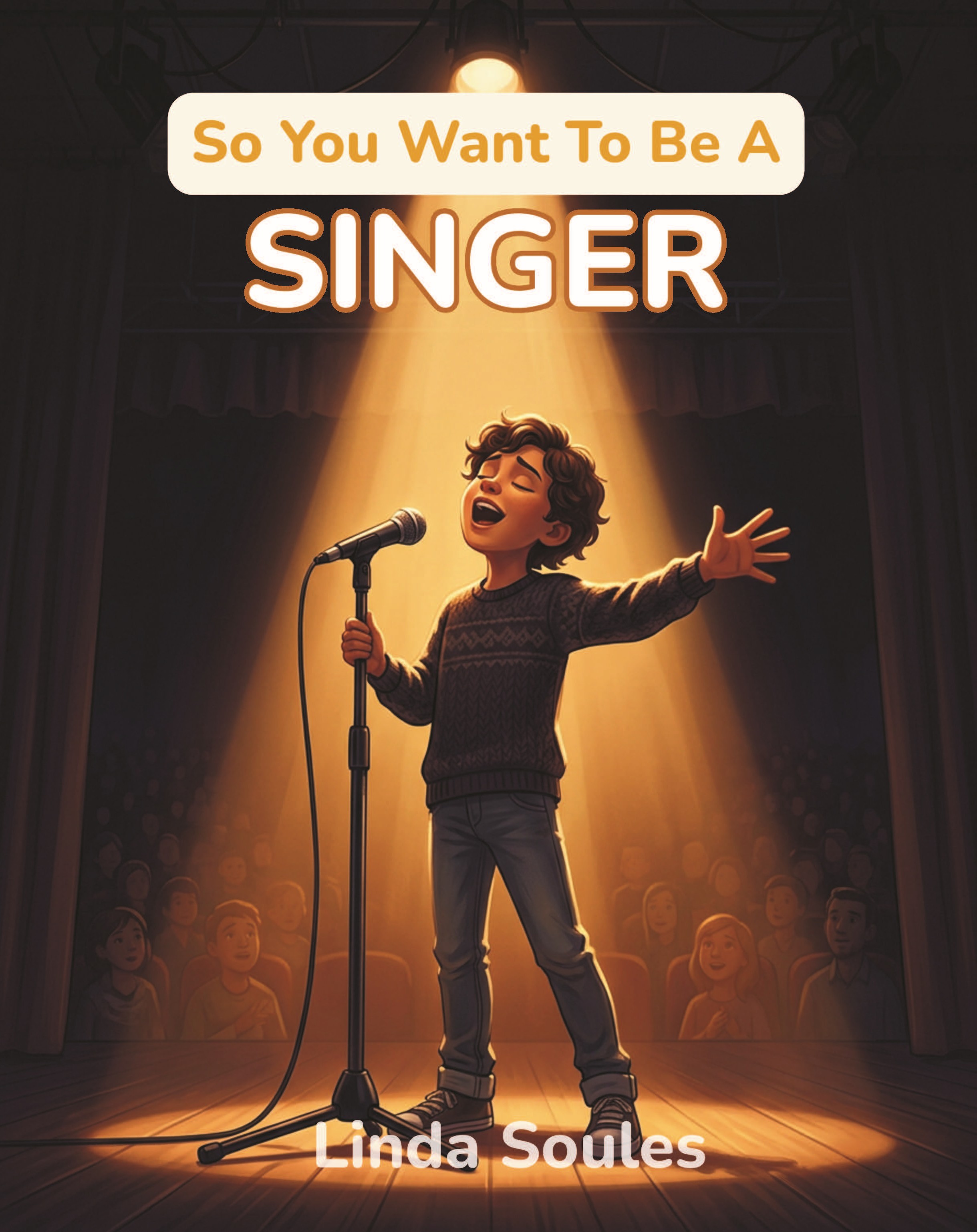
So You Want To Be A Singer
by Linda Soules
Listen to this review
So You Want to Be a Singer treats singing not as a glamorous shortcut to fame but as a physical, emotional, and sustained practice. Its strongest idea is also its simplest: the voice is an instrument inseparable from the person who uses it. The opening chapters turn that premise into an inviting account of breath, vocal folds, and resonance, while later sections consider fatigue, performance anxiety, collaboration, and the demands of a working life. For young readers wondering whether a love of music might become a vocation, the book offers both encouragement and a useful measure of the work involved.
Linda Soules writes in an energetic, conversational register, often addressing the reader directly and using short sentences to create momentum. The image of a singer’s instrument as something “inside you” gives the book a clear through-line, and comparisons—such as the body’s resonators to a guitar’s body—make technical ideas approachable. The advice to record oneself and listen back is particularly effective because it connects an unfamiliar concept to a practical, if uncomfortable, exercise. The book understands that learning to sing involves listening as much as producing sound.
Its account of the profession is broader than a simple portrait of a star onstage. “The Hardest Parts of the Job” covers vocal strain and the vulnerability of an instrument affected by illness, stress, and sleep; it also notes tensions between an artist’s development and commercial expectations. The sections on coaches, producers, engineers, songwriters, and bands make clear that a singer’s work is collaborative. The imagined schedule—from warm-up and rehearsal to soundcheck and performance—gives readers a concrete sense of how preparation surrounds the moments audiences see.
The book is most affecting when it connects singing to human experience. A story of a child joining a grieving parent in song conveys the comfort music can offer without reducing the moment to career advice. Elsewhere, the discussion of lullabies, communal singing, and songs that help people feel less alone places the profession within cultural and emotional life. The historical profiles add welcome variety: Marian Anderson’s exclusion from Constitution Hall and subsequent performance at the Lincoln Memorial show how a singer’s work can intersect with public history, while Aretha Franklin’s example emphasizes artistic and personal self-assertion.
The practical sections suit the book’s intended young readership. Readers are encouraged to join a choir, practice breath control, care for their voices, and work on a song repeatedly while focusing on one improvement at a time. These are accessible starting points rather than promises of quick success. The glossary and questions for singers reinforce the book’s central emphasis on technique and interpretation. Its closing note, which stresses that the voice requires lifelong care, gives the encouragement a welcome seriousness.
That seriousness is not always matched by precision. Several scientific and historical statements are presented with emphatic certainty but without citations in the supplied text. Claims that singers’ heartbeats synchronize, that lullabies lower children’s stress hormones, and that singing is essential across every human civilization may be broadly grounded, but readers are not shown the evidence or the limits of those findings. The section on hit-song templates makes similarly sweeping assertions. The “Want to Learn More?” pages point toward useful resources, including the National Institute on Deafness and Other Communication Disorders, but those references do not substantiate individual claims where they appear. For a book that presents itself as researched career guidance, clearer sourcing would strengthen trust.
Some explanations also favor vividness over nuance. Describing the diaphragm as a valve and saying that without its control the voice has “no fuel” makes breath support memorable, but risks turning a complex process into an overly literal picture. Likewise, the explanation of head and chest voice as two main registers is a serviceable introduction, not a full account of vocal technique. The book’s occasional maxim-like declarations—such as “The voice heals”—are emotionally resonant but blur the line between metaphor and medical claim. A little more qualification would preserve the accessible style while better serving curious readers.
The book also devotes more attention to the expressive rewards of singing than to the practical uncertainties of pursuing it as employment. It mentions industry pressure and the need for years of practice, but offers limited detail about different career paths, income, auditions, or the instability of professional work. That is a meaningful limit for readers using the book as a guide to career planning, though it does not undermine its value as an introduction to the craft and its demands. The author’s note discloses that illustrations are AI-assisted; readers who care about how images are made will appreciate that transparency.
So You Want to Be a Singer is best suited to middle-grade readers who are curious about singing and would benefit from an encouraging, accessible overview of vocal practice, performance, and music’s role in people’s lives. It is less complete as a practical map of the music business, and its uncited factual claims call for editorial attention. Even so, its combination of usable exercises, historical examples, and respect for the labor behind performance makes it a worthwhile starting point—especially for young singers who are ready to hear both the invitation and the responsibility in the question it poses.
Share-ready review images
Download square and vertical images for posts, stories, newsletters, and media kits.
For authors
Want a review page like this for your book?
Upload your manuscript, choose a review tier, and get a permanent public editorial review page you can share with readers.
Review My Book← Back to Reviews
