Children's Nonfiction
So You Want To Be A Shark Researcher
by Linda Soules
Listen to this review
So You Want to Be a Shark Researcher is a career guide for young readers that treats its subject as both a scientific vocation and a conservation cause. Its central appeal is clear: sharks are animals worth understanding, and the work of understanding them can help protect them. The book offers a lively introduction to that work, moving from research tools and field routines to communication, preparation, and further reading. Its strongest moments make the job feel specific rather than merely glamorous; its limitations emerge when the advocacy message and enthusiasm crowd out practical career detail and qualification.
The structure is well suited to browsing. Sections such as “The Tools of the Trade,” “A Day in the Life,” and “The People You Work With” give readers different routes into the subject, while the glossary explains terms including acoustic telemetry, ampullae of Lorenzini, and slow life history. The practical suggestions are accessible: learn one species closely, keep observations near water, visit an aquarium, or join a citizen science project. The guide also points readers toward books, organizations, and the OCEARCH tracker, extending the invitation beyond the page. This combination of explanation and manageable next steps gives the book value as a conversation starter for families and classrooms.
Its writing is direct, energetic, and often vivid. The passage describing a researcher waiting for a shark to appear at the “edge of visibility” conveys the alertness of fieldwork, while the later sequence of a vessel’s day usefully punctures any impression that the job consists only of dramatic dives. Data entry, video review, briefings, and waiting for tag results are part of the routine. The explanation of BRUVs, photo identification, and stereophotogrammetry also highlights a thoughtful theme: research can gather information while minimizing disturbance. This emphasis on non-invasive observation links scientific method to ethical responsibility, a particularly strong idea for a young audience.
The book’s most compelling broader theme is the distance between public image and ecological reality. It contrasts the small number of people killed by sharks with the much larger number killed by humans, and describes researchers’ work with fishing communities and the public as essential to conservation. The profiles of Eugenie Clark, Samuel Gruber, and Melissa Cristina Márquez give that theme human dimensions: the examples emphasize persistence, long-term study, and communication across language and community. The author’s closing reflection on research whose results may benefit future generations is affecting without losing sight of the slow timescale of conservation.
That sense of purpose is also the source of a tonal limitation. The book repeatedly frames shark research as a “rescue mission” and presents researchers as standing between sharks and “the end of [their] story.” This impassioned language may motivate readers, but it sometimes reduces a complicated scientific profession to a moral calling. Several sections return to the same argument—that fear and misinformation harm sharks and that researchers must correct the public story—so the conservation case can feel repetitive. Readers looking for a more neutral overview of marine biology may find the advocacy emphasis stronger than the career exploration.
Some statements would benefit from qualification. The book describes sharks broadly as apex predators with no natural predators, although the guide also addresses more than 500 species with varied sizes and ecological roles. Its phrasing sometimes makes broad claims sound universal. There is also a small but noticeable tension in its account of fear: one section describes the ongoing psychological management of real fear, while another says experienced researchers “are not afraid.” The intended distinction between feeling fear and functioning with composure is understandable, but it could be stated more consistently. Because the text uses many striking statistics and scientific assertions, a clearer trail of sources would also help readers distinguish well-established findings from simplified explanations. The recommended reading and organizations are useful, but they do not function as citations for the claims in the main text.
As career guidance, the book is more inviting than comprehensive. It explains useful skills—species identification, statistics, diving and watercraft competence, and public communication—and suggests activities a young reader can begin now. But it offers little detail about the educational route into the profession, the range of relevant degrees or training, the realities of securing research work, or the less adventurous settings in which many scientists may spend much of their time. The dramatic emphasis on field encounters is balanced by data work, but not by a similarly concrete account of study and employment. Readers seeking a step-by-step career plan will need other sources.
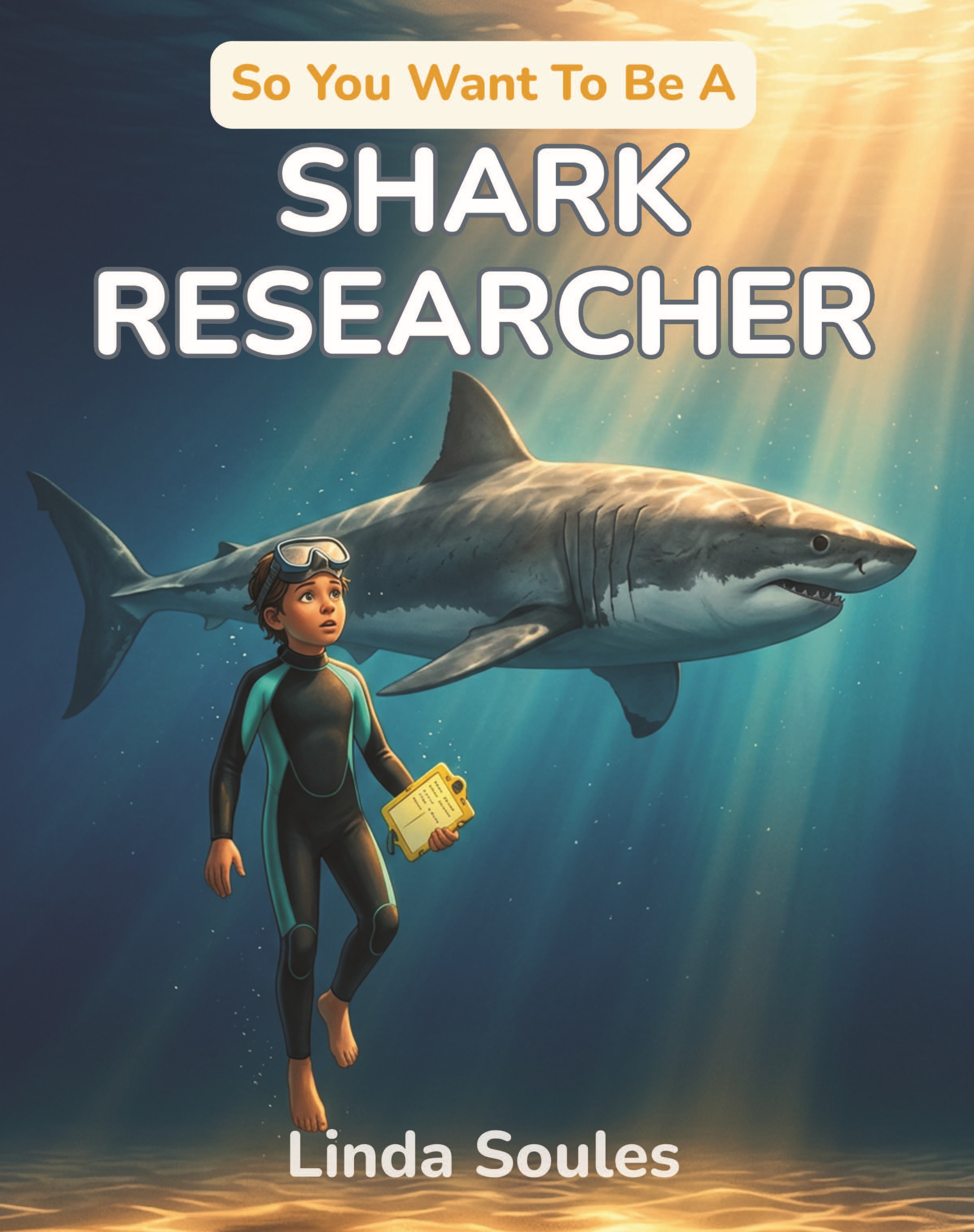
The supplied text refers to illustrations, but those images are not included here, so their quality and contribution cannot be assessed. On the evidence available, the book’s prose and organization are its clearest strengths. It is an enthusiastic, accessible introduction that gives young readers real scientific vocabulary and encourages curiosity beyond the familiar great white. So You Want to Be a Shark Researcher is best suited to readers roughly in the middle-grade and early-teen years who are already interested in sharks, conservation, or marine fieldwork, and to adults seeking a springboard for discussion. It is less complete as a practical career manual and may be a weaker fit for readers who prefer less exhortation and more detail on training and professional pathways.
Share-ready review images
Download square and vertical images for posts, stories, newsletters, and media kits.
For authors
Want a review page like this for your book?
Upload your manuscript, choose a review tier, and get a permanent public editorial review page you can share with readers.
Review My Book← Back to Reviews
