Children's Nonfiction
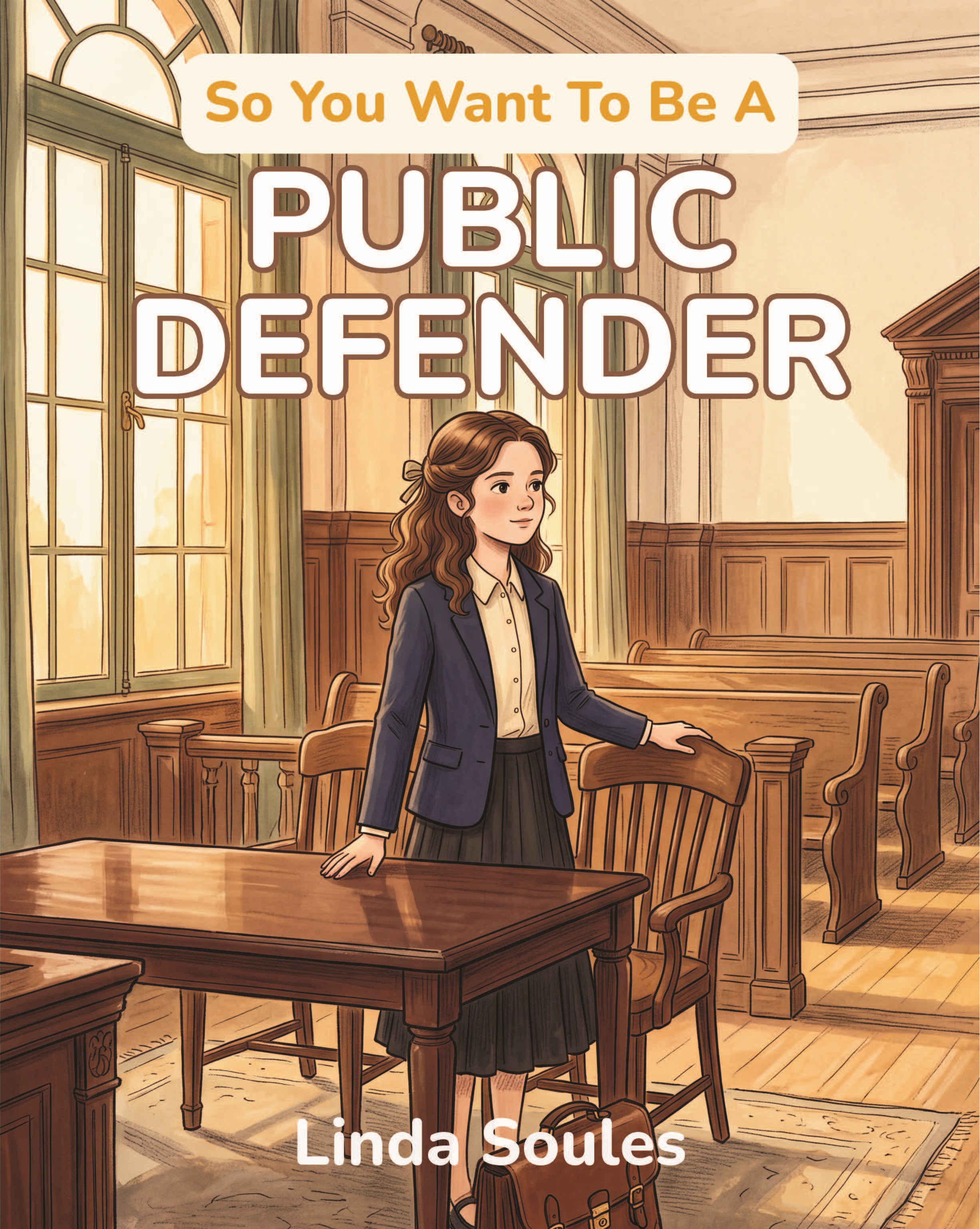
So You Want To Be A Public Defender
by Linda Soules
Listen to this review
So You Want to Be a Public Defender makes its case for public defense through a clear, compelling premise: a fair justice system depends on giving every accused person a lawyer, including people who are unpopular or may be guilty. Aimed at young readers exploring possible careers, the book is both an introduction to legal work and an argument for the value of due process. Its strongest quality is that it explains the principle without reducing the job to courtroom heroics. Public defenders, it insists, investigate, listen, negotiate, write, and help clients navigate practical problems as well as legal ones.
The opening chapter gives the book a strong moral and historical foundation. It introduces the right to counsel through Clara Foltz’s proposal for publicly funded defense and Clarence Earl Gideon’s handwritten appeal from prison, linking an idea to the person whose case helped make it a national guarantee. Later, the chapter on “The Most Surprising Thing About This Job” develops the rationale for defending people who may be guilty: the same protections that constrain the state in an unpopular case protect everyone else, too. The discussion of William Blackstone’s famous formulation makes the stakes memorable without requiring young readers to master legal theory first.
The writing is direct, brisk, and often warmly funny. The “Missing Cupcake” exercise turns the presumption of innocence into a child-sized investigation: chocolate crumbs do not match strawberry frosting, Max has an alibi, and the dog has pink icing on its nose. The conclusion—“the evidence is snoring”—makes the lesson stick without making the legal principle feel abstract. Elsewhere, the book uses light jokes about “Your Majesty,” dinner-table objections, and a courthouse fork to ease readers into unfamiliar vocabulary. This humor generally serves the teaching rather than undercutting the seriousness of the subject.
The career portrait is notably practical. The book contrasts the familiar courtroom image with the less glamorous work of reviewing case files, meeting clients in jail, researching legal rules, and negotiating plea agreements. The detailed “Day in the Life” schedule, from the morning court calendar to late-afternoon research, gives a plausible sense of how varied and demanding the work can be. The example of spotting a broken streetlight in city records shows how close reading can matter; the bus calculation for Rosa demonstrates how a mundane transit problem can affect a court appearance. These particulars help explain what defenders actually do, rather than merely telling readers that the work is important.
The book also earns trust by including difficulties alongside its aspirational message. It addresses crushing caseloads, lower pay than large private firms, losses that follow lawyers home, and the emotional strain of representing a client one may suspect committed a serious offense. Its explanation that defenders may not lie to the court or help a client lie offers a useful ethical boundary. The descriptions of plea decisions and client authority are especially valuable: the lawyer explains risks, but the client makes major choices. These details make the job’s responsibilities more tangible and avoid presenting advocacy as a simple matter of winning.
Its broad, modular structure suits readers who may dip in and out. Career preparation, workplace details, teamwork, personal qualities, historical profiles, a glossary, and suggested activities provide several routes into the subject. The profiles of Foltz, Gideon, Ketanji Brown Jackson, and Jeff Adachi connect individual careers to changes in law and public life. The final exercises—trying both sides of an argument, writing clearly, or staging a family mock trial—translate the book’s themes into accessible practice. The glossary also gives readers a useful reference for terms such as “reasonable doubt,” “motion,” and “voir dire.”
That breadth sometimes comes at the expense of depth. The book presents a strongly affirmative case for public defense, and its central moral argument is persuasive, but it gives less attention to the institutional and regional differences that shape how public defense works. Readers learn that some defenders carry dozens or hundreds of cases and that offices may be under-resourced, yet the consequences of those pressures are sketched more than examined. The salary figures are presented as typical without much explanation of how pay may vary by location or office. Such simplification is understandable in a children’s career guide, but older readers looking for a nuanced account of the system will need more than this book provides.
There is also a conspicuous editing problem in the description of a trial: the text says, “Then they give opening (say ‘vwahr DEER’),” before repeating that the lawyers give opening statements. The misplaced pronunciation and duplicated phrase interrupt an otherwise carefully explained sequence. Because the book is teaching unfamiliar terms, this is more than a cosmetic slip; it risks confusing a reader about voir dire and trial procedure. A careful proofread would strengthen an otherwise accessible presentation.
Overall, So You Want to Be a Public Defender is an engaging, humane introduction that takes young readers seriously. Its combination of practical career information, lively examples, and a clear defense of fairness makes it especially suitable for curious readers around ages 10–14, as well as parents and teachers seeking a starting point for conversations about law, rights, and responsibility. Readers wanting a detailed account of legal doctrine or the full complexity of public-defense systems may find it introductory, but for those beginning to imagine the work and its purpose, it offers a strong and thoughtfully grounded invitation.
Share-ready review images
Download square and vertical images for posts, stories, newsletters, and media kits.

For authors
Want a review page like this for your book?
Upload your manuscript, choose a review tier, and get a permanent public editorial review page you can share with readers.
Review My Book← Back to Reviews
