Children's Nonfiction
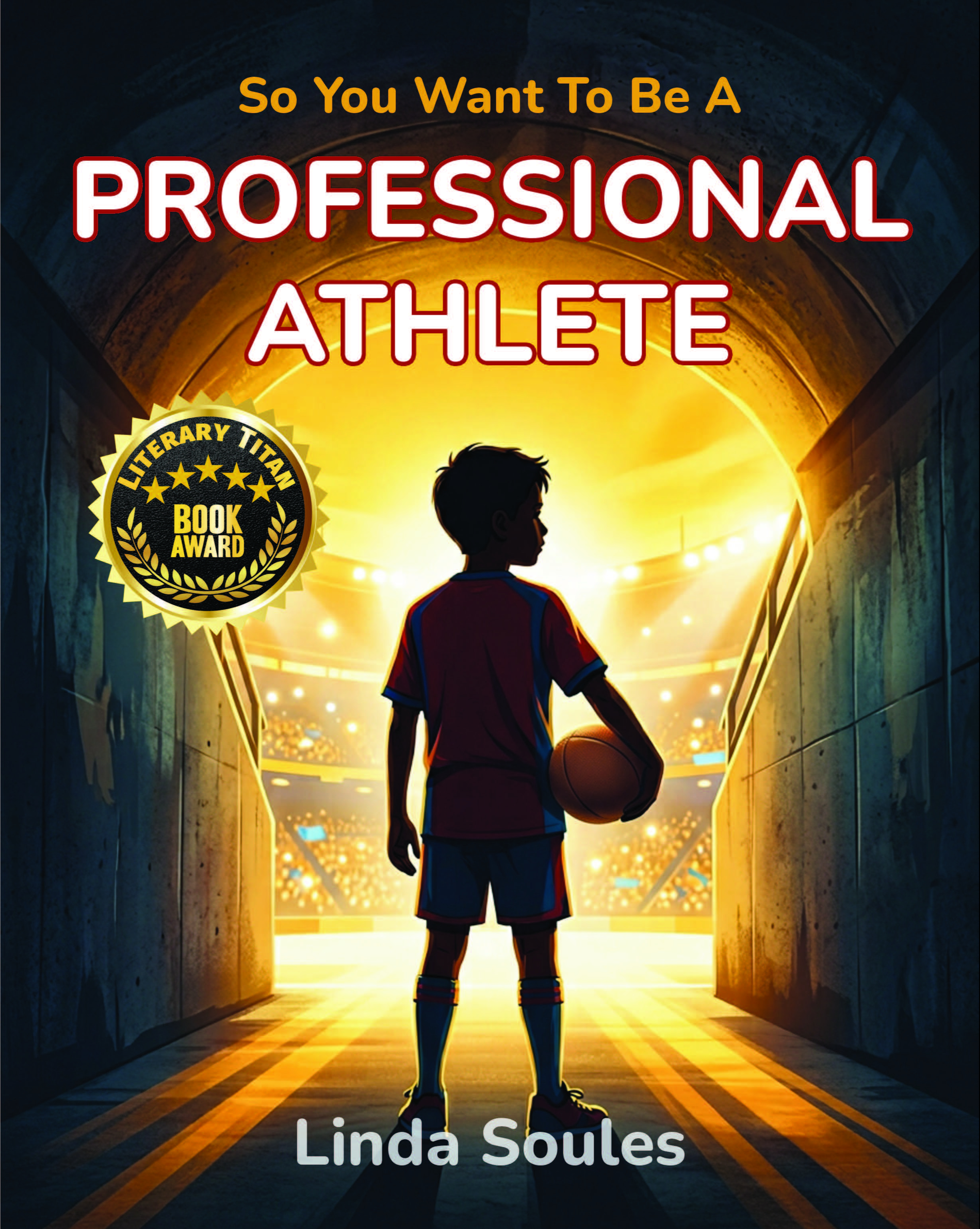
So You Want To Be A Professional Athlete
by Linda Soules
Listen to this review
Linda Soules’s So You Want to Be a Professional Athlete is less a guide to reaching the professional ranks than an introduction to the daily work, bodily costs, and personal qualities behind elite sport. Its clearest argument is that competition is only the visible fraction of the job: training, recovery, nutrition, and mental preparation occupy most of an athlete’s working life. For young readers drawn to the glamour of medals and highlight reels, that shift in emphasis is useful and often compelling.
The book’s strongest passages make routine feel consequential. In “A Day in the Life,” a weigh-in and hydration check can alter the day’s plan; an individual skills session is followed by team practice, treatment, and opponent analysis. The sequence gives readers a concrete sense of how performance is assembled, while the observation that “Recovery is training” neatly consolidates one of the book’s recurring themes. Sections on sleep, injury prevention, and body awareness similarly counter the idea that pushing harder is always the answer. The book presents rest not as weakness but as part of the discipline it celebrates.
Soules writes in direct, energetic prose, using short sentences and vivid contrasts to keep the material accessible. The opening sets the televised “ten seconds” of triumph against “the ten years behind those ten seconds,” a memorable framing device that establishes the book’s demystifying purpose. It also has a strong instinct for explaining abstract ideas through recognizable images: the body as an instrument, recovery as work, and flow as a state in which the doubting mind quiets. The glossary, practical preparation advice, and prompts such as asking an athlete about an ordinary Tuesday extend the book beyond description and encourage readers to investigate for themselves.
The historical examples give its lessons emotional weight. Derek Redmond’s hamstring injury at the 1992 Olympics becomes a meditation on character and the meaning of finishing; Simone Biles’s decision to withdraw at Tokyo is presented as a professional act of self-protection rather than failure. The profiles of Serena Williams, Bo Jackson, and Babe Didrikson Zaharias broaden the range of athletic achievement, while the “Fun Facts” section offers lively moments of sport-specific wonder, from the demands of hitting a fastball to Wayne Gretzky’s assists. These examples help the book avoid treating athletic excellence as a single kind of body or a single kind of career.
Its view of the profession is also wider than the playing field. Coaches, trainers, doctors, agents, nutritionists, psychologists, and financial advisers appear as part of an athlete’s working world. The account of teammates and opponents as a community bound by mutual understanding is especially effective, as is the recognition that retirement can unsettle a person whose identity and daily structure have been built around sport. These are thoughtful inclusions in a book aimed at readers who may otherwise see only the competition itself.
There are limits to the book’s treatment of its subject. It acknowledges that careers can end early, that some athletes spend much of their time waiting or recovering, and that retirement can be disorienting; nevertheless, its overall arc remains strongly inspirational. Practical barriers to becoming a professional—such as the uneven availability and cost of coaching, facilities, travel, and specialist support—receive little attention. Nor does the book distinguish much between sports with very different employment structures and prospects. Its sample day, with performance staff monitoring biometric data and a highly organized support team, may represent a well-resourced professional environment more than the full range of professional athletic work.
Some broad claims would benefit from clearer qualification or sourcing. Statements that former athletes have higher rates of employment, leadership positions, and life satisfaction, and that the most successful athletes are “almost never” the most naturally gifted, are presented confidently without evidence in the supplied text. The book’s advice to young readers to sleep nine to eleven hours and its account of nutrition are well-intentioned, but could make clearer that needs vary by age, health, sport, and individual circumstances. The repeated maxim that discipline matters more than talent is motivating, yet it risks simplifying a field shaped by opportunity as well as effort. These are not flaws in the book’s central message so much as places where its certainty exceeds its explanation.
The tone and format appear best suited to middle-grade readers beginning to explore careers: the short sections, direct address, prompts, and suggested activities make the material approachable. Older readers looking for detailed career planning, sport-specific training guidance, or a sourced examination of the economics of professional athletics may find it too general. The author’s note also discloses that the illustrations are AI-assisted, but the supplied text does not include images, so their quality cannot be assessed here.
As an accessible introduction to the less visible labor of sport, this is a thoughtful and engaging book, particularly when it connects discipline with recovery, teamwork, and the ability to adapt. Its encouragement is most persuasive when it makes room for difficulty, as in its discussions of injury and retirement; it is less persuasive when broad claims stand in for evidence. I recommend it to young readers who love sport and want a realistic first look at what professional athletes do—and to parents or teachers seeking a starting point for conversations about ambition, effort, and caring for one’s body.
Share-ready review images
Download square and vertical images for posts, stories, newsletters, and media kits.


For authors
Want a review page like this for your book?
Upload your manuscript, choose a review tier, and get a permanent public editorial review page you can share with readers.
Review My Book← Back to Reviews
