Children's Nonfiction
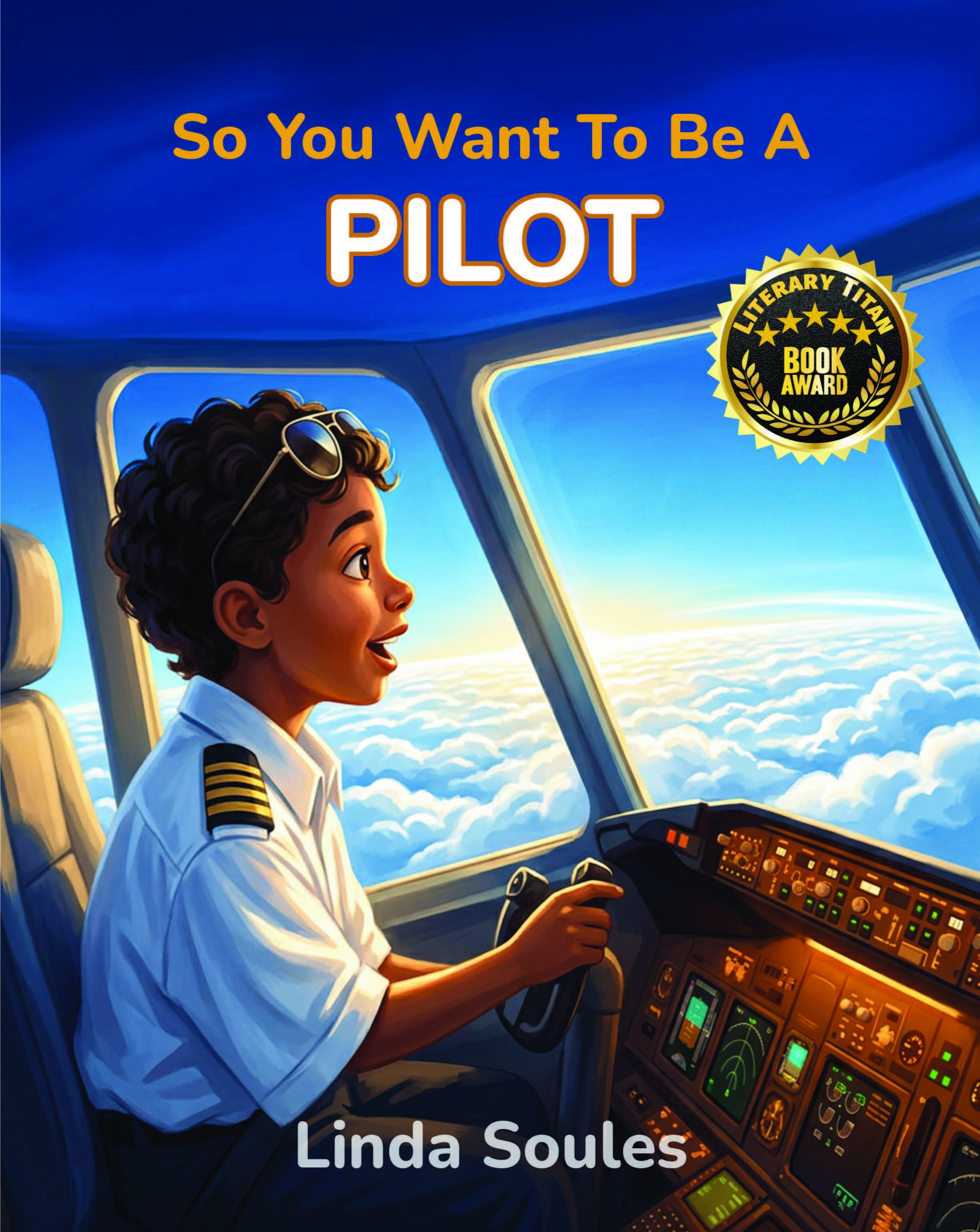
So You Want To Be A Pilot
by Linda Soules
Listen to this review
So You Want to Be a Pilot makes a persuasive case that flying is not simply a thrilling view from the cockpit, but a profession built on preparation, judgment, and shared responsibility. Linda Soules writes for young readers with evident enthusiasm, opening with the rush of takeoff before widening the lens to include checklists, weather decisions, and life on an irregular schedule. The result is an inviting introduction to aviation that takes its readers seriously. Its strongest idea is that a pilot’s competence lies not in bravado but in making a complex, potentially dangerous operation seem calm and routine.
The book’s prose is vivid and often effective at translating scale into images a child can grasp. An airliner is compared to “about 40 elephants,” while roads seen from above become lines and fields a quilt. These comparisons give flight a physical immediacy without depending solely on technical explanation. Soules also has a gift for memorable framing: the cockpit is described as an extension of the pilot’s mind, and a checklist as “not a memory aid” but a system. Such language helps make abstract professional habits—attention, consistency, humility—feel concrete. The recurring contrast between the wonder of flight and the discipline that makes it safe gives the book a coherent emotional center.
The organization is well suited to career exploration. Short, clearly titled sections move from daily duties and equipment to workplace relationships, personal qualities, history, and practical ways a reader might prepare. The “Tools of the Trade” section usefully treats instruments, radio communication, and checklists as distinct parts of the job, while the “Pilot’s Alphabet” gives readers something immediately interactive to try. The sample day, from a 6:00 a.m. weather review to shutdown and handoff, helps counter the idea that a pilot’s work consists only of takeoff and landing. The book also gives meaningful space to dispatchers, controllers, mechanics, flight attendants, and ground crews, emphasizing that aviation safety depends on coordination rather than a lone heroic figure.
That emphasis becomes especially strong in the account of aviation’s safety culture. The 1935 control-lock accident is used to explain why checklists became a standard, and the author’s closing note returns to the larger lesson: mistakes must be examined and shared so that others can learn from them. This is a thoughtful theme for a children’s career book, and it avoids presenting expertise as innate perfection. The profiles of Amelia Earhart, Bessie Coleman, Chuck Yeager, and Sully Sullenberger broaden the historical picture and offer examples of different forms of courage and achievement. Coleman’s struggle to access training is particularly important because it makes clear that barriers have often been imposed by institutions, not by the sky itself.
The practical guidance is another asset. Suggestions such as building paper airplanes, watching the weather, making checklists, visiting an airport, and taking a discovery flight turn admiration into possible next steps. The resource pages extend that invitation through books, websites, simulators, and youth aviation organizations. The glossary is extensive enough to support independent browsing, and the questions pilots ask—about weather, aircraft systems, and contingency plans—summarize the mindset the book wants readers to develop. This is useful not only to children already set on flying, but also to parents or teachers looking for a starting point for conversation.
There are limits to the book’s approach. The lyrical intensity of the opening sometimes gives way to repetition: the extraordinary view, the calmness of the pilot, and the idea of a miracle made routine recur in several sections. That insistence reinforces the central theme, but it can crowd out more varied detail about the actual work. The daily schedule is cleanly reassuring, and the book says that serious incidents are rare, yet readers receive less sense of how careers differ across aircraft, employers, or kinds of flying. A young reader seeking a detailed account of training requirements, career pathways, or the less glamorous administrative demands will need additional sources.
Some technical explanations also need more qualification. The description of lift—air moving faster over a curved wing, creating lower pressure—is a familiar shorthand, but it risks suggesting a single simple explanation for a more complex aerodynamic process. Likewise, the comparison of autopilot to car cruise control makes automation approachable, but may understate how much the pilot’s monitoring and management responsibilities vary across phases of flight and aircraft systems. The claim that pilots’ hands are on the controls for about seven minutes on a typical long-haul flight is striking, but presented without context it may leave readers treating a rough generalization as a fixed rule. These simplifications are understandable in a book for young readers, but precision matters in a guide whose central message is that aviation depends on accurate understanding.
The back matter notes that the illustrations are AI-assisted and explains the author’s approach to their creation; this transparency is welcome, though the text supplied here does not allow their visual quality to be assessed. Overall, So You Want to Be a Pilot is a warm, clearly structured introduction that balances the appeal of flight with an admirable respect for procedure and teamwork. Its best audience is curious readers around ages 10 to 14, especially those drawn to aircraft or exploring possible careers, along with adults who can help them follow up on the technical details. It is less suited to readers looking for a comprehensive aviation manual, but as an encouraging first look at the work and mindset of a pilot, it offers both wonder and a grounded sense of responsibility.
Share-ready review images
Download square and vertical images for posts, stories, newsletters, and media kits.

For authors
Want a review page like this for your book?
Upload your manuscript, choose a review tier, and get a permanent public editorial review page you can share with readers.
Review My Book← Back to Reviews
