Children's Nonfiction
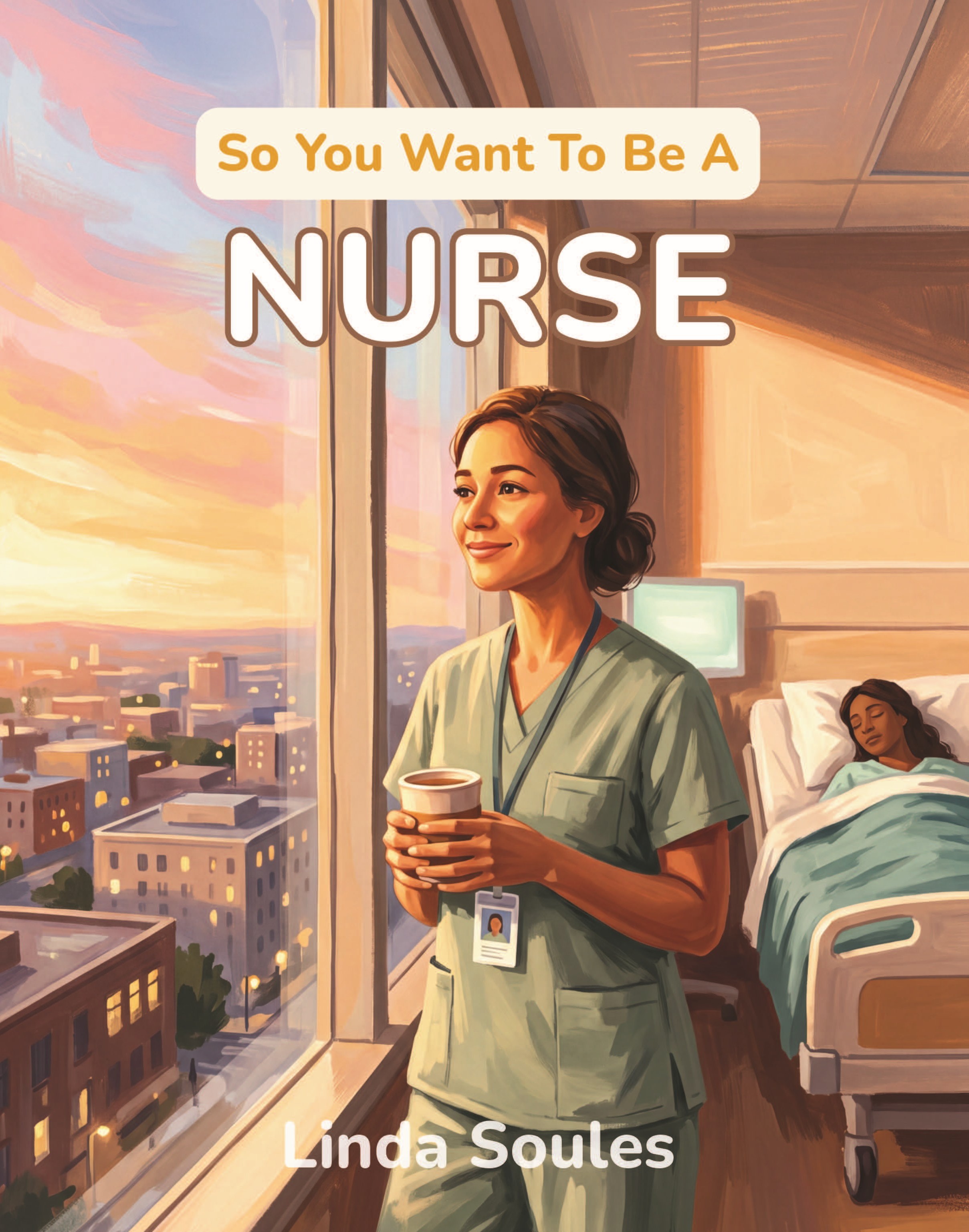
So You Want To Be A Nurse
by Linda Soules
Listen to this review
So You Want to Be a Nurse is a career guide for young readers that takes nursing seriously without making the profession seem either mysterious or impossibly glamorous. Its clearest organizing idea is that good care begins with attention: noticing a change in breathing, a patient’s confusion, or a family member’s sense that someone is “not like herself.” This focus gives the book a strong through-line, connecting practical skills, personal qualities, history, and the emotional meaning of the work.
The opening example of twelve-year-old Maya learning to use an asthma inhaler is an effective introduction. The nurse spots a small but consequential mistake, demonstrates the correct technique, and asks Maya to explain it back. That “teach-back” scene makes a clinical concept legible through action, while showing how education can prevent a later emergency. The book repeatedly turns abstractions into tangible moments: a warmed blanket, a careful handoff, or a nurse calling a rapid response team because several subtle signs suggest sepsis. In the “Day in the Life” sequence, the fictional nurse’s decision to act before the patient’s numbers become alarming gives the book’s central argument a vivid, memorable form.
Soules writes in an inviting, brisk style that generally respects children’s intelligence. Definitions are embedded in context, as when the text explains triage through the contrast between a stubbed toe and chest pain. Humor helps sustain the explanatory passages: the seven-year-old who names his IV pole Steve, the missing pens, and the nurses’ superstition about saying “quiet” all make hospital routines feel human rather than forbidding. The book also handles difficult work plainly. It discusses bodily fluids, violence, grief, missed meals, burnout, and the strain of understaffing; its account of nurses sometimes crying on the drive home is frank without being sensational.
The structure is broad and deliberately modular. Short sections move from duties, tools, and workplaces to training, history, personal qualities, and activities young readers can try now. This makes the book easy to dip into and useful for browsing, though the many stops can also make it feel more like a series of compact explainers than a sustained narrative. Some ideas recur: observation, advocacy, teamwork, and comfort appear in multiple sections. The repetition reinforces the book’s priorities, but occasionally does so at the expense of space that might have deepened a topic—for instance, how nurses balance competing demands across a full shift or how different specialties change the nature of patient relationships.
Historical material gives the career guide welcome depth. Florence Nightingale is presented not only as the “Lady with the Lamp” but as a mathematician whose diagrams helped expose preventable deaths in dirty hospitals. The profiles of Susie Walking Bear Yellowtail, Mary Seacole, Mary Eliza Mahoney, Lillian Wald, Luther Christman, Kofoworola Abeni Pratt, and Ildaura Murillo-Rohde widen the book’s account of who has shaped nursing and what barriers they faced. These biographies connect individual achievement to exclusion based on race and gender, and to the ways language and culture affect care. The result is more than a parade of inspirational figures: it shows that nursing’s history includes both service and struggles over access and authority.
The book is strongest when it balances the appeal of the work with its demands. It describes job security, varied specialties, and the satisfaction of helping someone recover, but does not conceal physical exhaustion or the emotional burden of caring for people who die. Its discussion of staffing is particularly valuable for aspiring readers: the association between heavier patient assignments and worse outcomes, along with the examples of legal limits and school admissions constraints, suggests that patient care depends on working conditions as well as individual compassion. The description of “compassion with boundaries” is similarly thoughtful, acknowledging that caring deeply and protecting one’s capacity to continue are not opposites.
There are limits to the guide’s level of qualification. Its explanations are necessarily simplified for a young audience, but some career pathways and scopes of practice vary substantially by country and region; the brief account of LPNs, RNs, and nurse practitioners cannot capture those differences in detail. The book does direct readers toward further resources, yet many statistics and claims—on pay, staffing, and projected job growth, for example—are presented without citations beside them. Readers using the book for serious career research should treat such figures as a starting point and consult current local sources. This is a modest but real weakness in a work that otherwise emphasizes careful decisions and reliable information.
As a whole, So You Want to Be a Nurse is an accessible and humane introduction, especially effective for readers who want both a sense of daily practice and a broader view of the profession. Its conversational tone, practical examples, and varied historical portraits make it well suited to middle-grade students exploring health careers, as well as parents and teachers looking for material to discuss together. Readers seeking an in-depth textbook or a detailed guide to licensing in a particular location will need additional sources. For curious young people drawn to science, hands-on care, and noticing what others might miss, this book offers a grounded and encouraging place to begin.
Share-ready review images
Download square and vertical images for posts, stories, newsletters, and media kits.
For authors
Want a review page like this for your book?
Upload your manuscript, choose a review tier, and get a permanent public editorial review page you can share with readers.
Review My Book← Back to Reviews
