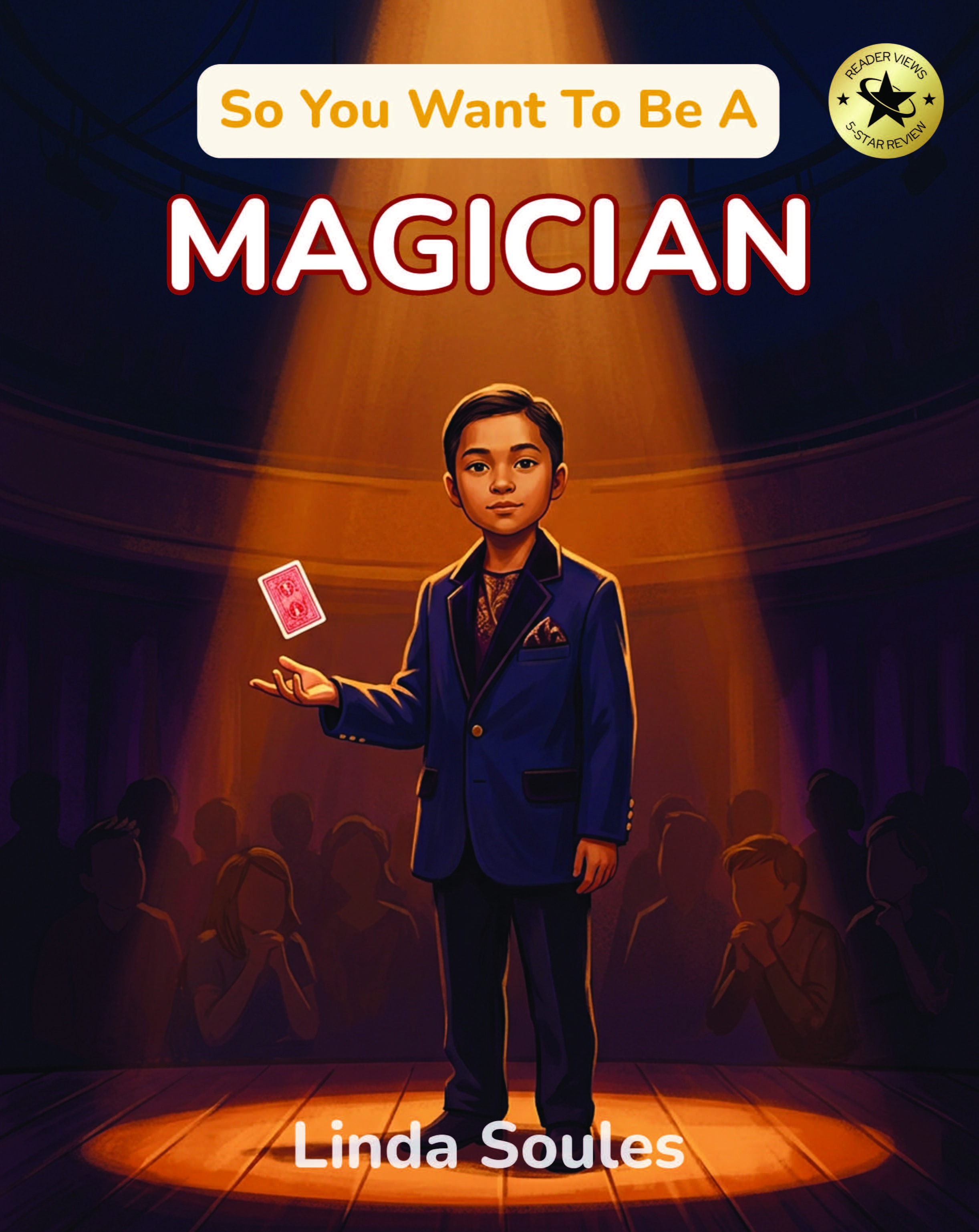
Children's Nonfiction
So You Want To Be A Magician
by Linda Soules
Listen to this review
So You Want to Be a Magician treats magic less as a collection of tricks than as a discipline of attention, practice and performance. Its opening makes a useful distinction: the effects are not supernatural, but the audience’s experience of wonder is real. That idea gives the book a coherent purpose. It aims not only to introduce children to a possible career, but to explain what the work asks of a person—and why someone might find it meaningful.
The strongest material concerns the craft behind the apparent ease. In “What a Magician Actually Does,” Linda Soules breaks the job into misdirection, psychology, practice and performance, then shows how they depend on one another. The book’s example of a coin vanish is especially effective: an audience sees an empty hand and may reconstruct the event as having watched a coin disappear. This turns a trick into an accessible lesson about perception without requiring readers to know technical vocabulary in advance. Later, the description of the practice room—mirrors, a close-up mat and repeated work in solitude—makes clear that the performance is built far from the spotlight.
The book is also good at presenting the less glamorous side of the profession. Its imagined day moves from practice and developing new material to research, prop maintenance and a private-event performance. The account of a move that still “leaves a flash” gives the work a concrete problem to solve, while the section on failed tricks acknowledges the embarrassment and recovery skills involved in performing live. These details help counter the assumption that being a magician consists chiefly of showing off clever effects. The recurring emphasis on patience, composure and attention to detail is well matched to the career’s demands.
Soules’s prose is direct, energetic and often deliberately theatrical. Short sentences and second-person address make the chapters feel like a conversation with a young reader; phrases such as “The method is just the skeleton. The feeling is the art” give abstract ideas a memorable shape. The practical advice—learn one trick well, use a mirror, perform for supportive people and keep a notebook—also gives aspiring magicians something to do beyond imagining the job. The glossary clarifies terms such as “force,” “patter” and “sleight of hand,” and the suggested books, organizations and live experiences extend the introduction into possible next steps.
Its ethical argument is a notable strength. The author’s note recognizes the tension at the heart of magic: the performer deceives, but should do so in a way that protects rather than humiliates the audience. The injunction not to use skill to exploit someone’s trust gives the book a thoughtful dimension unusual in a basic career primer. The profiles of Adelaide Herrmann and Dai Vernon also widen the picture of the art: Herrmann’s career challenges the assumption that professional magic belonged only to men, while Vernon’s preference for teaching over fame illustrates a different kind of accomplishment. These brief histories make the profession feel more varied than a single image of the stage illusionist.
At times, however, the book’s persuasive voice outruns its evidence. It presents figures about the brain’s information processing and sweeping claims about the history of magic and modern psychology without citations in the supplied text. Statements such as “the magician figured out the human mind first, and the scientists are still catching up” are vivid, but too broad to serve as careful explanation. The anecdote about a person with Alzheimer’s is similarly moving, yet the claim that wonder reaches a part of the brain illness cannot affect risks turning an individual story into a general medical assertion. The author’s closing note says the series is extensively researched and fact-checked, but the excerpt offers no source notes with which a curious reader could follow up. More qualification and references would strengthen the book’s educational authority.
The structure is easy to navigate, but the central message is repeated often: magic creates wonder, practice makes the method invisible, and performance gives a trick its emotional force. Repetition can reinforce a theme for younger readers, yet some sections revisit the same point without adding much. The career picture is also more inspiring than practical. Readers learn about venues, collaborators and a typical workday, but little about the varied routes into paid work, the financial uncertainty of performance careers or how a beginner might move from practice to professional opportunities. That omission matters in a book framed around whether this could be a job.
Overall, So You Want to Be a Magician is a lively, encouraging introduction to the art’s disciplines and values, strongest when it connects technical labor with audience experience. Its confident generalizations and limited discussion of the business side keep it from being a fully rounded career guide, but its practical starting points and attention to ethics give it substance beyond cheerleading. It is best suited to readers around ages 10–14 who are already curious about tricks, performance or how people pay attention, and to adults looking for a springboard into conversations about craft and responsible showmanship.
Share-ready review images
Download square and vertical images for posts, stories, newsletters, and media kits.
For authors
Want a review page like this for your book?
Upload your manuscript, choose a review tier, and get a permanent public editorial review page you can share with readers.
Review My Book← Back to Reviews
