Children's Nonfiction
So You Want To Be A Lawyer
by Linda Soules
Listen to this review
So You Want To Be a Lawyer is a career guide for young readers that takes the work seriously without reducing it to courtroom theatrics. Its central argument is that lawyering is less about delivering grand speeches than about careful reading, precise language, ethical judgment, and understanding the people affected by legal problems. That emphasis gives the book a useful identity: it introduces a profession while also asking what fairness, responsibility, and public service require.
The opening sections establish the book’s strongest corrective to popular images of lawyers. “What a Lawyer Actually Does” explains the work of gathering facts, researching statutes and decisions, and applying general rules to an individual situation. It also notes that many important arguments happen in writing, and that thoughtful preventive work—a carefully drafted contract or will—may keep a dispute from arising at all. Later, “The Most Surprising Thing About This Job” returns to the theme with an accessible reminder that quiet, methodical readers can thrive in the profession. The point is persuasive because the book supports it with concrete examples, from reviewing a deposition to revising a motion to dismiss.
Soules writes in a direct, conversational style, using vivid scenarios to make abstract tasks legible to children. The imagined client who arrives frightened, the tenant trying to keep her home, and the family waiting to adopt a child give human stakes to the descriptions of legal practice. The “Day in the Life” schedule is particularly effective: its early-morning case reading, hearing, drafting, and late-evening return to a brief convey both the variety of the job and its encroachment on personal time. The account avoids making every day a courtroom drama, while acknowledging that legal work can be demanding and emotionally difficult.
The book also has a clear ethical and civic center. Its discussion of representing unpopular defendants explains due process as a principle that must apply even when the public disapproves of a client. The profiles of Thurgood Marshall, Ruth Bader Ginsburg, Bryan Stevenson, and Constance Baker Motley connect that principle to consequential legal work, especially efforts to challenge racial and gender discrimination and unjust treatment. These accounts are brief, but they show young readers that legal careers can take very different forms and that change often depends on sustained work rather than a single dramatic victory. The author’s note, drawing on her own twenty-five years of practice, reinforces the book’s preference for careful problem-solving and negotiation over a simplistic contest of winners and losers.
Its practical features make the guide more than an inspirational portrait. The glossary defines terms such as “appeal,” “deposition,” and “precedent”; the preparation section offers attainable exercises, including summarizing an opposing view fairly, writing precisely, visiting a public courtroom, and trying mock trial. The suggested books, websites, and organizations give interested readers places to continue exploring. The tone generally respects its audience: it explains technical vocabulary without assuming that children cannot handle complexity, and it repeatedly presents patience, listening, and teamwork as genuine professional skills.
There are, however, points where the simplification risks becoming misinformation. The most notable is the claim that in civil law “the loser usually pays,” contrasted with the possibility of jail in criminal cases. That is too sweeping as a description of civil disputes in the United States: outcomes and fee rules vary, and a losing party does not generally pay the winner’s legal fees simply by losing. For a book that celebrates precision, this broad statement deserves qualification. The division of law into two “big rivers,” criminal and civil, is also a useful starting image but can obscure other distinctions and the many ways legal fields overlap. These are correctable problems, but they matter because young readers may treat the explanations as firm rules.
The organization is comprehensive, sometimes at the cost of repetition. Ideas about precise language, careful reading, ethical conduct, and helping clients recur across the qualities, tools, surprises, and author’s note sections. Repetition can help reinforce a message for younger readers, but some passages reiterate the same point rather than adding a new angle. The book also gives a strongly affirmative account of law’s capacity to make society fairer. It does acknowledge that systems fail, cases are lost, and resources are unequal, yet offers less space to the limits of legal remedies or to the ways lawyers’ work can serve conflicting interests. Its idealism is a strength for an introductory career book, though readers looking for a more critical account of the legal system will need additional material.
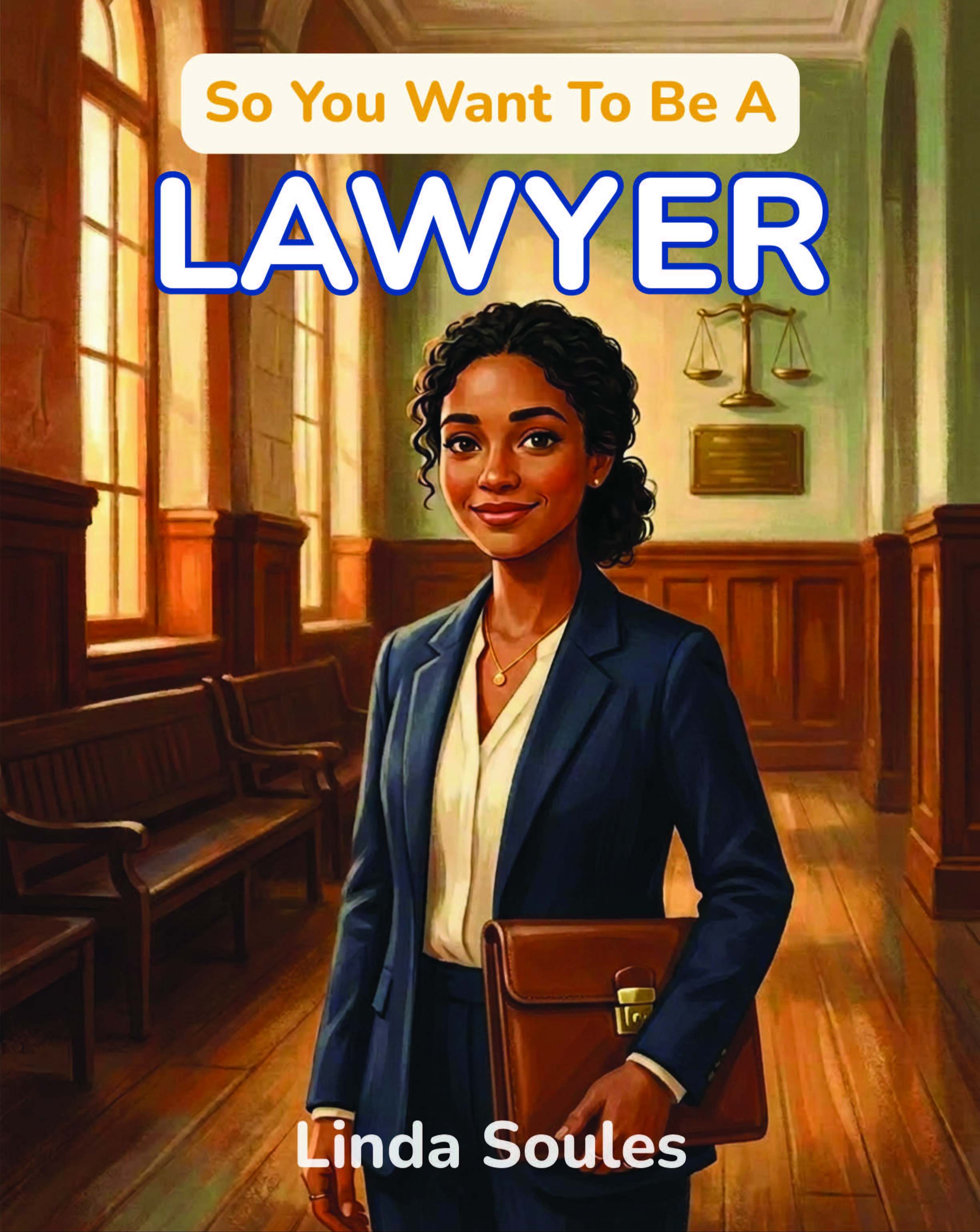
The supplied text also describes the series’ illustrations as AI-assisted, with the author explaining her approach to directing and refining them. That transparency is welcome; without the actual images, however, their quality and relationship to the text cannot be judged here. Overall, So You Want To Be a Lawyer is a thoughtful, approachable introduction for readers around the stated 10–14 age range who are curious about law, enjoy language and argument, or care about fairness. It is most valuable as a starting point for discussion and further exploration, rather than as a definitive account of every area of legal practice.
Share-ready review images
Download square and vertical images for posts, stories, newsletters, and media kits.
For authors
Want a review page like this for your book?
Upload your manuscript, choose a review tier, and get a permanent public editorial review page you can share with readers.
Review My Book← Back to Reviews
