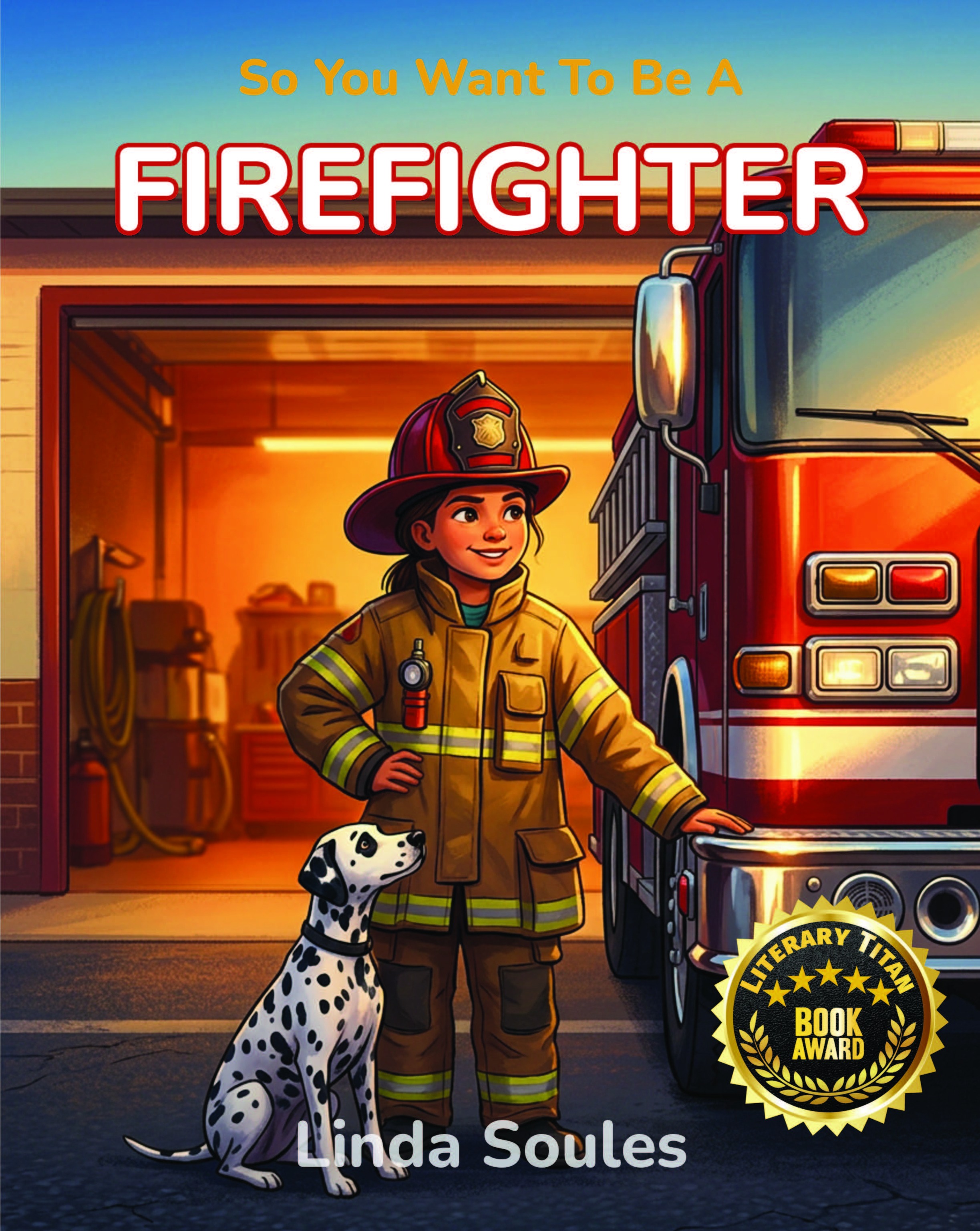
Children's Nonfiction
So You Want To Be A Firefighter
by Linda Soules
Listen to this review
So You Want to Be a Firefighter is a career introduction for young readers that tries to replace the familiar image of the firefighter rushing into a burning building with a fuller account of the work. Its most useful premise arrives early: “fighting fires is only PART of what firefighters do.” The chapters that follow explain a profession shaped as much by medical calls, inspections, training, and teamwork as by flames. The book is at its strongest when it makes that breadth concrete without losing sight of the danger and purpose that draw many children to the job.
The voice is direct, energetic, and deliberately conversational. Sound effects, short sentences, and second-person address—“You step forward”—put the reader inside the imagined experience. That immediacy suits a book meant to kindle curiosity, and the explanation that firefighters feel fear but train to act despite it is more thoughtful than a simple celebration of fearlessness. The “A Day in the Life” chapter also gives the reader a helpful change of pace: its schedule moves from equipment checks and training to a medical call, a prevention inspection, dinner, and a nighttime fire. This routine makes the less dramatic work visible and reinforces the book’s central point.
Its practical explanations are another strength. Sections on bunker gear, SCBA, thermal imaging cameras, and the Halligan bar introduce specialized equipment in accessible terms, while the glossary gives readers a second chance to understand words such as “accountability,” “Mayday,” and “size-up.” The chapters on crew relationships and qualities needed for the job usefully broaden the definition of competence. Putting people at ease, understanding building construction, and taking mental health seriously sit alongside courage and physical readiness. These details help prevent the book from presenting firefighting as a matter of daring alone.
The historical material adds welcome depth. The account of Molly Williams identifies her as an enslaved Black woman who helped drag a fire engine through the snow in 1818, and notes the limited recognition she received in her own time. That passage offers a pointed reminder that the history of the profession includes people whose contributions were overlooked. Red Adair and the firefighters who died on September 11, 2001, extend the book’s sense of the job’s reach and cost. These examples are memorable, although the 9/11 passage’s solemn intensity may call for discussion with younger readers.
The book’s structure is easy to navigate, with distinct chapters addressing tools, working conditions, rewards, risks, preparation, and career fit. It also ends with practical next steps: fire-safety activities, suggested books, organizations, and places to learn more. The advice to make a home escape plan is especially well connected to the book’s emphasis on prevention. Its final reflection on the firefighter’s “promise” gives the book emotional closure, but also reveals a tension in its approach. After offering substantial information about ordinary duties and difficult realities, the closing pages return to elevated language about heroes, sacrifice, and a calling. The result is stirring, but it risks making service sound more uniformly noble and personal than a career guide needs to.
Some factual claims would benefit from tighter qualification. The statement that firefighters are trained to do “almost everything a paramedic can do” is too broad as written: training and responsibilities vary, and the book does not explain those differences. Likewise, claims about the proportion of calls that are fires and the rapid failure of engineered beams are presented with numerical specificity but without citations in the supplied text. The further-reading list is a useful resource, yet the reader cannot readily tell which claims in the main text are based on particular sources. For a book that encourages real career exploration, clearer sourcing and more careful distinctions between firefighters, EMTs, and paramedics would strengthen its reliability.
There is also some repetition. Courage, teamwork, preparation, and the promise to help recur across several chapters, sometimes in nearly the same emotional register. Repetition can reinforce a young reader’s understanding, but here it occasionally displaces opportunities to explain practical questions—such as how training and entry requirements differ across departments. The “What You Can Do to Prepare” advice is encouraging, though the suggestion to practice carrying a dog or a younger sibling is an awkward example; safer, more clearly supervised fitness guidance would be preferable. The tone, too, often skews younger than the stated 10-to-14 age range, even as the technical material aims at older readers.
The author’s note says the series uses AI-assisted illustrations and describes an effort to direct and refine them. Since the material provided here contains no images, their quality and contribution cannot be assessed. The prose itself offers a strong, approachable introduction, though its occasional factual overreach and heroic framing keep it from being a fully balanced career handbook. It is best suited to curious children, especially around the middle-reader years, who want an inviting first look at firefighting, and to parents or teachers prepared to discuss its more technical claims and emotional passages alongside it.
Share-ready review images
Download square and vertical images for posts, stories, newsletters, and media kits.


For authors
Want a review page like this for your book?
Upload your manuscript, choose a review tier, and get a permanent public editorial review page you can share with readers.
Review My Book← Back to Reviews
