Children's Nonfiction
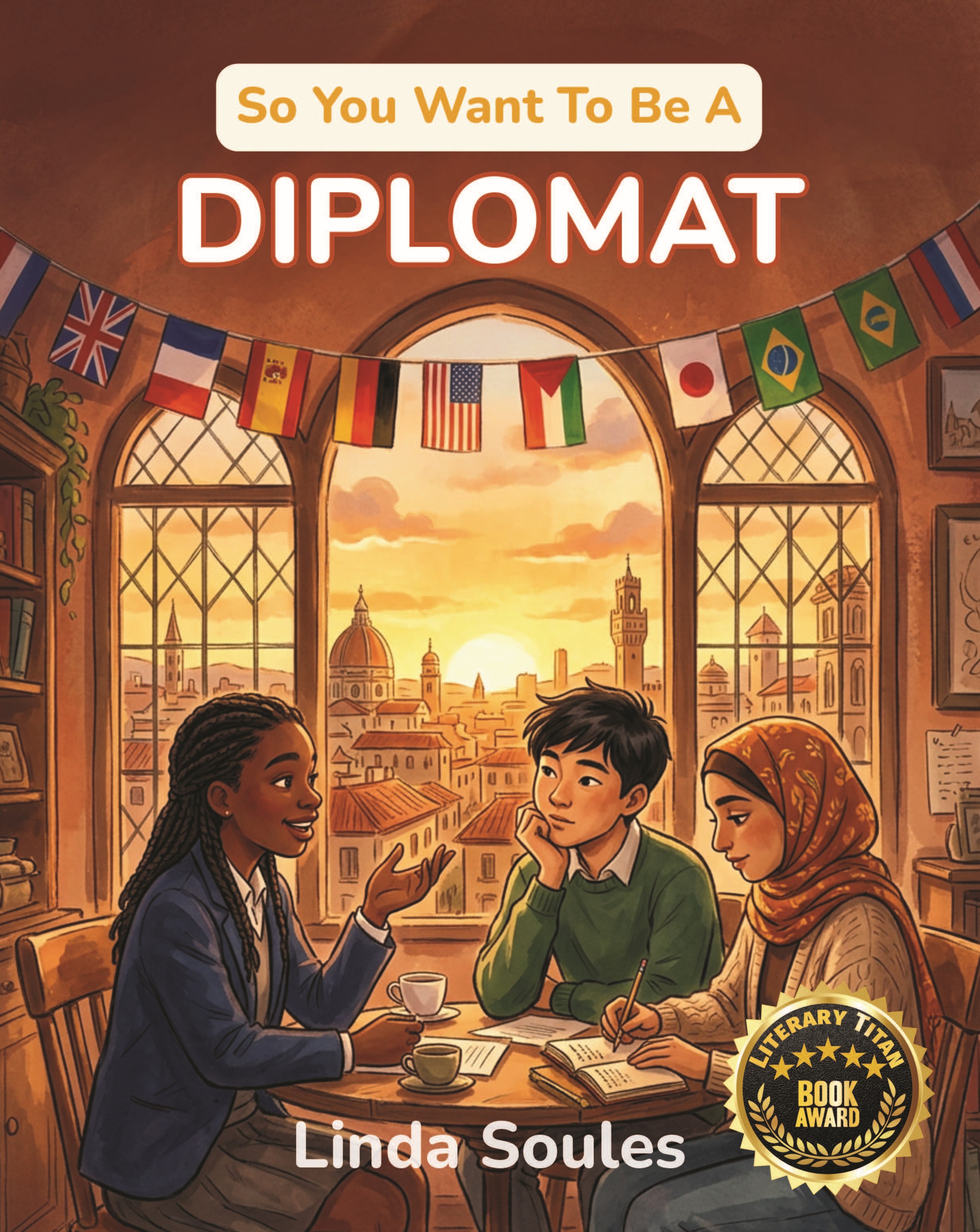
So You Want To Be A Diplomat
by Linda Soules
Listen to this review
So You Want to Be a Diplomat makes an appealing case for a profession whose most important successes are often invisible. Rather than presenting diplomacy as a parade of summits and speeches, Linda Soules describes it as patient work: listening, reporting, building relationships, helping citizens in trouble, and returning to difficult conversations. The book’s central idea—that diplomacy helps keep the world “in conversation rather than at war”—gives its career guidance a clear moral and emotional focus.
The strongest writing is vivid without losing sight of the work’s routine. The opening image of a diplomat making a late-night call to prevent “something that will never happen” neatly introduces the book’s argument about unseen achievement. Later, the sample day makes the profession tangible: overnight cables, a foreign-ministry meeting, lunch with a journalist, a consular visit, report writing, and an evening reception. This sequence usefully complicates the glamour of international travel with desk work, careful drafting, and long hours. The description of the detained citizen who is calmer when the diplomat leaves is especially effective because it translates an abstract public service into a human encounter.
Soules also handles the job’s rewards and costs with welcome balance. Living in different countries and helping secure agreements sit alongside repeated moves, disrupted family lives, isolation, risk, and the possibility that negotiations will fail. The passage acknowledging that a diplomat may have to deliver a message they disagree with is an important qualification to the book’s otherwise idealistic portrait. Its advice that patience means “staying in the room,” rather than passivity, gives young readers a useful way to understand persistence without pretending that good intentions guarantee success.
The book’s structure is well suited to browsing. Short, clearly titled sections move from duties and workplaces to tools, personal qualities, historical examples, preparation, and vocabulary. Practical suggestions—learning languages, following another country’s news, trying Model United Nations, volunteering, and practicing concise summaries—give readers ways to explore the field before making career decisions. The glossary is a sensible reference, while profiles of Eleanor Roosevelt, Ralph Bunche, Dag Hammarskjöld, and Kofi Annan broaden the account beyond a single contemporary job description. The ping-pong episode in the section on surprising developments is a memorable illustration of how unexpected human encounters can open diplomatic doors.
The prose is warm, direct, and frequently lyrical. Its conversational address invites a young reader to imagine themselves in the role, while the food details, diplomatic gifts, and anecdotes provide welcome changes of pace. At times, however, the book leans so heavily on its central theme that the emphasis becomes repetitive. The value of patience, trust, quiet work, and continued conversation is restated in several sections and again in the author’s note. That repetition reinforces the book’s conviction, but it also narrows the range of perspectives: diplomacy is presented primarily as a humane practice of mutual understanding, with less attention to power imbalances, competing interests, or situations in which a counterpart may not be acting in good faith.
That idealism is a strength as an invitation, but a limitation as a complete picture of the profession. The book notes that diplomats represent their governments and may disagree with their instructions, yet gives little space to how policy choices, national interests, or political pressure shape their work. Its practical career guidance is also more about cultivating aptitudes than navigating entry into the field. It mentions exams and foreign-service pathways, but does not explain the qualifications, selection process, or how those routes differ between countries. Because many examples and recommended resources are American, the book’s broad language about diplomacy can sometimes feel more universal than its career guidance actually is.
Some factual explanations would benefit from more qualification. In particular, the glossary describes diplomatic immunity in broad, absolute terms, including the claim that diplomats and their families cannot be arrested or sued in the host country. That compressed wording risks leaving young readers with an overly simple understanding of a complicated legal protection. The anecdote about Khrushchev’s phrase is also presented with considerable confidence despite acknowledging that translation is contested; a little more care around uncertainty would strengthen the book’s lesson about language rather than undercut it.
So You Want to Be a Diplomat is most successful as an engaging first introduction, not as a comprehensive guide to international relations or diplomatic careers. Its accessible explanations, human-scale examples, and honest attention to the profession’s sacrifices make it a strong choice for curious readers around the series’ stated ages of 10 to 14, especially those drawn to languages, history, travel, or conflict resolution. Parents and teachers may also find its prompts useful for starting conversations. Readers seeking detailed hiring advice or a more politically complex account will need additional resources, but young people wondering whether they might belong in this demanding, often unseen line of work will find a thoughtful place to begin.
Share-ready review images
Download square and vertical images for posts, stories, newsletters, and media kits.


For authors
Want a review page like this for your book?
Upload your manuscript, choose a review tier, and get a permanent public editorial review page you can share with readers.
Review My Book← Back to Reviews
