
Buy this Book:
Romantic Theiller
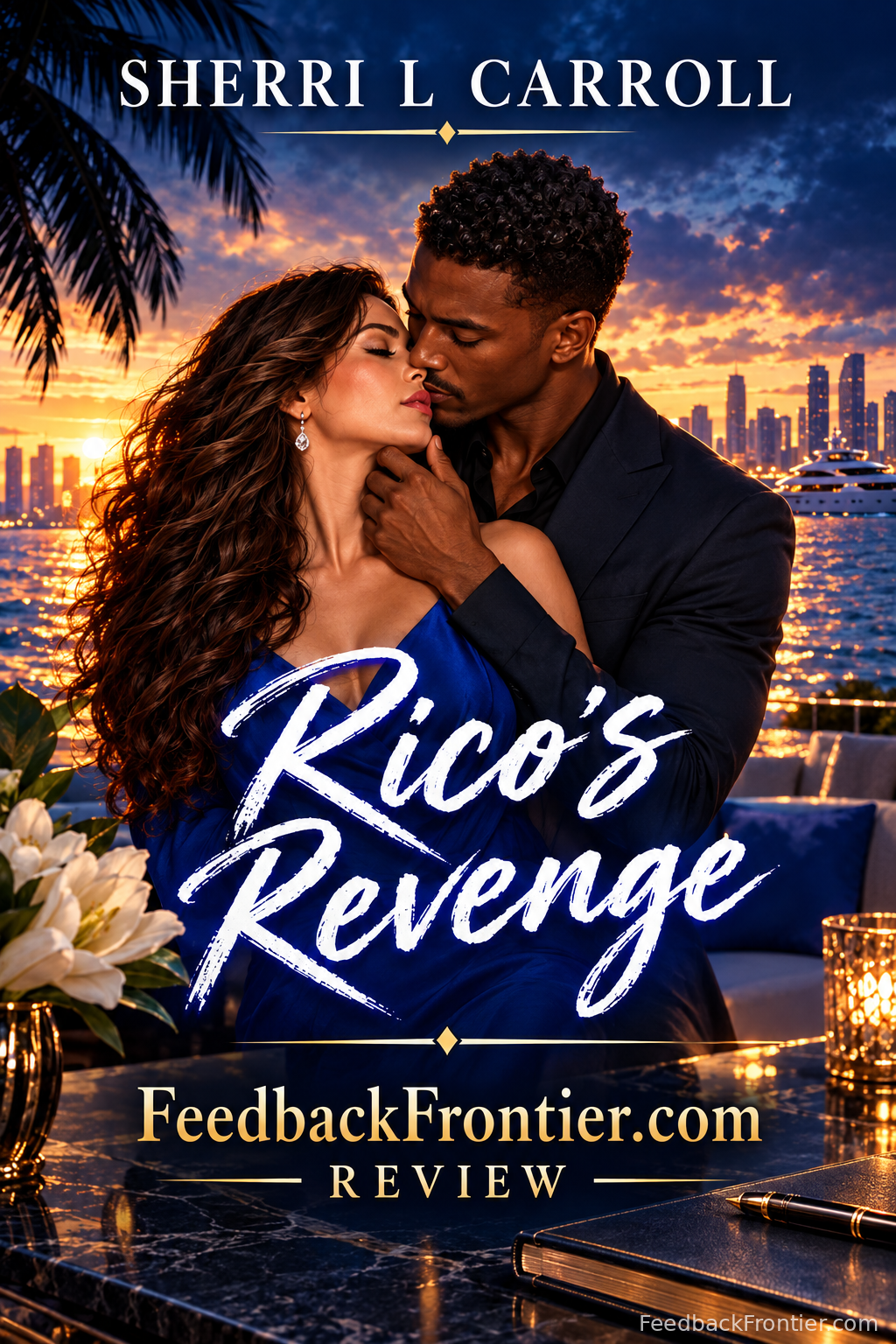
Rico's Revenge
by Sherri L Carroll
Listen to this review
This is a relationship-centered suspense novel about Skye Aberra, a police officer recovering from a shooting, and Rico, the partner who loves her but struggles to distinguish protection from control. The story widens from the intimate ordeal of Skye’s recovery into a search for her attacker, Dennis, and eventually a cross-border kidnapping plot. Its strongest idea is that survival does not end when the immediate danger passes: it leaves questions about trust, bodily autonomy, work, grief, and the kind of future a couple can choose together.
The most convincing passages are often the quietest. Early on, Skye rejects a prescribed pill, and Rico’s fear turns into anger; afterward, he recognizes that being beside her is not the same as knowing what she needs. Their exchange—“Then we’re both learning”—sets up a meaningful arc. Later, Skye asks to read her own discharge papers and make her own medical inquiries, while Rico learns to accompany her without answering for her. These scenes give the romance more substance than declarations of devotion alone. The novel understands that care can become paternalistic, and that an apology matters most when followed by changed behavior.
Skye’s recovery is also rendered through specific, effective details. She chooses the chair farthest from the bedroom door, watches the maintenance ledge from the balcony, and gradually reclaims decisions about her body and home. During her captivity, she scratches her name into a bottle and the underside of a cot, then risks asking Nadège for help. These actions make her resourcefulness tangible without suggesting that fear simply disappears. The eventual return to work is similarly complicated: Skye finds purpose in listening to a frightened woman at the station, but the effort leaves her exhausted. The book’s most affecting insight is that agency can consist of small, difficult choices rather than a clean return to a former self.
The supporting relationships broaden that emotional picture. Phillip’s teasing friendship with Skye offers warmth and humor, while his willingness to challenge Rico prevents him from becoming merely a comic sidekick. Nadège’s intervention is an especially welcome reminder that Skye’s survival depends not only on the person searching for her, but also on the people who hear and believe her. Rico’s history with Gaston Bastile gives the revenge plot a second moral dimension: Bastile’s help does not erase his role in Rico’s wrongful imprisonment, and Rico’s insistence that he put the truth on record keeps reconciliation from arriving too easily. The later chapters also resist a fully tidy resolution: Dennis is arrested, but Jay’s culpability remains subject to evidence and law.
Structurally, however, the novel’s expanding thriller machinery is less assured than its recovery narrative. Rico’s investigation moves through financial traces, aliases, phone data, a drone, gang contacts, and a sea crossing; the details sometimes create momentum, but the chain of discoveries can feel convenient, and the rescue operation strains credibility. The story itself recognizes the danger of impulsive vigilante action, especially when Ellis warns Rico not to approach the hut alone. Yet the plot repeatedly places private networks and armed associates at the center of the search, then relies on official authorities at crucial moments. That tension could produce a sharper examination of law and vengeance, but it is not always developed beyond the immediate suspense.
Rico’s secrecy is another productive conflict that the narrative sometimes prolongs too long. He withholds information about Bastile and the search, asks Phillip to help conceal his plans, and leaves Skye believing that he may have abandoned her. The consequences are clear: Skye feels betrayed, and her partner Ellis’s suspicion becomes more plausible. Rico does eventually acknowledge that fear does not entitle him to decide what Skye can bear. Still, because the book revisits similar concealment-and-reassurance exchanges, the emotional development can feel repetitive, and Skye’s forgiveness sometimes arrives more quickly than the accumulated breaches of trust warrant.
The prose favors direct emotional declaration, romantic endearments, and emphatic reactions. That style will suit readers who enjoy high-intensity relationship fiction, but it can blunt scenes that would be stronger with more restraint; grief and danger are often explained again after the physical action has already conveyed them. The supplied text also contains frequent grammatical and copyediting errors, along with visible gaps and abrupt transitions marked by ellipses. Those interruptions make some shifts in chronology and plot difficult to assess, while inconsistencies such as Dennis also being identified as Daniel call for closer editorial attention. A thorough line edit and continuity pass would materially improve the reading experience.
The closing chapters offer earned signs of renewal—Skye chooses a new home, returns gradually to work, and accepts Rico’s proposal without pretending that trauma or the legal cases are settled. The final movement toward Elaine and Gaston’s uncertain connection also opens another thread rather than resolving every relationship. Readers looking for a polished, tightly engineered thriller may be frustrated by the plot’s conveniences and the manuscript’s uneven execution. But readers drawn to emotionally explicit romantic suspense, especially stories focused on recovery, consent, family loyalty, and the difference between protection and control, may find Skye’s hard-won steps toward self-determination worth following.
Share-ready review images
Download square and vertical images for posts, stories, newsletters, and media kits.

For authors
Want a review page like this for your book?
Upload your manuscript, choose a review tier, and get a permanent public editorial review page you can share with readers.
Review My Book← Back to Reviews
