autobiography
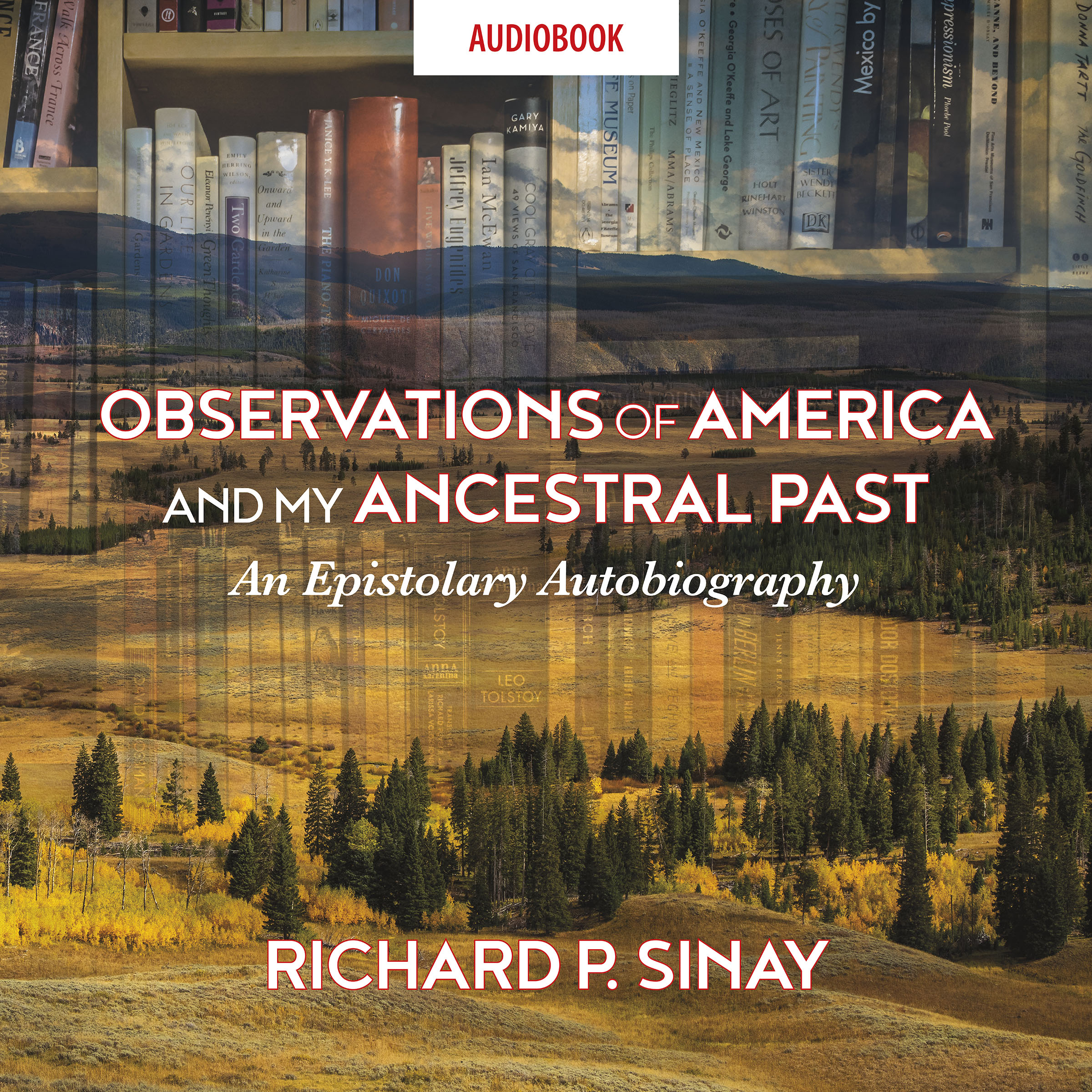
Observations of America and My Ancestral Past
by Richard P. Sinay
Listen to this review
Observations of America and My Ancestral Past is part travel diary, part family-history project, and part retrospective on a retired teacher’s attempt to see the country he had long taught. Richard P. Sinay sets out in 2014 with several purposes: to meet cousins, investigate the origins of his Slovak family, visit historic sites and the homes of writers he taught, and play celebrated golf courses. That mixture gives the book its personal character, though it also makes for an itinerary—and a narrative—without a single dominant focus.
The journey’s most compelling thread is Sinay’s effort to turn family lore into documented history. In the introduction, he explains that his name, which he had long described as Czechoslovakian, has Hungarian roots, while his ethnicity is Slovak. He hopes to share new findings with relatives and dispel myths about their grandparents. The visits show that this goal is not simply a matter of uncovering records: cousins differ in their interest, and one relative’s silence leaves him baffled. Sinay’s reflections on family estrangement and the older generation’s objections to marriages outside Catholicism give the ancestry quest emotional stakes. The research is also usefully preserved in the appendices, where records and competing possibilities are laid out rather than reduced to a tidy family legend.
The book is most affecting when its large ambitions meet intimate experience. A reunion with a cousin he has not seen for fifty years, a long conversation with old school friends, or a day spent discussing family history can matter as much as a famous landmark. Sinay’s account of returning to the Canton neighborhood where he grew up is especially suggestive: the contrast between personal memory and visible decline makes the journey an exercise in revisiting, not just sightseeing. His stated wish to “go home again” gives the travelogue a reflective center, even when the route carries him far from home.
Sinay also brings an engaged teacher’s curiosity to the places he visits. His plans to see the homes of Hemingway, Twain, Dickinson, and other writers are not merely a checklist; he describes wanting to experience the settings in which their lives unfolded. The anecdote about following a forked path behind Robert Frost’s home, then learning that “The Road Not Taken” was written elsewhere, nicely captures the book’s mix of literary enthusiasm and self-correction. Likewise, visits to Jamestown, Williamsburg, Philadelphia, and Civil War sites connect travel with the history he taught. The recurring reference to Rocinante, his car’s name drawn from Don Quixote and Steinbeck’s Travels with Charley, places his own modest expedition in a recognizable tradition of American road writing without claiming equivalence to it.
The prose is direct and conversational, consistent with the book’s origin as Facebook travel posts. Sinay readily shares enthusiasms: the beauty of Sedona, the pleasure of meeting new companions in Augusta, and the wonder of seeing the Grand Canyon and Old Faithful. That accessibility suits readers who want a companionable account rather than a formally constructed literary travel narrative. The index of cities, sites, and golf courses is a practical feature, helping readers navigate a sprawling journey and locate the destinations that interest them.
The same diary-like immediacy, however, can limit the book’s analysis. Sinay announces an ambition to discover a different America and reflect on its history, but some observations remain broad or quickly concluded. His comments about fast-food chains, national obesity, the poverty of former industrial towns, or the nuisance of beggars in New Orleans often state a judgment more than develop it. The contrast between the promise of America and its “sordid” history is an expansive frame; the travel entries, at least in the material provided, do not always make that frame cohere into a sustained argument. Readers seeking deeply researched social history or a carefully shaped account of regional differences may find the observations less probing than the itinerary suggests.
There is also a structural tension between the title’s apparent promise of a single 2014 journey and the preface’s admission that experiences from different years have been combined. The parts are organized by routes, but the stated willingness to fold in other adventures makes the chronology less straightforward. The book’s many aims—genealogy, literature, national history, family visits, golf, and bucket-list travel—offer variety, but sometimes compete for attention rather than reinforce one another. The appendices are a valuable counterweight, though their genealogical terminology, unresolved hypotheses, and occasional rough or confusing passages make them better suited to patient family-history readers than to casual browsing.
Sinay’s book is most rewarding as an earnest record of curiosity: a teacher revisiting the literature and history he taught, a son and cousin pursuing family origins, and a traveler finding that relatives do not always share his appetite for the past. Its candid, informal voice and documentary appendices are strengths; its loose structure and tendency toward broad verdicts are real limitations. Readers drawn to personal travel diaries, Slovak-American family research, literary landmarks, and the small dramas of reconnecting with relatives are likely to value it most. Those looking for a tightly argued national portrait or a polished, scene-driven road memoir may be less satisfied.
Share-ready review images
Download square and vertical images for posts, stories, newsletters, and media kits.

For authors
Want a review page like this for your book?
Upload your manuscript, choose a review tier, and get a permanent public editorial review page you can share with readers.
Review My Book← Back to Reviews
