Psychology
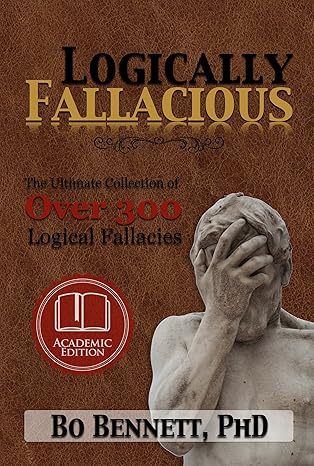
Logically Fallacious: The Ultimate Collection of Over 300 Logical Fallacies (Academic Edition) (Dr. Bo's Critical Thinking Series)
Listen to this review
Logically Fallacious: The Ultimate Collection of Over 300 Logical Fallacies (Academic Edition) by Bo Bennett, PhD is one of those rare reference books that reads as well as it informs. Part textbook, part field guide and part witty conversation partner, this updated 2021 edition manages the difficult balance of rigorous conceptual framing and lively, accessible prose. From the Preface through the lengthy catalog of fallacies and the helpful concluding Q&A and practice sections, Dr. Bennett writes with the confident clarity of a teacher who enjoys the classroom—and who wants his reader to enjoy it too.
One of the book’s greatest strengths is its architecture. Bennett begins not with a laundry list but with a crisp intellectual scaffolding: the Introduction’s clear distinctions among Reasoning, Arguments, and Beliefs; the careful section “What is a Logical Fallacy, Exactly?”; and the useful division of Formal versus Informal fallacies. That early work pays dividends throughout the volume. When the reader later encounters a dense-sounding entry like Affirmative Conclusion from a Negative Premise or the more familiar Ad Hominem family, the explanations land because the conceptual groundwork has already been laid.
The book’s structure—alphabetical entries—works wonderfully for both reference and cover-to-cover reading. Each fallacy follows a consistent and pedagogically smart template: Name(s), a short Description, a symbolic Logical Form where appropriate, concrete Example(s), any notable Exception(s) or Variation(s), and a final Tip/Fun Fact. This uniformity is a very practical gift to the reader: whether you look up the entertainingly titled Alphabet Soup, the moral subtlety of Anthropomorphism, or the clever chapter on Ad Hoc Rescue, you know exactly how the entry will guide you. The inclusion of multiple aliases and “also known as” names is an especially useful touch for real-world readers who encounter fallacies under different labels online and in conversation.
What sets Bennett’s edition apart is the authorial voice: intelligent, kind, and a little irreverent. He punctuates academic rigor with well-chosen humor—the Accent Fallacy example from My Cousin Vinny and the Book of Mormon musical anecdote are both funny and instructive—and he is not shy about using contemporary, even controversial, real-world examples to show how fallacies function in political and cultural argumentation. The book also benefits from Bennett’s evident familiarity with both classical sources (Aristotle, the Stanford Encyclopedia of Philosophy) and modern cognitive science (Kahneman and Tversky). His section on the difference between logical fallacies and cognitive biases is a model of clarity: it explains why conflation between the two is common and how each plays a separate role in our reasoning.
Pedagogically, this edition is generous. The addition of Dr. Bo’s “Three Criteria for a Logical Fallacy,” the playful chapter Being a Smart-Ass, and the methodological transparency in Format and Style of this Book are all smart moves that invite readers to think critically about the act of criticizing. The practical sections—the Top 25 Most Common Fallacies, the dozen or more practice situations (#1–#12), the Reductios, and the lively Questions and Answers that tackle contemporary puzzles (from ad hominem defenses to whether “there are no absolute truths”)—make the book useful not only for philosophy students but for teachers, lawyers, communicators, and anyone engaging on social media or in public debate.
The cumulative impact is considerable: readers will leave the book with a durable toolbox for identifying, classifying, and responding to poor reasoning without veering into pedantry or cynicism. Bennett’s insistence on charity, on preferring interlocutor to opponent, and on resisting the urge to “force-fit” fallacies is not merely stylistic—it changes how one conducts argument and public conversation.
If I offer any gentle caveats they are small. Readers seeking a textbook of formal symbolic logic or an exhaustive scholarly taxonomy of fallacies will find some entries more popular in origin than strictly academic; Bennett candidly explains where internet-sourced usages appear and where he has leaned on the “wisdom of crowds.” Likewise, specialists might wish for more formal proofs in a handful of the deductive fallacies. These are not oversights so much as editorial choices that favor accessibility and applicability for a broad audience.
In short, Logically Fallacious is an unusually lively, thorough, and useful compendium. It is at once a rigorous primer on what fallacies are and a practical manual for spotting them in daily life. Whether you are teaching critical thinking, moderating online debates, or simply trying to be less gullible, this book will become a frequently consulted companion. I enthusiastically recommend it—highly recommended for anyone who cares about argument, truth, and the craft of clear thinking.
Share-ready review images
Download square and vertical images for posts, stories, newsletters, and media kits.
For authors
Want a review page like this for your book?
Upload your manuscript, choose a review tier, and get a permanent public editorial review page you can share with readers.
Review My Book← Back to Reviews
