Buy this Book:
Biography & Memoir
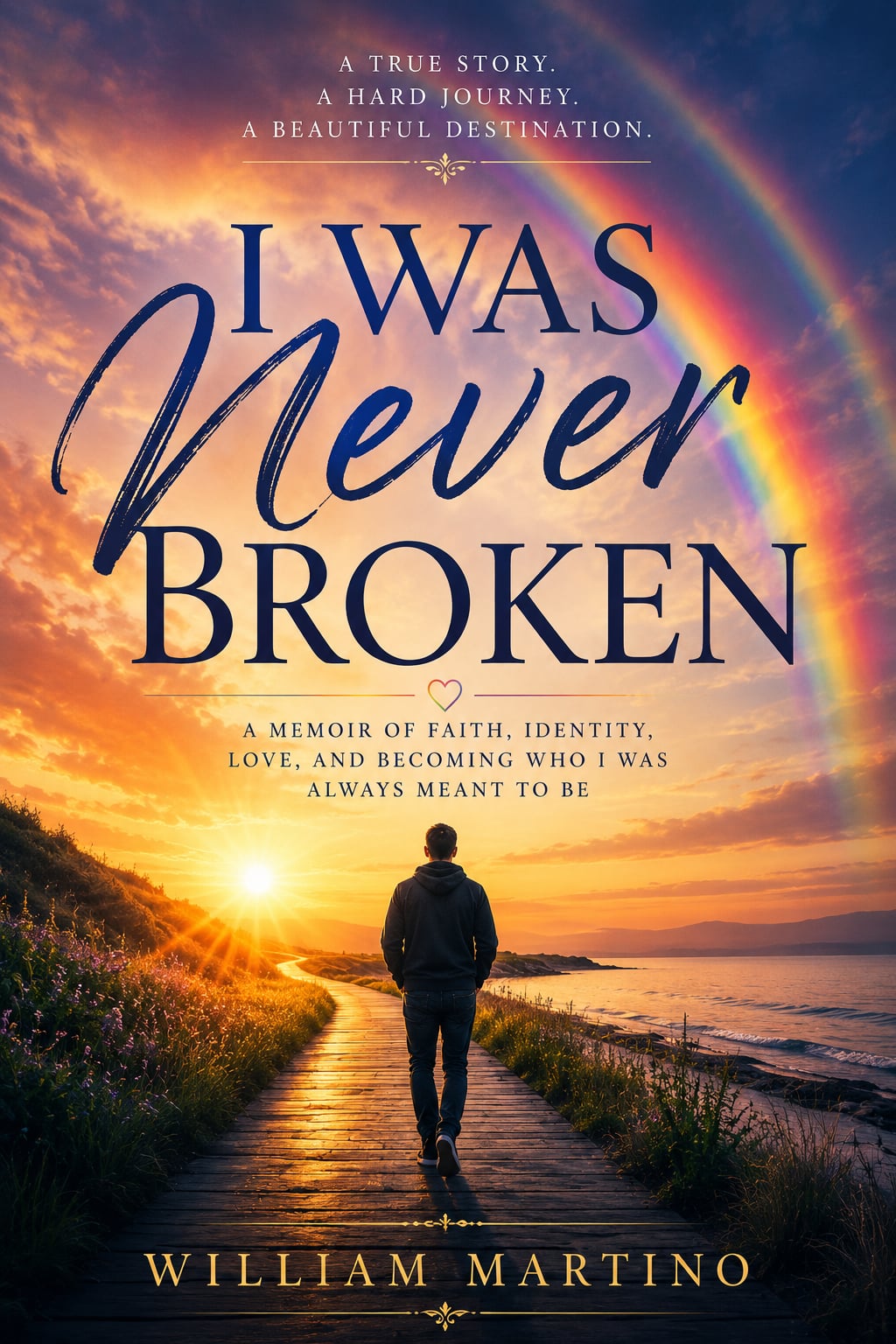
I Was Never Broken: A Memoir of Faith, Identity, Love, and Becoming Who I Was Always Meant To Be
by William Martino
I Was Never Broken is a memoir built around a clear, urgent moral argument: that shame imposed in the name of faith can wound a child far more deeply than the truth ever could. William Martino tells that story with unusual emotional directness. From the prologue’s blunt distinction between “being gay” and being taught to be ashamed of it, through the long interior conflict of childhood church life, conversion therapy with Kent Paris, and the eventual break with that system, the book keeps its focus tightly on the author’s lived experience. That focus is its greatest strength. The prose is often plain, repetitive by design, and therefore cumulative; the repeated cycles of hope, effort, failure, shame effectively mirror the psychological trap Martino describes.
The memoir is also strongest when it shows, rather than merely asserts, the social world that formed him: fire-and-brimstone preaching, the pressure of Sunday school, a father’s “we’ll find a way to fix this,” the isolation of hiding in school, and the relief of allies such as Mrs. Gross, Rodney Woodworth, and the friends who accepted him. The later chapters about Faith United Methodist Church, Brandon, and the wedding sequence give the book a welcome expansion from survival into attachment, chosen family, and self-acceptance. Those passages provide the emotional payoff the earlier sections earn.
At the same time, the book’s insistence on its central thesis can make it feel rhetorically closed rather than exploratory. Some readers may also find the theological reflections and repeated affirmations somewhat repetitive across the middle sections. The very direct, testimonial style leaves little room for ambiguity or narrative distance.
Even so, this is a powerful and accessible memoir for readers interested in LGBTQ+ life stories, faith deconstruction and reconstruction, and the human cost of conversion therapy. It will be especially valuable to readers seeking a candid, affirming account of surviving religious shame and building a life beyond it.
For authors
Want a review page like this for your book?
Upload your manuscript, choose a review tier, and get a permanent public editorial review page you can share with readers.
Review My Book← Back to Reviews
