Buy this Book:
FAMILY & RELATIONSHIPS / Parenting / General (FAM034000)
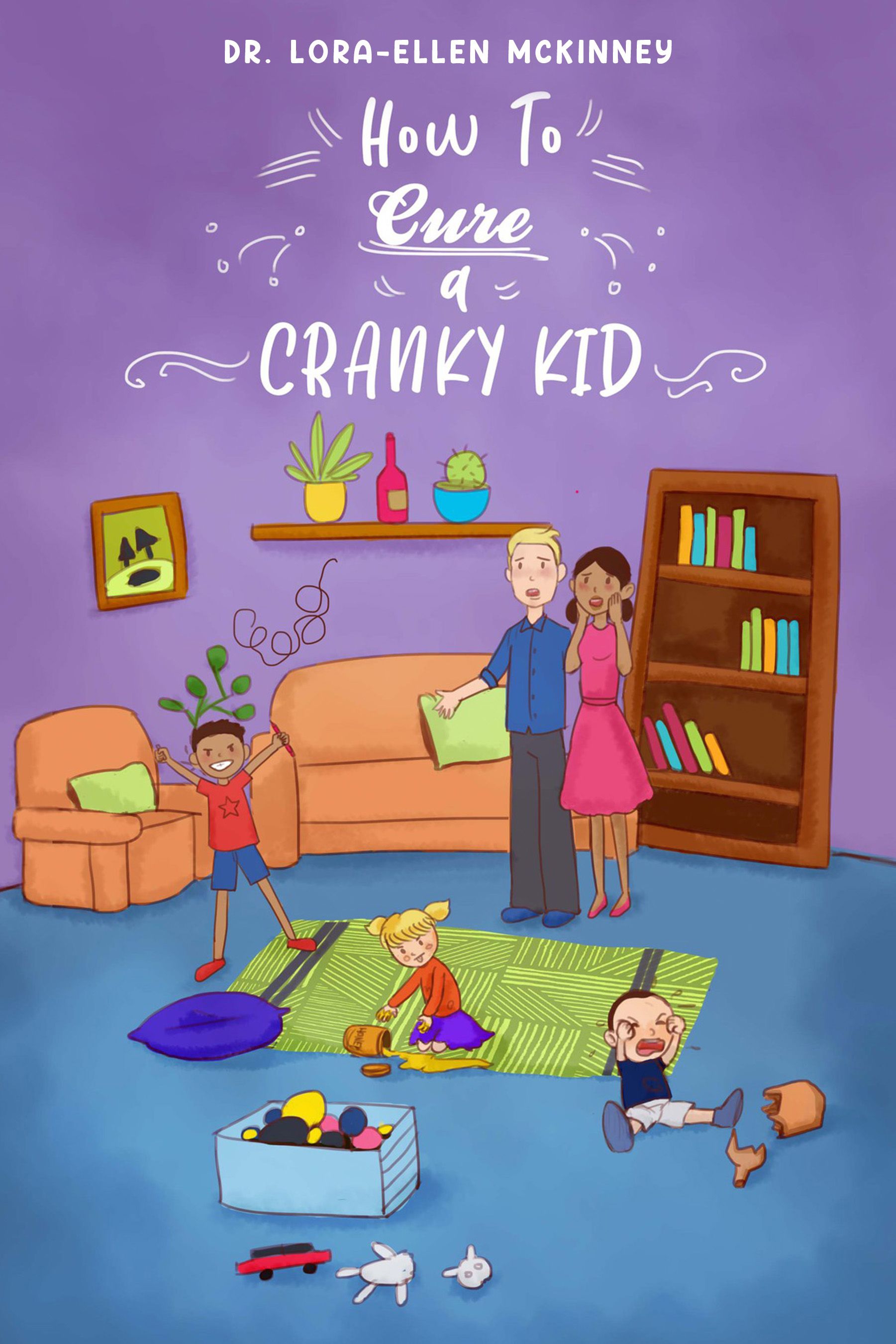
How to Cure a Cranky Kid
by Dr. Lora-Ellen McKinney
Listen to this review
How to Cure a Cranky Kid is less a brisk parenting manual than a sustained attempt to reassure worn-out caregivers that toddler turbulence is both normal and manageable. Across its prefatory chapters and the substantial material that follows, the book argues with steady conviction that early childhood behavior is best understood through development, environment, and adult consistency rather than through panic or punishment. That premise is not especially novel in the broader parenting genre, but the book’s insistence on translating it into practical, day-to-day guidance gives it a clear functional purpose.
Its strongest quality is the authorial tone. The prose is warm, colloquial, and intentionally companionable, repeatedly framing parenting as “a comforting conversation with a friend who gets it.” That voice makes the book approachable for readers who may be anxious, sleep-deprived, or simply overwhelmed by conflicting advice. Chapters such as Why This Book? and Why Don’t Children Come with Instructions? establish an empathetic premise: parents are not expected to know everything instinctively, and learning is part of the job. That reassurance is reinforced in later sections on brain development, developmental stages, trust, routines, and discipline. The book is most persuasive when it refuses to treat misbehavior as moral failure and instead links tantrums, resistance, and crankiness to developmental needs.
There is also real value in the book’s structural logic. It moves from broad framing to more specific interventions in a way that mirrors how a reader might actually seek help: first understanding why toddlers are difficult, then learning how brain development, routines, communication, boundaries, food, and movement shape behavior. Chapters 4 through 6, especially, supply a developmental foundation before the book shifts into strategy. The section on infant, toddler, and young child brain development emphasizes synaptic growth, responsiveness to experience, and the significance of play, emotional regulation, speech, sleep, nutrition, and physical closeness. Even when the language becomes metaphor-heavy, the underlying message is coherent: young children are highly sensitive to the conditions around them, and adult behavior matters enormously.
Several chapters also offer practical ideas that feel readily usable. The discussion of routines in Chapter 8, for example, sensibly emphasizes predictability, bedtime consistency, and transitions that reduce resistance. Chapter 9’s focus on “discipline that teaches, not punishes” gives concrete examples of redirecting energy, explaining consequences in child-sized language, and offering choice within firm limits. Chapter 10’s advice on active listening is likewise grounded in observable behavior: getting down to a child’s level, reading facial expression and body language, and reflecting back feelings. In Chapter 11, the emphasis on self-help skills and boundaries is particularly useful because it treats independence and compliance not as opposites but as complementary goals. The chapters on social skills, empathy, sharing, and play likewise recognize that these abilities are taught through interaction, not magically acquired.
The book’s strongest thematic thread is perhaps its insistence that parenting is relational rather than merely managerial. In Chapter 7, trust is presented as the basis for communication; in Chapter 12, empathy is modeled as something adults must embody if they want children to learn it; in Chapter 14, culture is treated as a serious force shaping family expectations, values, and routines. That final chapter is a welcome expansion of perspective. By acknowledging collectivist and individualist norms, the role of extended family, and faith beliefs, the book resists a strictly one-size-fits-all picture of childrearing. For readers looking for a parenting text that recognizes social context, that breadth is a genuine asset.
Yet the book has notable limitations. Its most obvious weakness is stylistic excess. The recurring reliance on stock metaphors—sailing, lighthouses, gardens, highways, sponges, scaffolding, and “pint-sized Hulk” comparisons—can become repetitive and occasionally dilutes the force of the advice. The effect is not disastrous, but it does create a sense of rhetorical inflation, as though the book is continually trying to make ordinary guidance feel more grand than it is. In a similar vein, the text sometimes slips into overgeneralization. Statements about “kids,” “toddlers,” or “parents” are often presented in sweeping terms that may not hold across temperament, family structure, disability, or cultural setting, despite the book’s occasional effort to broaden its lens.
There are also moments where the rhetoric becomes more prescriptive than reflective. Early on, the book states, “You are the parent. Though friendly, you are not your child’s friend,” and “As parent, you are in charge of your children.” Those claims will appeal to readers seeking firm boundaries, but they also signal a fairly hierarchical view of family life that may not sit well with parents who prefer more collaborative or autonomy-centered approaches. The book consistently favors adult authority, consequences, and compliance, and while it often tempers that with empathy, readers looking for a more psychologically exploratory or less directive model of parenting may find its assumptions limiting.
Another practical limitation is the book’s uneven depth. Some subjects are handled more as orientation than as fully developed guidance. Chapter 4 promises to explore what is going on in the child’s head, but much of the material that follows in the provided text remains introductory. Likewise, the section on developmental delays is helpful in naming early intervention, pediatric consultation, and school-based services, but it stops short of offering nuanced distinctions or detailed decision pathways. The parent-facing “quick tips” in the appendix are useful as a reference, yet they also underline the book’s tendency to summarize rather than deeply analyze.
Even so, the book’s value lies in its accessibility and its clear commitment to reducing shame. It repeatedly tells exhausted caregivers that they are not failing because parenting is hard, that children are shaped by environment, and that small, consistent responses matter. Those are not trivial messages. The book is most effective when read as a supportive primer for the early years, especially for families trying to build routines, manage tantrums, encourage communication, and understand development without wading through dense theory.
Recommendation: This is a good fit for first-time parents, grandparents, caregivers, and early childhood educators who want an encouraging, practical overview of toddler and preschool behavior from a strongly structured, boundary-conscious perspective. Readers seeking a more nuanced, less repetitive, or less authority-centered parenting philosophy may find it less satisfying.
Share-ready review images
Download square and vertical images for posts, stories, newsletters, and media kits.


For authors
Want a review page like this for your book?
Upload your manuscript, choose a review tier, and get a permanent public editorial review page you can share with readers.
Review My Book← Back to Reviews
