FICTION / Short Stories (single author) (FIC029000)
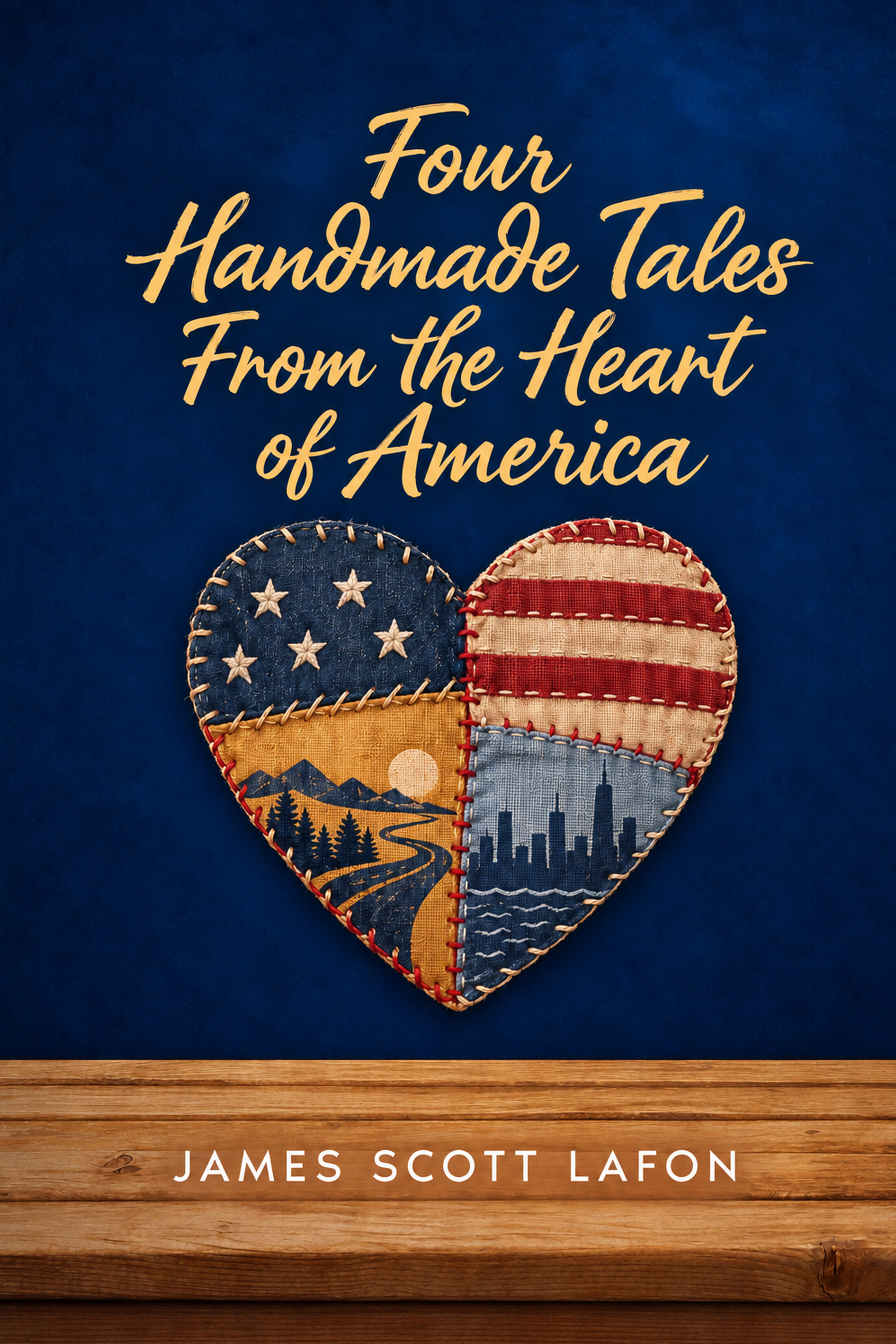
Four Handmade Tales From the Heart of America
by James Scott LaFon
Listen to this review
The material presented reads less like a single continuous novel than a collection of linked narrative sequences: Alfonzo and Mrs. Barrett’s rental-property life in Pueblo, a circle of golfers in Albuquerque, a murder-and-family story stretching from Las Vegas to New Orleans, and Poppy Harrigan’s daily rounds on Saint Thomas. Recurring interests—work, family, faith, money, and the small rituals that keep people connected—give these sections a common ground. Their strongest passages convey affection for ordinary lives and for the places in which those lives unfold. Their chief limitation is structural: the shifts in cast, setting, tone, and narrative approach are so frequent that the collection’s larger design is difficult to discern.
A particular strength is the attention to practical detail. The rental chapters understand the labor involved in preparing a vacant house: Zack clears a clogged drain, checks a cleaning company’s work, and helps Alfonzo ready properties for new tenants. In “Golf Is Not a Four-Letter Word,” Raphael’s work at Second Hand Sports and his careful practice at Los Altos similarly give golf a material life beyond the game itself. Poppy’s taxi, meanwhile, makes Saint Thomas legible through errands, school runs, hardware shopping, and the daily logistics of scarce water and steep roads. These details make work feel like a form of character rather than mere background.
The recurring images of stars and games also provide a loose thematic thread. Alfonzo’s stargazing frames his reflections on rental business and family; in “Stargazing With Mrs. Barrett,” the couple’s decision to seek out their absent son gives their shared view of the night sky an emotional purpose. Golf functions in the Albuquerque sequence as both recreation and social glue, culminating in the Desert Rats’ last-hole success at the Casa Angelica fundraiser. On Saint Thomas, dominoes and fishing offer Poppy’s family and friends a modest counterweight to uncertainty. The writing is often most affecting when these repeated activities quietly register loyalty, grief, or hope.
“Las Vegas Soliloquy” has the clearest suspense engine. Uncle Rick’s death, the letter and key he left Aaron, and the notebook that may expose the people responsible give the sequence forward momentum. Yet its focus is less on detective work than on bereavement: Aaron’s drive to recover his uncle and return him to New Orleans matters more to him than solving the killing. The funeral parade, with its music, decorations, and neighborhood participants, is a vivid and humane conclusion to that emotional journey. Francine’s recollection that being missed may be the best measure of a life well lived is another effective moment of reflection.
The Saint Thomas chapters offer a different pleasure: patient observation rather than plot acceleration. Poppy’s relationship with Kingston, his wife Tamsin, and the sometimes troubled Captain is rendered through meals, conversation, and repeated acts of care. The island’s landscape and economy are not simply postcard scenery; the descriptions of cisterns, water deliveries, imported fuel, and winding roads suggest the conditions shaping daily life. The Ridgecrests’ realization that they can enjoy the island without owning a home adds a useful complication to the idea of “paradise,” which Poppy himself cannot afford elsewhere.
That episodic approach, however, can become diffuse. Chapters often introduce a situation, explain its context, and close on a general reflection, while offering little change in the relationships at their center. The Barrett material, the golf sequence, and the island chapters are linked more by recurring subjects and conversational habits than by a clearly articulated overall arc. The supplied text also contains ellipses and stops partway through the Saint Thomas material, so it is not possible to assess every sequence’s completion. Across what is available, the brisk chapter-by-chapter movement sometimes leaves characters feeling like entries in a social panorama rather than people whose conflicts have been fully developed.
The prose is accessible and conversational, with a fondness for aphorisms, jokes, and direct commentary. That voice can be engaging, especially in dialogue, but its repetitions and explanations sometimes blunt the effect of scenes that would be stronger if allowed to stand on their own. The comedy is also uneven. Alfonzo’s domestic banter and Harry’s negotiations over his putting mat are light, recognizable humor; other moments rely on sexual generalizations or blunt judgments. The remark that women are not always logical, and Alfonzo’s framing of sex as leverage in his marriage, are presented as comic observations, but can make the warmth of the relationships feel less reciprocal. Readers may also find the political passages in the City Hall chapter one-sided: its discussion of landlords, rent control, homelessness, and immigration asserts positions more than it explores competing pressures.
Overall, these narratives are most rewarding as portraits of workaday communities, with memorable regional texture and a genuine interest in the small gestures through which people sustain one another. They are less suited to readers seeking a tightly plotted novel, consistent narrative voice, or subtle, sustained exploration of political questions. Readers who enjoy episodic fiction, local color, golf and domestic comedy, and stories attentive to family bonds—particularly those drawn to the Pueblo, Albuquerque, Las Vegas, and Saint Thomas settings—are the audience most likely to value the collection.
Share-ready review images
Download square and vertical images for posts, stories, newsletters, and media kits.

For authors
Want a review page like this for your book?
Upload your manuscript, choose a review tier, and get a permanent public editorial review page you can share with readers.
Review My Book← Back to Reviews
