Mystery
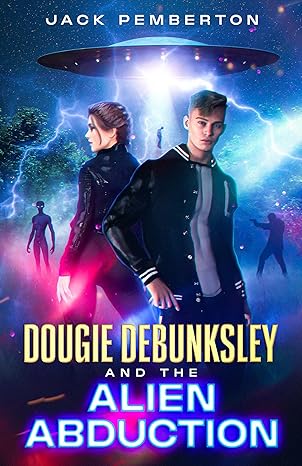
Dougie Debunksley and the Alien Abduction
Reading this novel is like stepping into a starlit conspiracy that feels at once intimate and vast. From the opening chapter, The Realms of Doubt, the author masterfully sets up a narrator—Dougie—whose skeptical rigor collides with Eva’s haunted certainty, and the result is a compelling emotional engine that drives the entire book. The prose is clear and agile, alternating between crisp, observational detail (the glowing disc warm in Dougie’s pocket) and quiet, human moments of confession—“I guess I just accept that not knowing is part of the journey”—that linger long after the page is turned. Writing style and voice are enormous strengths here: the narrator’s wry, searching tone makes the scientific mysteries feel personal and the emotional revelations feel earned. Structurally, the book’s episodic chapter titles—The Cosmic Confidante, The Shard of Doubt, The Unveiling of Shadows—work like waypoints on a map. Each chapter introduces a new layer of stakes or meaning, from Uncle Charlie’s astrophysical lead to Dr. Lena Kurov’s life-saving lab, from the nerve-wracking misdirection and capture sequences to the surprising corporate-humanist turn aboard the EnviroSol jet. The pacing is assured: quieter reflective passages under the oak tree balance the taut chase sequences in “The Heart of Darkness” and “The Escape Through Shadows,” so tension never exhausts the book’s emotional bandwidth. Originality is another hallmark. The novel cleverly blends teen coming-of-age concerns—identity, friendship, responsibility—with high-concept ideas about quantum communication and emergent AI. The reveal that the device, later nicknamed Tony, functions both as a quantum communicator and as a quasi-sentient mirror that can render fantasy into convincing reality is imaginative and thematically rich. It reframes the alien-abduction trope into a meditation on how technology amplifies human longing, and it forces characters (and readers) to ask which experiences we trust. The character of Eva, in particular, is sympathetically drawn: her vulnerability and courage carry the theme that belief and doubt can coexist. James Barker’s undercover role and the shifting alliances between ZenTech, EnviroSol, and EnviroSol’s founder add moral complexity without ever becoming mere plot machinations. If I were to wish for one modest expansion, it would be a touch more technical grounding around Tony’s quantum mechanics for readers who delight in speculative science; a debrief that sketches the technology’s limits would reward curious minds without dulling the novel’s wonder. A second gentle note: a few secondary figures—Uncle Charlie, Dr. Kurov—might have benefited from slightly more backstory to deepen their emotional resonance. These are small quibbles against a book that otherwise hums with intelligence and heart. This is a novel that entertains and provokes in equal measure: it delivers suspense, tender friendship, ethical questions about emergent intelligence, and a satisfying emotional arc for Dougie and Eva. For readers who love smart, character-driven science fiction that keeps its feet on human soil even as it opens its eyes to the stars, I enthusiastically recommend this book.
Share-ready review images
Download square and vertical images for posts, stories, newsletters, and media kits.
For authors
Want a review page like this for your book?
Upload your manuscript, choose a review tier, and get a permanent public editorial review page you can share with readers.
Review My Book← Back to Reviews
