Buy this Book:
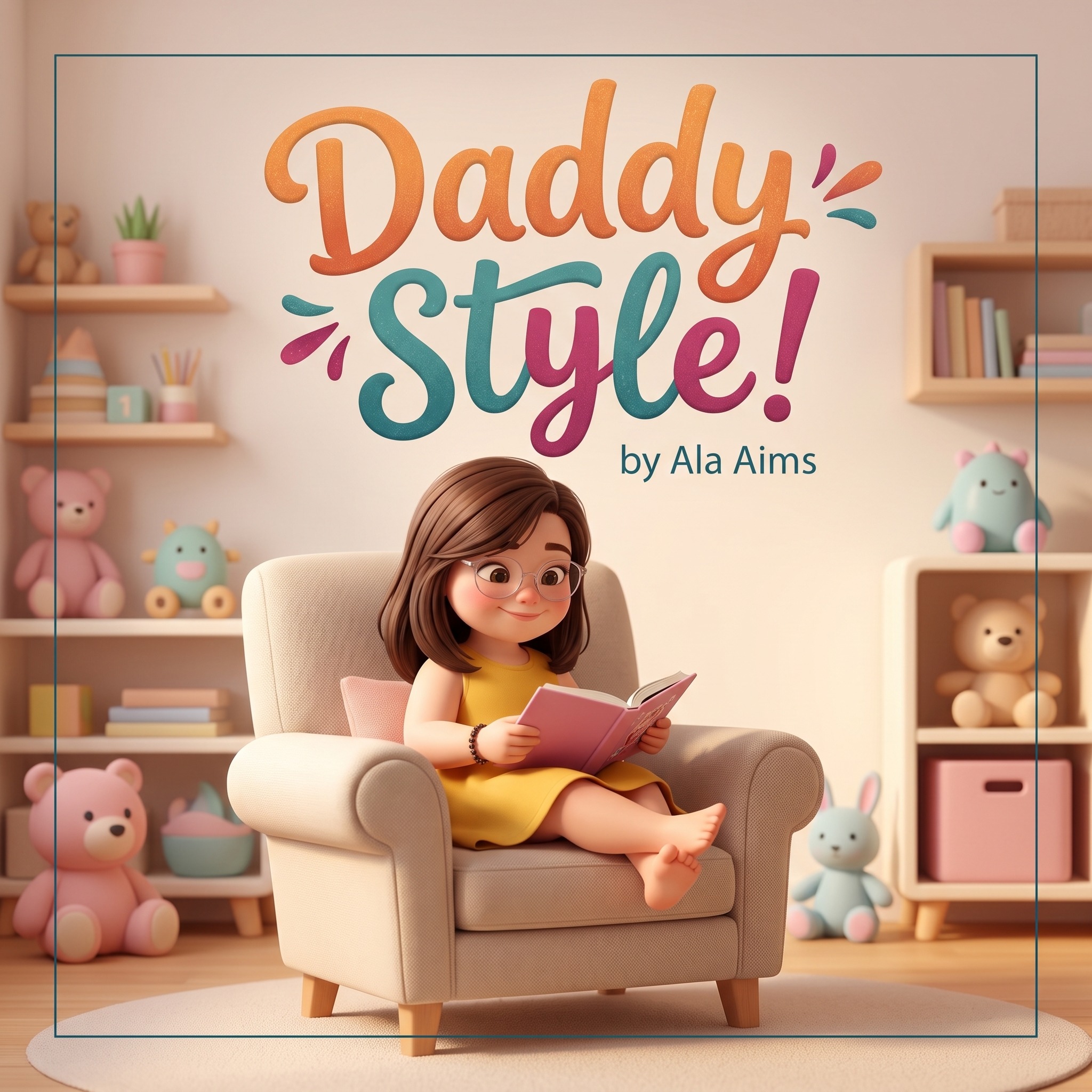
Daddy Style!
by Ala Aims
Listen to this review
Ala Aims’s Daddy Style! is a picture-book story about Tula, a young child whose world often feels overwhelming and whose family struggles to understand what she wants. She dislikes unfamiliar clothes, noise, and new experiences, and she has difficulty finding words for her feelings. The turning point is not a formal lesson but an ordinary moment of connection: Tula watches her father enjoy a cheeseburger, Pokémon, and techno music, then discovers that these are pleasures she can share. The book’s central insight is appealingly simple: a familiar person’s enthusiasm can offer a child a safe route toward communication and participation.
The narrative is strongest when it makes Tula’s experience concrete. Her yellow dress is comfortable when other clothes feel “scratchy” or tight; the noisy world contrasts with the quiet room where she feels safe. These details give the story an accessible emotional foundation without assigning Tula a diagnosis. Her sense that her family speaks “words from a map” while she remains on the other side of a gap is an especially effective image for the difficulty of communicating across different needs. The poem also recognizes that Tula can feel lonely even within a loving family—a meaningful note of complexity in an otherwise reassuring story.
The father-daughter relationship supplies the book’s warmth and structure. Rather than demanding that Tula immediately try something new, Daddy shares his own interests beside her. She observes first, then chooses the cheeseburger herself, announcing, “I want a cheeseburger, Daddy Style!” That moment gives her a small but clear act of agency: she has found a phrase that works for her. The repeated “Daddy Style!” becomes a playful shorthand for connection, and the book’s best emotional payoff is the sense that a shared interest can make communication feel less daunting.
The rhyming couplets are designed for reading aloud, and their bright, uncomplicated diction suits a young audience. Repetition—especially the early “No, no, no, no”—helps convey Tula’s resistance in a way children can recognize, while the food and music references add lively sensory anchors. The poem moves in a straightforward sequence from isolation, to observation, to a first request, and then to growing participation. That clarity makes the story easy to follow and gives caregivers natural opportunities to talk with a child about preferences, feelings, and ways of joining in.
At times, however, the rhyme appears to dictate the phrasing more than the scene does. Lines such as “This isn’t a dare” after Tula’s request for a cheeseburger feel awkwardly inserted, and some rhymes lean on familiar or approximate constructions. The result can make the meter uneven when read aloud. The narrative also moves quickly from one successful food request to broad improvements in play, outings, communication, and tolerance of uncomfortable sounds and textures. These later changes are asserted rather than shown, so the emotional transition feels more sweeping than the story has prepared us to believe.
That compression points to the book’s most important limitation. Tula’s sensitivities and communication difficulties are introduced with care, but the resolution risks suggesting that the right shared interests—and a loving father—will make these challenges recede. The text says the loud sounds and scratchy things become “not quite as bad,” yet offers little sense of what happens when they remain difficult. A more gradual ending, or a clearer acknowledgment that connection helps without fixing every discomfort, could preserve the hopeful tone while better honoring the persistence and variety of children’s needs. Daddy is also the decisive guide throughout, while Mom mainly asks questions and celebrates Tula’s progress; the story’s family portrait is affectionate but not evenly developed.
The book identifies itself as fiction and notes that its story and illustrations were created with artificial-intelligence assistance. The supplied text does not include the illustrations, so their contribution to the storytelling cannot be assessed here. As a text, Daddy Style! is most successful as a tender invitation to notice what a child enjoys and to meet them through those interests. It is not a detailed account of sensory differences or a practical guide to supporting them, and readers seeking nuanced, gradual treatment of those experiences may find its resolution too easy.
Daddy Style! will likely appeal most to preschool and early-elementary readers, especially when shared with a parent or caregiver who can use Tula’s story to discuss comfort, communication, and common interests. Its affectionate premise and memorable refrain give it a welcoming read-aloud quality, even as the uneven rhyme and simplified arc limit its depth. For families looking for a gentle story about finding a point of connection, it offers genuine warmth; it is less suited to readers wanting a more realistic exploration of ongoing sensory or communication challenges.
Share-ready review images
Download square and vertical images for posts, stories, newsletters, and media kits.
For authors
Want a review page like this for your book?
Upload your manuscript, choose a review tier, and get a permanent public editorial review page you can share with readers.
Review My Book← Back to Reviews
