Fiction — Thriller & Suspense
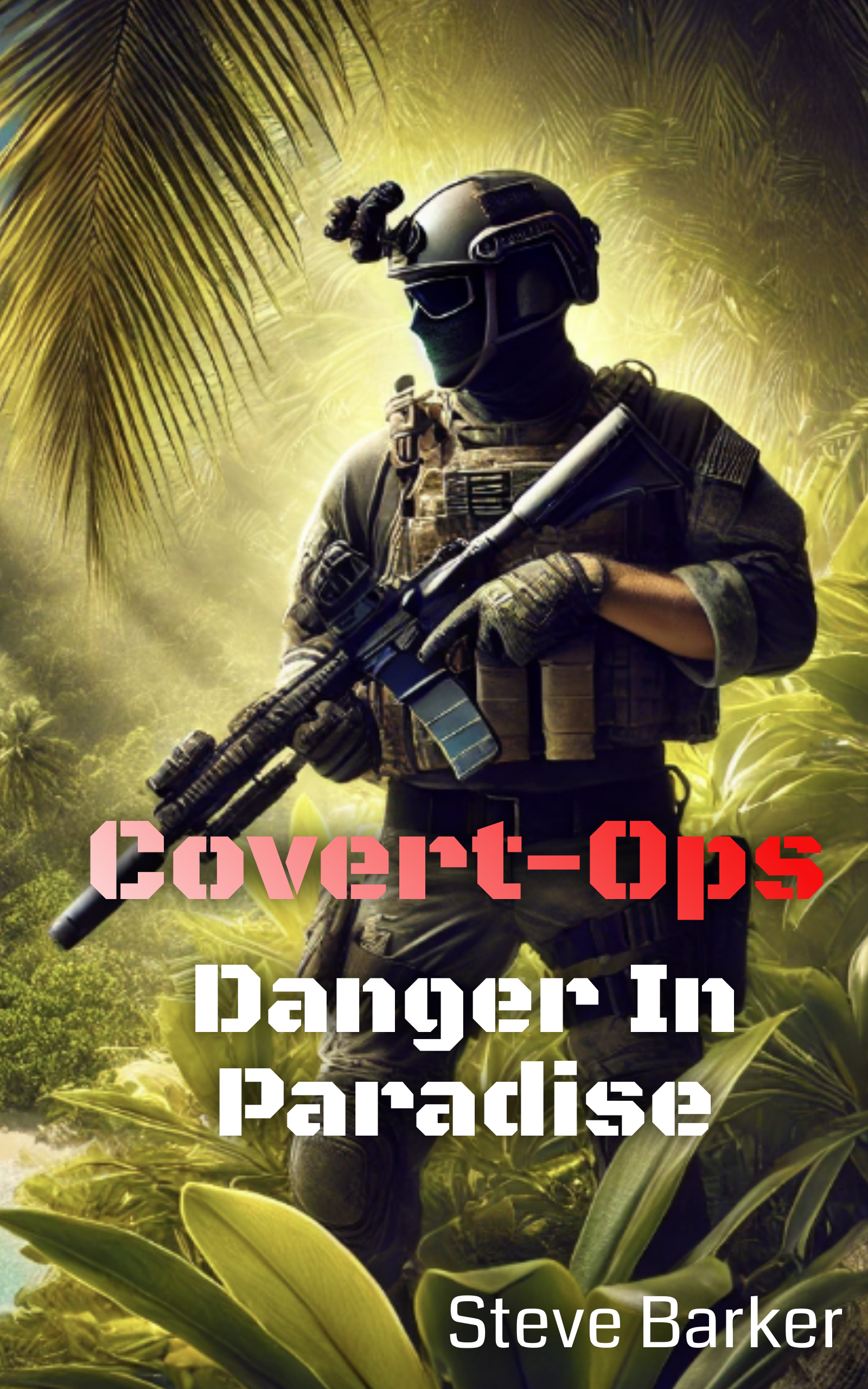
Covert Ops: Danger In Paradise
by Steve Barker
Listen to this review
Danger in Paradise opens the Covert-Ops series with a confident, bruised, and highly readable burst of military thriller energy. Steve Barker wastes no time establishing the atmosphere: this is a novel driven by hard-earned experience, operational detail, and the emotional residue of war. From the outset, the book balances action with character, and that balance is one of its greatest strengths. It is not merely about a mission on a Caribbean island; it is about what happens when men who have been shaped by conflict are offered one more job, one more chance to use the skills that civilian life has not fully absorbed.
At the center is Steve, a former British soldier whose life is fraying under the pressure of chronic PTSD, debt, anger, and sleeplessness. Barker gives him a compelling sense of texture: he is not presented as a glossy action hero, but as a man living with the long aftershocks of service. That emotional honesty gives the book real weight. When Simon, an old veteran mate, brings him the offer from Henry—a wealthy landowner who needs a problem removed from his Caribbean estate—the setup immediately feels plausible, but also faintly dangerous in the best thriller tradition. Steve’s instinct that the job is “too neat” is one of the novel’s sharpest early touches, and it signals the book’s larger skill in turning practical suspicion into suspense.
The plot is tightly constructed and steadily escalates. What begins as a straightforward private security assignment becomes something much darker once the team reaches St Bethanie and moves toward St Halb. Barker makes excellent use of the island setting: the tropical beauty is never romanticized into softness. Instead, the Caribbean landscape becomes a place of concealment, threat, and strategic difficulty. The vineyard estate, the armed guards, the dogs, and the narrow road linking the island’s two halves all contribute to a sense of pressure that is both physical and psychological. The story understands that in a covert operation, terrain is never neutral. Here, paradise is operationally hostile.
One of the book’s most satisfying features is its attention to tactical realism. Steve’s planning—observation posts, escape routes, transport contingencies, fallback positions—adds credibility without bogging the narrative down. Readers who enjoy the procedural side of military fiction will appreciate how Barker uses these details to deepen tension rather than interrupt it. Simon’s movement and George’s practical preparation for the guard dogs show a team that feels functional and experienced, and that grounded competence makes later escalation more effective. The mission has a rhythm: reconnaissance, suspicion, discovery, and then violence, each phase earned by the one before it.
Just as strong is the dark humour threaded through the novel. The barrack-room wit never feels decorative; it serves as a form of survival, a means of maintaining cohesion in a world that is otherwise corrosive. That tonal control is difficult to achieve, but Barker manages it well. The humor lightens the weight of the material without diminishing it, and it makes the characters feel recognizably human. These are men who know how to joke because they know how bad things can get. That authenticity gives the book its distinctive voice.
The central revelation—that Henry’s vineyard is being used as cover for a drug operation, with marijuana hidden in wine barrels and shipped under the guise of legitimate commerce—brings the story into sharper moral focus. The criminal scheme is smartly chosen: it exploits the respectability of the estate and the sophistication of the wine trade, which makes the betrayal feel especially invasive. The gang leader Hadley is appropriately ruthless, but the more memorable twist is the betrayal by Sam, the trusted ex-military contact. That double-cross lands well because the novel has already established a world where loyalty is precious and fragile. The presence of Abbie, caught in the tightening web of violence and greed, adds another layer of urgency and vulnerability, preventing the story from becoming a purely mechanical firefight.
What Barker does particularly well is preserve the emotional stakes even as the action intensifies. The final movement—across the estate, through the vineyard, and toward the escape route back to open water—has the breathless momentum readers want from a covert-action thriller, but it also carries the weight of damaged men trying to impose order on chaos. Steve’s competence is never just about winning the day; it is about reasserting purpose in a life that has become difficult to manage. That thematic undercurrent gives the novel more resonance than a standard mercenary adventure.
If there is a slight limitation, it is that readers hoping for extensive backstory or a slower-burn exploration of the island politics may find the coverage intentionally concise. Yet that economy is also part of the book’s propulsion. Barker is writing a lean, mission-focused thriller, and he understands the value of keeping the pace taut. Likewise, the larger emotional and geopolitical implications are suggested rather than exhaustively unpacked, which keeps the novel in motion but leaves room for future installments to expand the world.
Danger in Paradise succeeds because it knows exactly what it wants to be: a smart, gritty, fast-moving military thriller with a damaged heart beneath its combat-ready surface. Steve Barker combines operational authenticity, sharp dialogue, and a strong sense of place into a debut that is both entertaining and emotionally credible. Readers who enjoy covert operations, veteran camaraderie, Caribbean danger, and action that grows out of character rather than spectacle will find plenty to admire here. Highly recommended for fans of intelligent, hard-edged military fiction.
Share-ready review images
Download square and vertical images for posts, stories, newsletters, and media kits.
For authors
Want a review page like this for your book?
Upload your manuscript, choose a review tier, and get a permanent public editorial review page you can share with readers.
Review My Book← Back to Reviews
