Language Arts
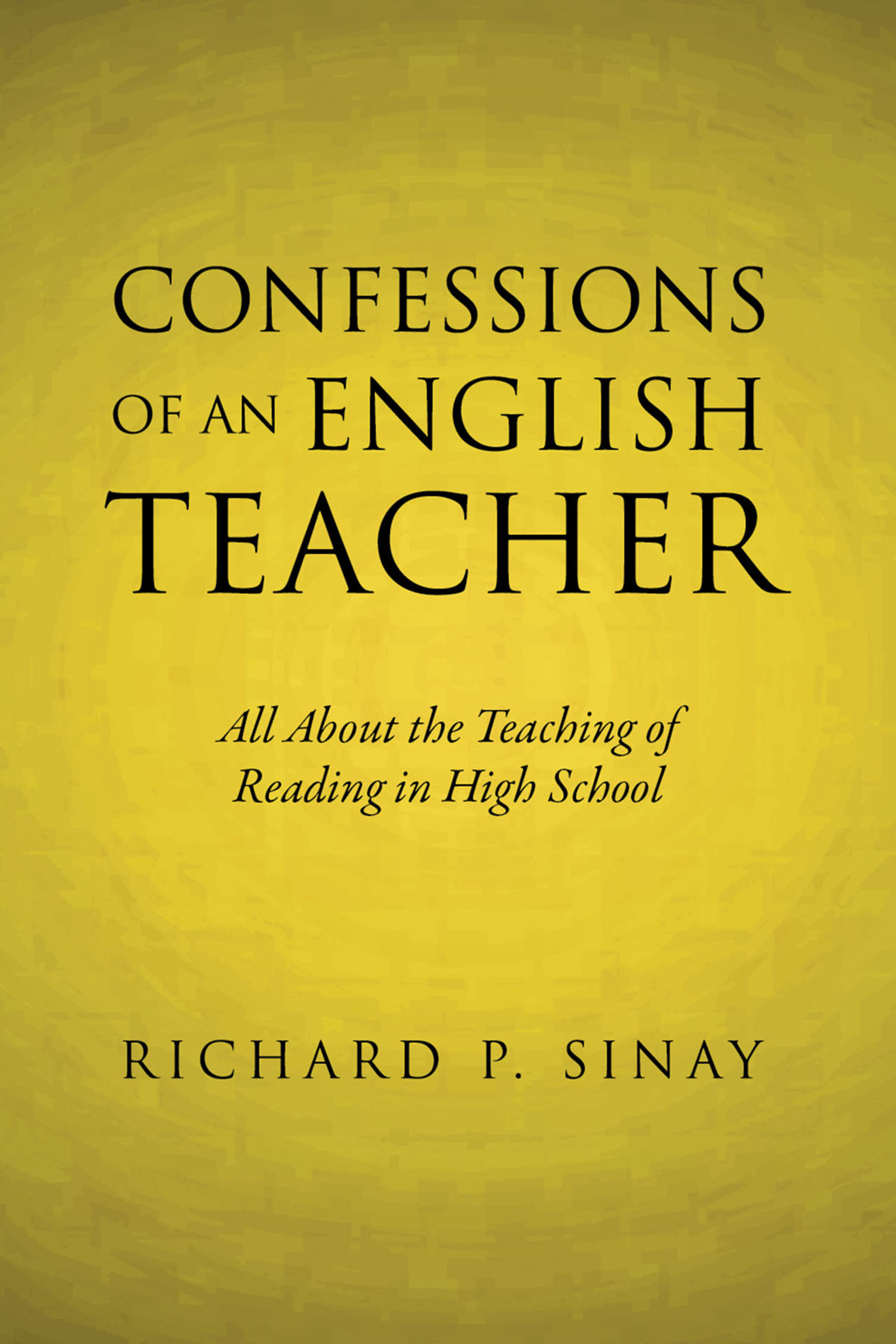
Confessions of an English Teacher
by Richard P. Sinay
Listen to this review
Confessions of an English Teacher: All About the Teaching of Reading at the High School Level makes a sustained case for shifting English instruction away from literary analysis as its default purpose and toward the development of students’ reading ability. Richard Sinay’s central claim—that English teachers should act as reading teachers and encourage reading across the curriculum—gives this book a clear, practical concern. Its strongest passages draw on classroom experience to show what that change might look like. Its weaker ones turn a valuable argument into a series of sweeping verdicts, often without enough evidence to support them.
Sinay’s most persuasive recommendations are concrete. In Chapter 5, he describes reading Washington Irving’s “The Legend of Sleepy Hollow” aloud, using distinct voices to animate Ichabod Crane, Brom Bones, and Katrina. He recalls students laughing, asking who the Headless Horseman was, and returning to the text to consider Ichabod’s fate. The episode gives substance to his argument that expressive reading can make a difficult work more inviting and prompt discussion. Chapter 6 extends the idea: teachers should read during silent reading periods, model assigned texts, and participate in performances of plays. These suggestions are grounded in recognizable classroom situations rather than abstract exhortation.
The book is similarly useful when it turns its emphasis on reading into workable routines. Chapter 7 proposes a classroom library, student-selected books matched to reading ability and interests, and brief conversations to confirm that a book has been read. Chapters 11 and 12 make a related case for teaching vocabulary in context and addressing grammar and usage through students’ own writing. The examples—such as combining simple sentences or checking the use of “their,” “there,” and “they’re”—help clarify the intended practice. Chapter 14 adds textbook reading strategies, including SQ3R and mapping, while Chapters 10 and 15 advocate daily reading time across school subjects. Collectively, these proposals make the book’s educational purpose legible: reading should be a routine, modeled activity, not merely an assignment attached to English class.
Sinay’s personal history also gives the argument a distinctive shape. In Chapter 2, he recalls the extensive list of works assigned during his 1962–66 high-school years, along with his independent reading of Steinbeck and other novels. He contrasts that experience with later classrooms in which some honors students avoided Huckleberry Finn. The contrast explains why he values sustained reading, though it does not by itself establish that reading habits have declined for the reasons he identifies. His account of reading to his children from infancy, and of their later academic success, likewise conveys genuine conviction about the importance of books while remaining anecdotal evidence rather than proof of a general causal claim.
The book is most thought-provoking in its treatment of literary difficulty. Chapters 8, 13, and 17 argue that students are more likely to grow as readers when texts are challenging but accessible, and that classic works can become counterproductive when their language or historical context is beyond students’ reach. Sinay’s account of reading The Scarlet Letter aloud to students who remained lost in Hawthorne’s language illustrates the distinction he wants to make between appreciating a book and developing literacy through it. He does not reject literature altogether: he values cultural knowledge and points to To Kill a Mockingbird as an example of a text he considers both relatable and demanding. Still, his discussion sometimes treats accessibility and literary study as opposing aims, rather than exploring how careful scaffolding might serve both.
That tension is part of a larger limitation. Sinay repeatedly criticizes English teachers, curricula, standardized testing, technology, and school administrators in categorical terms. He calls Common Core “pathetic,” describes social media as a “wasteland,” and suggests that teachers generally lack knowledge of reading instruction. Such polemics communicate frustration but narrow the argument: readers may be left with a portrait of educational practice in which opposing approaches are dismissed more readily than examined. The book also circles back to its central claims frequently. Chapters 9, 10, and 15, for instance, revisit school-wide and cross-curricular reading programs, while the case against difficult literature recurs across several chapters. Repetition reinforces the theme but can make the progression feel less carefully organized than the ideas warrant.
The evidentiary base is another notable weakness. The Works Cited lists three sources, while the text makes broad statistical claims about literacy levels, college readiness, and the effects of technology and testing. Those claims are not consistently connected to specific supporting research. The author’s long teaching career provides valuable firsthand perspective, but it cannot alone establish the scale or causes of national trends. More precise sourcing, greater attention to alternative explanations, and clearer guidance on how to evaluate the proposed programs would strengthen the book’s authority. Copyediting also appears uneven: repeated phrases, typographical errors, and occasional awkward sentences interrupt the practical discussion.
Despite these limitations, the book offers a clear challenge to teachers who assume that assigning literature automatically improves reading. Its best material encourages educators to model reading, make room for independent choice, match texts to students’ developing abilities, and treat literacy as a school-wide responsibility. Readers seeking a research-heavy account of literacy policy may find the claims under-supported and the tone too sweeping. English teachers, reading specialists, and school leaders looking for classroom-level ideas—and willing to assess the proposals critically—are more likely to value it.
Share-ready review images
Download square and vertical images for posts, stories, newsletters, and media kits.
For authors
Want a review page like this for your book?
Upload your manuscript, choose a review tier, and get a permanent public editorial review page you can share with readers.
Review My Book← Back to Reviews
