Buy this Book:
SPORTS & RECREATION / Coaching / Basketball (SPO061010)
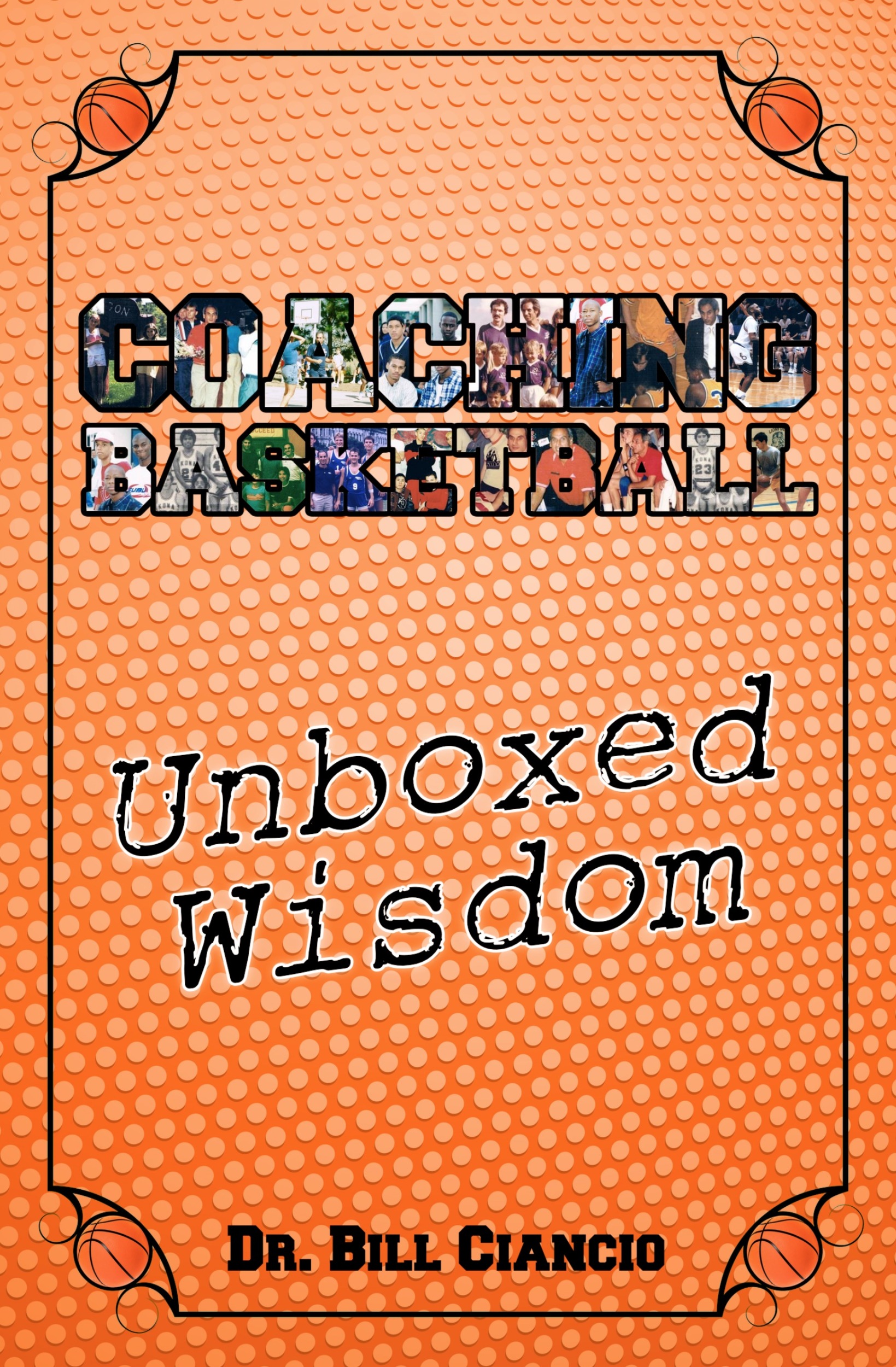
Coaching Basketball
by Dr. Bill Ciancio
Listen to this review
Coaching Basketball: Unboxed Wisdom is the kind of coaching book that feels earned rather than assembled. It arrives not as a sterile manual of drills, but as a long-view reflection on a life spent in gyms, clinics, locker rooms, and the quiet in-between moments where coaching philosophy is really formed. What makes the book especially compelling is its voice: candid, seasoned, and grounded in lived experience. The author writes as someone who has coached through changing eras, from the influence of Adolph Rupp, John Wooden, Bobby Knight, Jim Valvano, and others, while steadily arriving at a philosophy that is distinctly his own.
At its best, the book is a persuasive argument for coaching as a moral and human practice as much as a tactical one. The opening chapters, especially “Foundation” and “Why,” establish the book’s central conviction: the coach’s temperament, ethics, and relationships matter as much as the X’s and O’s. The recurring emphasis on treating others as you want to be treated, staying gossip-free, and asking “What is the cost of winning?” gives the book a welcome integrity. In a field often obsessed with results, the author insists on something more durable: character. That theme is not merely preached; it is illustrated repeatedly through stories of players, officials, parents, and fellow coaches.
The structure is one of the book’s great strengths. Each chapter feels like a stage in the evolution of a coaching mind: “Foundation,” “Why,” “Now What,” “Philosophy,” “Explore,” “Choosing,” “Creating,” “Culture,” “Year Around Plan,” “In Season Practices,” “Conditioning,” “Games,” “Playoffs,” and “Press.” This progression gives the work a satisfying arc. It moves from inner principles to practical application, from abstract ethics to concrete practice planning, from teaching habits to managing playoff pressure and public scrutiny. The result is a book that does more than advise; it models how a coach might think through a season and, more importantly, through a career.
There is also a refreshing originality in the author’s approach to adaptation. Rather than presenting basketball as a fixed system, he presents it as something to be filtered through personality, available talent, and context. His concept of “Billy Ball,” for example, captures the book’s practical inventiveness: a style built from pressure defense, gambling, and high-octane offense, refined by years of trial, observation, and modification. Likewise, his renaming of “weak side” to “steal side” is a small but revealing example of the author’s instinct to make language serve philosophy. These details lend the book personality and show the author thinking not just about plays, but about how language shapes action.
One of the most engaging aspects of the book is its celebration of coaching as a process of apprenticeship and synthesis. The “Explore” chapter, in particular, is rich with memorable references to Paul Westhead, Dean Smith, Jim Valvano, Al McGuire, Bob Knight, and John Wooden. The author is never merely name-dropping; he is extracting usable ideas from each coach’s style. He admires Westhead’s repetition and conditioning, Smith’s late-game structure, Valvano’s improvisation, McGuire’s “go to” player and trapping, Knight’s defensive concepts, and Wooden’s disciplined practice ratio. That cross-pollination of influences gives the book intellectual energy and reminds readers that originality often emerges from disciplined borrowing and thoughtful revision.
The book’s most touching material may be found in its chapters on “Culture” and “Year Around Plan,” where the author shows the developmental side of coaching. The story of Marvin, the undersized player who became a starter and eventually a college basketball player, is especially effective because it demonstrates the book’s central belief that coaching is about recognizing and cultivating determination. The same is true of the “Let the Peacocks Fly” passage at the end, which captures a coach learning to trust what has already been taught and to allow players to become more self-directed. That closing idea gives the book an unexpectedly graceful finish: the best coaching eventually becomes invisible enough to let the players shine.
Readers seeking a heavily polished, modern analytics-driven basketball manual may find some sections more anecdotal and expansive than technical. At times the prose is rambling, and the author’s conversational style occasionally wanders. Yet even this looseness has a charm: it feels like sitting across from an experienced coach who is eager to tell you not only what worked, but how he came to understand why it worked. The practical advice on practice structure, conditioning through competition, playoff preparation, and media relations is substantial, and the emphasis on “play hard, play together, have fun” gives the book a useful, repeatable core.
Coaching Basketball: Unboxed Wisdom is ultimately a generous, thoughtful, and deeply human book. It has the wisdom of experience, the humility of a coach who kept learning, and the conviction that winning and good character need not be enemies. For coaches, teachers, and readers interested in the philosophy behind leadership, this is an insightful and genuinely motivating read. Strongly recommended.
Share-ready review images
Download square and vertical images for posts, stories, newsletters, and media kits.
For authors
Want a review page like this for your book?
Upload your manuscript, choose a review tier, and get a permanent public editorial review page you can share with readers.
Review My Book← Back to Reviews
