Buy this Book:
Family & Relationships / Parenting / General (FAM034000)
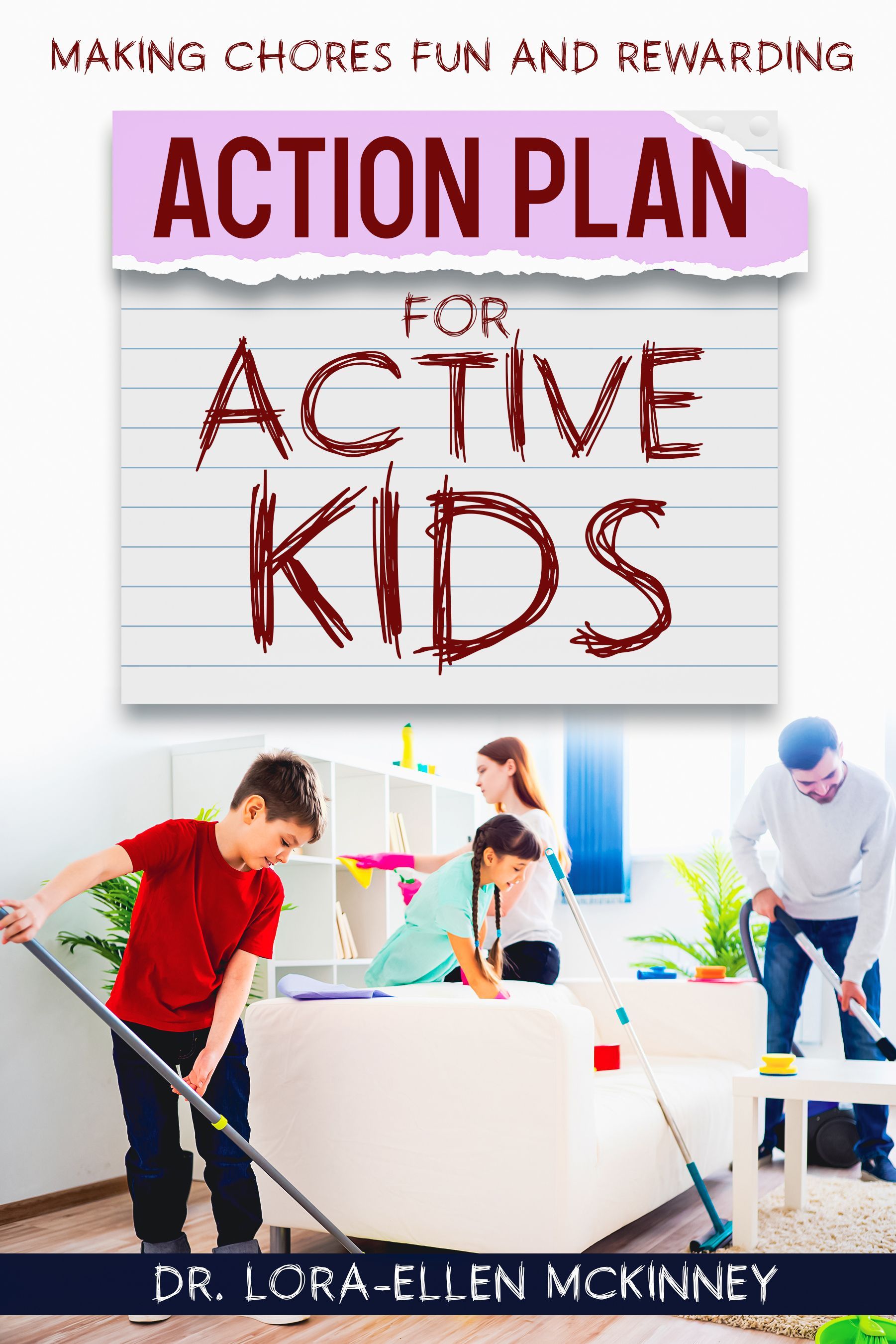
Action Plan for Active Kids
by Dr. Lora-Ellen McKinney
Listen to this review
Action Plan for Active Kids is a narrowly focused parenting guide that argues, with tireless conviction, that household chores are not a domestic nuisance but a developmental tool. Across its seven chapters, the book returns again and again to the same central proposition: if children are assigned age-appropriate tasks, they will become more responsible, more disciplined, more self-reliant, and more connected to family life. The argument is not especially novel, but it is presented with unusual persistence and a clear pedagogical aim. Readers looking for a practical framework rather than a nuanced family memoir or a psychologically complex parenting philosophy will recognize the book’s purpose immediately.
The book’s strongest quality is its clarity of structure. Each chapter builds on the last in a logical sequence: The Foundation of Active Kids establishes the value of early chore participation; Chores as Essential to Family Functioning reframes chores as a household system; Chores as a Method for Instilling Discipline introduces routines, consequences, and rewards; Chores as a Way to Teach Responsibility and Chores for Kids by Age and Developmental Stage refine the developmental approach; Making Chores Fun and Rewarding adds gamification, allowances, and technology; and Inviting Kids into Planning and Problem Solving closes by emphasizing collaboration. This modular design makes the book easy to consult in pieces, and the inclusion of an appendix with sample chore charts and app recommendations suggests a genuinely utilitarian intent.
Stylistically, the prose is earnest, formal, and heavily declarative. The author repeatedly uses phrases such as “foundational pillar,” “essential life skills,” and “family unity,” which creates a steady tone of advocacy. That consistency may reassure readers who want a confident voice, but it also becomes the book’s most visible limitation. The writing is often repetitive, with the same claims about responsibility, teamwork, self-efficacy, and time management restated in slightly different language from chapter to chapter. For example, Chapter 1 presents chores as a means of developing “responsibility and ownership,” Chapter 2 describes them as the “glue” of family functioning, Chapter 3 ties them to discipline, and Chapter 4 again returns to responsibility and independence. The cumulative effect is less cumulative argument than reiteration.
The book’s thematic strengths lie in its insistence that chores should be developmentally matched and emotionally framed with care. The sections on age-appropriate tasks are among the most useful, because they move beyond abstract praise of responsibility and give concrete examples. For ages 3–5, the book recommends simple tasks such as picking up toys, setting the table, and feeding pets. Ages 6–9 are guided toward more involved responsibilities like helping with meal preparation, sorting laundry, and gardening tasks. For ages 10–13, the book shifts to organizing personal spaces, budgeting small expenses, and managing more complex routines. By ages 14–18, the emphasis becomes preparation for independence, including laundry, meals, grocery planning, and basic financial responsibility. This developmental progression is one of the clearest and most practical parts of the book, and it is backed, at least rhetorically, by repeated appeals to research.
Another strength is the book’s insistence on flexibility. It does not advocate a rigid, punitive chore system. Instead, it recommends family meetings, chore charts, visual reminders, and regular adjustment based on age, temperament, and household needs. The discussion of “Rewards vs. Consequences” is particularly notable because it avoids pure punishment models and instead urges parents to use consequences that are “appropriate” and “not punitive.” Likewise, the repeated encouragement to involve children in planning, choosing tasks, and revising systems gives the book a collaborative spirit that keeps it from becoming simply authoritarian. In Chapter 7 especially, the focus on family problem-solving broadens the conversation beyond chores themselves and toward communication, negotiation, and resilience.
Where the book is less successful is in the depth of its evidence and the sophistication of its argument. The text frequently cites studies and names many researchers, but because the supplied material does not include full bibliography details or a sustained engagement with counterarguments, the references function more as reinforcement than as critical inquiry. The book rarely pauses to consider whether all families have the same bandwidth, space, cultural norms, or stress levels for implementing chore systems in the highly organized way it recommends. Its confidence can feel generalized, as if the same framework would fit every household with only minor adjustments. Yet the book itself occasionally acknowledges that there is no “one-size-fits-all” solution; it would have been stronger if it had followed that insight more fully.
There is also a tension between the book’s emphasis on intrinsic motivation and its enthusiasm for reward systems, apps, allowances, points, and gamification. Chapter 6, in particular, offers a practical discussion of making chores “fun and rewarding,” but the material sometimes blurs the line between cultivating responsibility and incentivizing compliance. The author is aware of this risk and notes that overemphasis on extrinsic rewards can backfire, yet the book’s overall architecture still leans heavily on systems of tracking, rewarding, and managing behavior. Readers who want a more reflective treatment of how autonomy develops, or who are wary of turning family life into a behavioral economy, may find this section less persuasive.
There are also occasional problems of tone. The language can become overly emphatic—“fail-proof strategy,” “very glue,” “undoubtedly yields lasting rewards”—which may weaken the book’s authority for readers who prefer restraint. The argument would have benefited from more precise, less promotional phrasing and from fewer sweeping assurances about the benefits of chore participation. The book’s best moments are the ones that stay concrete: a chore chart, an age-based task, a family meeting, a schedule. Its weakest moments are the ones that rely on abstraction and repetition.
Even so, Action Plan for Active Kids has a clear audience and serves it with consistency. It is most valuable as a starter manual for parents, guardians, or caregivers who want a structured, practical approach to household chores and child responsibility. It will be especially useful for readers seeking age-based chore ideas, a basic framework for routine-building, and a family-centered approach that treats chores as developmental practice rather than mere labor. Readers looking for a more psychologically nuanced, less repetitive, or more critical exploration of parenting and domestic labor may find it too programmatic. But for those who want a straightforward handbook on chore systems and family participation, the book offers an organized, if somewhat overextended, guide.
Share-ready review images
Download square and vertical images for posts, stories, newsletters, and media kits.
For authors
Want a review page like this for your book?
Upload your manuscript, choose a review tier, and get a permanent public editorial review page you can share with readers.
Review My Book← Back to Reviews
