BIOGRAPHY & AUTOBIOGRAPHY / Personal Memoirs (BIO026000)
A Mostly Magnificent Memoir
by Bo Bennett, PhD
Listen to this review
A Mostly Magnificent Memoir is candid about its own instability: Bo Bennett calls it “fictionalized truth,” and the book’s subtitle promises stories that are “dramatized and somewhat fictionalized.” That qualification matters. The narrator, James Murphy, is a comic construction as well as a remembered child, and the memoir’s strongest effect comes from the uneasy fit between slapstick recollection and a childhood marked by alcoholism, violence, and loss. It is often funny, sometimes moving, and not always sure how to balance those registers.
The book’s central setting is a household in which Fred and Delores drink, argue, and replay the same jealous accusations night after night. In “Toxic Scripts,” James explains how those repeated quarrels became a kind of family code, while his parents’ shared pleasure in disliking other people makes even their brief moments of accord feel warped. The material is serious, but Bennett resists solemnity through comic detail: cigarettes, cheap matching outfits, and the Weekly World News sit beside the children’s attempts to make peace. The humor helps establish the child’s bewildered perspective, though its relentless presence can also blunt the force of scenes that might benefit from more space to register as painful.
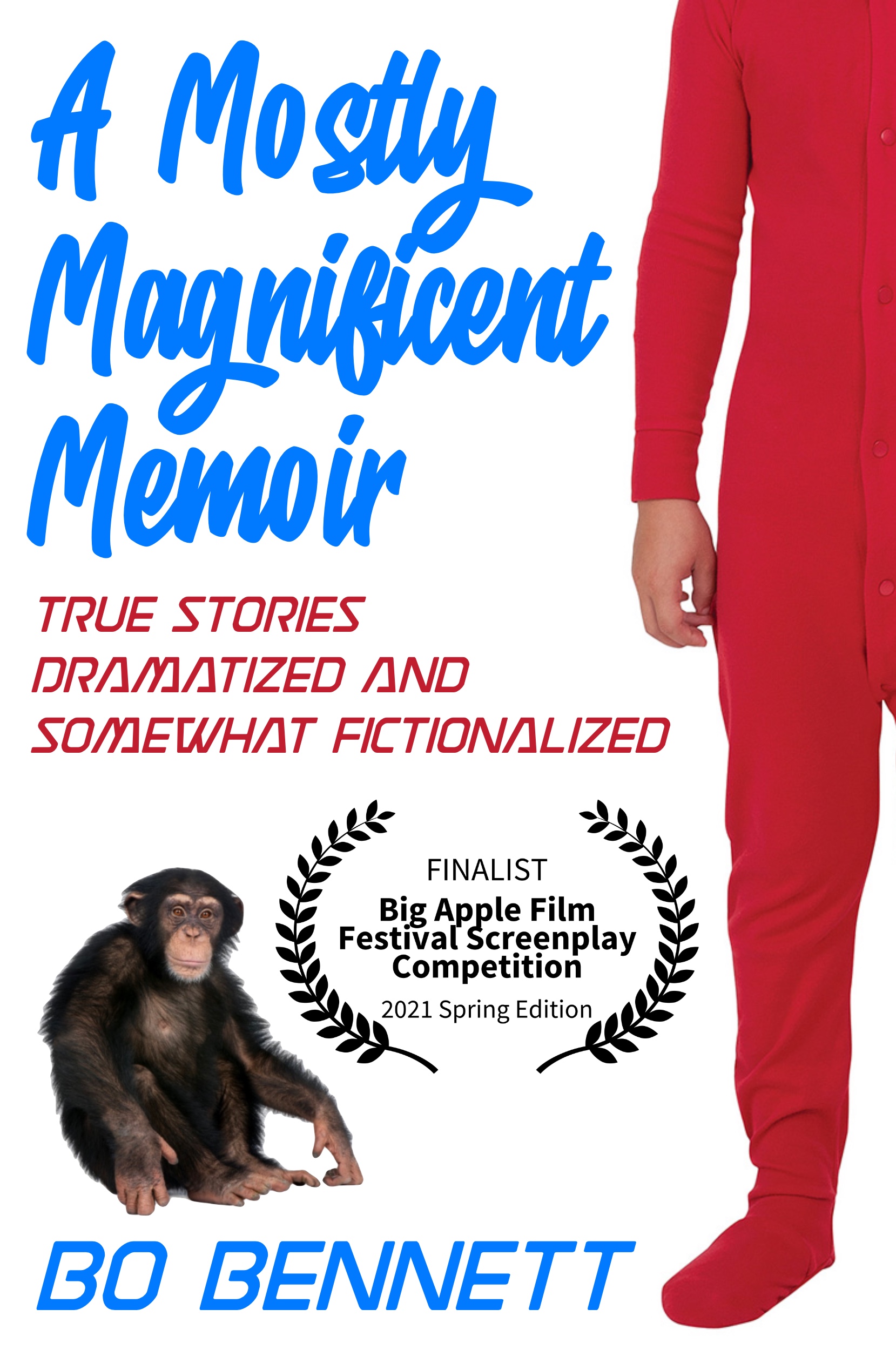
Bennett’s main stylistic strength is comic timing. Many episodes are shaped like miniature routines: a clear premise, escalating absurdity, then a punchline. In “I Wasn’t Monkeying Around,” James’s family dismisses his report of a monkey in the yard because he has a reputation for inventing stories—until the local news confirms that a zoo escapee has been found nearby. In “James and the Beanstalk,” Fred secretly replaces the boy’s growing plant with larger ones, turning a fairy-tale fantasy into a practical joke with a sore-backed father and a concerned teacher. The scenes are vivid and economical, and their humor often depends on the narrator’s ability to admit his own gullibility without making the child seem foolish.
That self-implicating quality gives the memoir more substance than a catalogue of childhood antics. “Baseball Cards” is particularly effective: James builds a valuable collection by gambling and making unfair trades, then feels betrayed when his friends take cards from him. Their actions force him to recognize that he has been exploiting others himself. Similarly, “I Kicked Their Imaginary Asses” exposes the gap between James’s invented story of beating up four bullies and the mundane truth of a car door hitting him in the eye. His lie brings him admiration and relief from intimidation, but it also becomes a burden he carries into adulthood. These chapters make dishonesty and self-image recurring themes, not just sources of jokes.
The memoir also finds genuine emotional weight in quieter material. In “Love Comes in Many Forms,” Christie’s death after being struck by a car is described with more restraint than much of the book’s comedy. The stranger who drives James to the veterinarian offers a simple, powerful counterpoint to the chaos of his family life. Later chapters return to the importance of friendship and support: Annie’s presence during difficult years, and the friends who share James’s misadventures and their consequences. The book’s claim that love is not limited to human relationships feels earned here rather than merely stated.
Structurally, the first-person childhood episodes are framed by third-person scenes in 2019 and 2020. The prologue places adult James at his childhood home before a final speech; the conclusion reveals that he is facing the end of his life, and the epilogue records his death. This frame gives the anecdotes an emotional destination: the book is not only about what happened on Sturbridge Road, but about the value of people and memories after a life has passed. The closing reunion, including the unexpected appearance of a friend in a rugby shirt, is an affecting payoff to a detail established earlier. Yet the abrupt shift from comic episodes to terminal illness may feel engineered, and readers may question how much of the frame belongs to memoir and how much to its openly dramatized design.
There are other limitations. The episodes can feel like screenplay scenes assembled around a succession of punchlines, especially in “Party at the Murphy’s,” whose timestamped misunderstandings create lively comic choreography but little cumulative development. Some jokes rely on dated ideas about masculinity, sexuality, and women, or on deliberately crude language; the book’s account of the boys’ bullying culture sometimes exposes those attitudes, but does not always clearly distance itself from them. And the later “Seek and Destroy Missions,” involving trespass, pranks, and a plan to set a pond on fire, are entertaining in their escalation but risk making reckless behavior seem more charming than dangerous. The eventual police intervention provides a corrective, though the book’s tone remains breezy.
At its best, A Mostly Magnificent Memoir uses comedy to reveal how a child makes sense of instability—and how an adult can look back with affection without pretending the damage was harmless. Its episodic form, broad humor, and tonal swings will not suit readers seeking a conventionally reflective or tightly unified memoir. But readers drawn to irreverent coming-of-age stories, family dysfunction rendered through comic anecdote, and a candid narrator willing to expose his own cruelty and self-deception may find the book both entertaining and unexpectedly tender.
Share-ready review images
Download square and vertical images for posts, stories, newsletters, and media kits.
For authors
Want a review page like this for your book?
Upload your manuscript, choose a review tier, and get a permanent public editorial review page you can share with readers.
Review My Book← Back to Reviews
