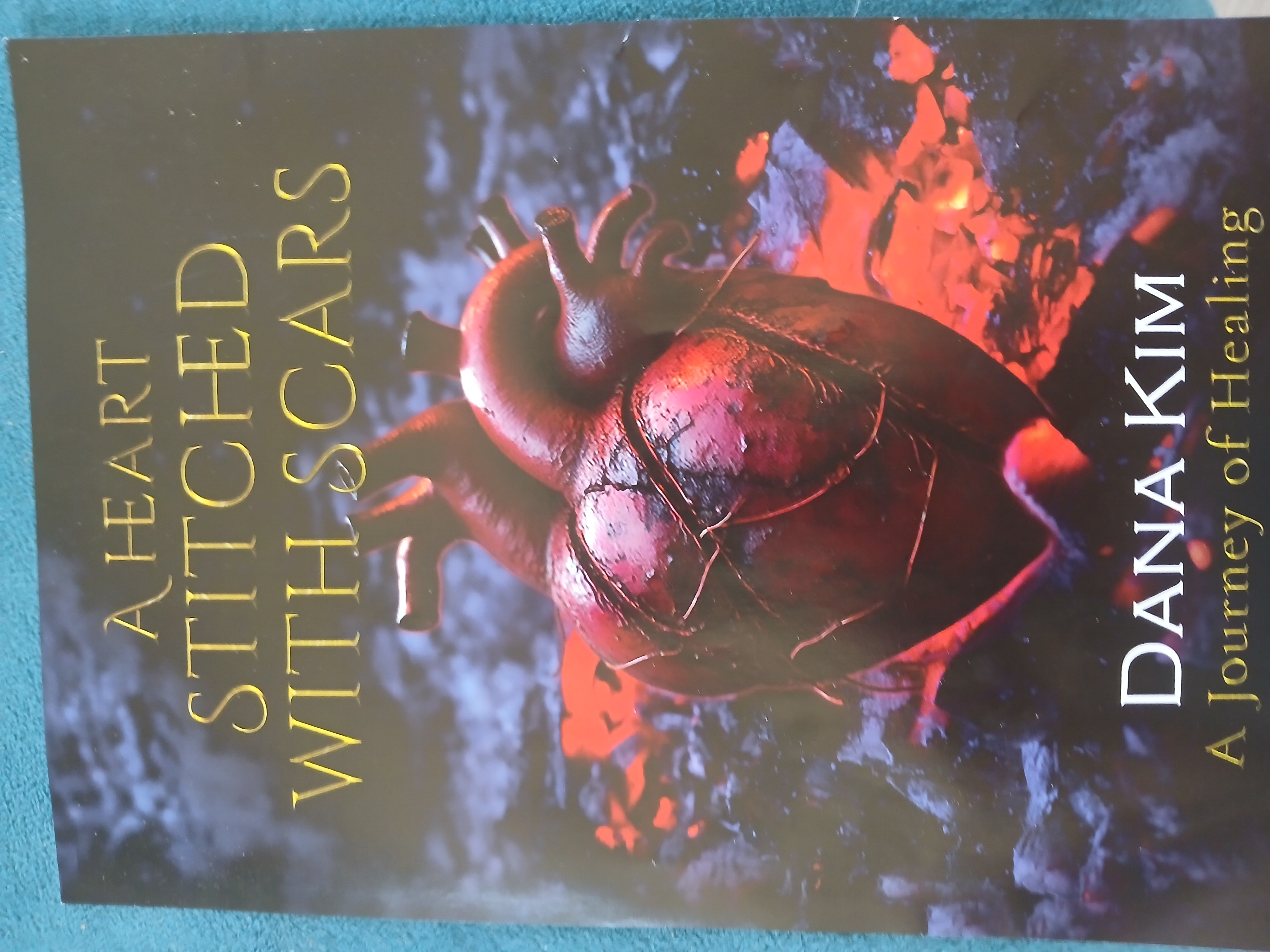
Buy this Book:
Biography & Memoir
A heart stitched with scars
by Dana kim
Listen to this review
This memoir offers a raw, often painful account of a life shaped by trauma, resilience, and the slow, uneven work of survival. Its power lies not in polish or narrative neatness, but in the author’s refusal to disguise how fractured memory, shame, and hindsight actually operate. Across its 30 chapters and epilogue, the book moves from childhood accidents and family dynamics to sexual violence, depression, marriage, parenting, a daughter’s teen pregnancy, and a husband’s PTSD and alcoholism. The result is less a tightly sculpted literary memoir than an extended testimony: deeply personal, emotionally exposed, and frequently harrowing.
One of the book’s greatest strengths is its candor. The author does not hide from uncomfortable material, including suicidal ideation, the long aftermath of rape, compulsive cleaning, hypervigilance, and the burden of keeping a family functioning while internally unraveling. Chapters 2, 6, 21, and 30 are especially stark in this regard. The description of dissociation after assault, the moment in the hospital when the telephone cord becomes a suicidal impulse, and the later panic attacks while working as a hairstylist all communicate the bodily reality of psychological distress with unsettling immediacy. The memoir also deserves credit for insisting that trauma does not end when the event ends; it reappears in marriage, parenting, work, and domestic routine. That thematic continuity gives the book real emotional coherence.
The author is at her best when grounding large emotional claims in concrete domestic detail. The little blue bed and dresser bought from the want ads, the two buses to work, the packed house of roommates, the Easter basket from Helen’s family, the family photo before her father’s death, and the rural “funny farm” in the epilogue all help locate the narrator in lived reality. Those details matter because they counterbalance the book’s more generalized reflections on fate, self-love, and survival. Likewise, the recurring language of bridges, storms, boxes, and shelves creates a recognizable interior vocabulary for repression and endurance. Even when the prose becomes abstract, the underlying motifs are clear: this is a life spent trying to contain what cannot be fully contained.
The memoir also has thematic ambition. It links personal trauma to broader social issues: the misunderstandings surrounding consent, the stigma attached to teenage pregnancy, the failure of some family members to listen, and the military’s historical neglect of PTSD. Chapter 2’s explanation of consent is one of the clearest passages in the book, and Chapter 24’s account of seeing Jake transformed after Afghanistan broadens the memoir beyond one woman’s suffering into a portrait of a family under repeated pressure. The author’s compassion is evident in the way she repeatedly makes room for the pain of others, including her husband, her children, her parents, and even the young men and women whose circumstances are not idealized.
At the same time, the book has meaningful limitations. Its prose is frequently repetitive, and the same ideas are sometimes stated multiple times in nearly identical form. Phrases about being “a survivor,” about putting feelings “in a box,” or about life changing “forever” recur so often that they can flatten the emotional force they are meant to intensify. The narration also leans heavily on summary and retrospective commentary, which can make some chapters feel more like lived recollection than shaped narrative. Readers looking for scene-driven memoir with sharp pacing and fully developed dialogue may find the structure diffuse.
There is also a tension between sincerity and presentation. The repeated insertion of quotations from well-known figures at the start of chapters gives the book a self-help framing, but those epigraphs can feel disconnected from the actual narrative rather than organically earned. Similarly, the memoir often shifts between intimate confession and instructional address, as when it turns directly to the reader with lessons about self-worth, consent, or parenting. Those moments may resonate with readers seeking encouragement, but they can also blunt the complexity of events by converting hard-won ambiguity into moral takeaway too quickly. In that sense, the book’s strongest material is often the least generalized.
Some sections are especially effective because they resist easy resolution. The account of telling a favorite aunt and being dismissed; the long silence before telling Jake; the confusion over whether abuse was “an affair”; the mixed feelings about the father who hurt the family yet is still mourned; and the daughter’s repeated mistakes, which are met with both frustration and care, all lend the memoir moral texture. These are not simple triumph-over-adversity episodes. They show how people can be hurt, hurt others, and still remain worthy of love. That honesty is the book’s most compelling quality.
Overall, this is a significant but uneven memoir: heartfelt, brave, and often moving, though structurally repetitive and stylistically more direct than artful. It will be most rewarding for readers drawn to trauma memoirs, recovery narratives, and candid accounts of mental health, sexual violence, military family life, and parenting under pressure. Readers seeking a tightly crafted literary memoir with more compression and formal control may find it less satisfying. For the audience willing to meet it on its own terms, however, the book offers a genuine and affecting record of endurance.
Share-ready review images
Download square and vertical images for posts, stories, newsletters, and media kits.
For authors
Want a review page like this for your book?
Upload your manuscript, choose a review tier, and get a permanent public editorial review page you can share with readers.
Review My Book← Back to Reviews
